
The Explorer is housed at Loyola Marymount University’s William H. Hannon Library in the Department of Archives and Special Collections. Shelved among sixty or so other Kipling works, it stands out; its shiny blue and gold silk binding is in stark contrast to the surrounding industrially manufactured volumes—cloth bindings, mutted in sheen and color, often with embossed titles on the spine—indicative of late nineteenth and early twentieth-century mass-market book production.
What first caught my attention was the book’s odd construction: While its exterior was [INSERT WORD], its interior was less so. The book’s formate is octavo. Its binding, a shiny blue silk, is stamped with a simple gold-leaf cartouche above which, in block letters, is the book’s title and below which is the name, Rudyard Kipling. This republication of “The Explorer,” a poem that first appeared in Kipling’s Five Nations (1903), was commissioned and presumably designed by Joseph McAleenan (1873-1926).
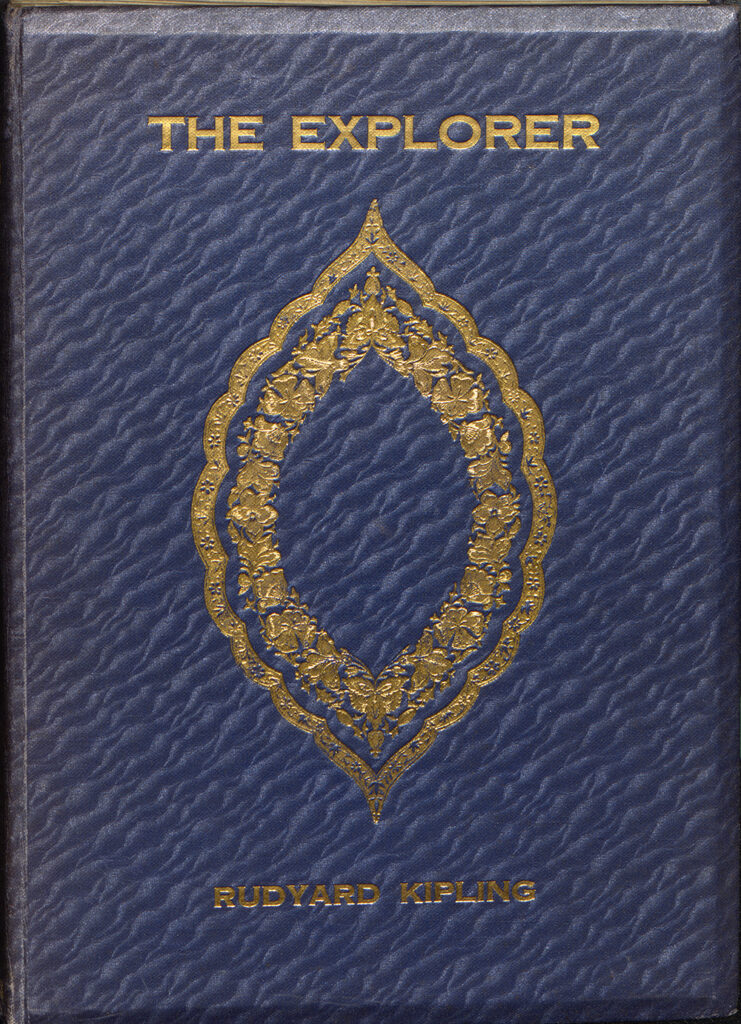
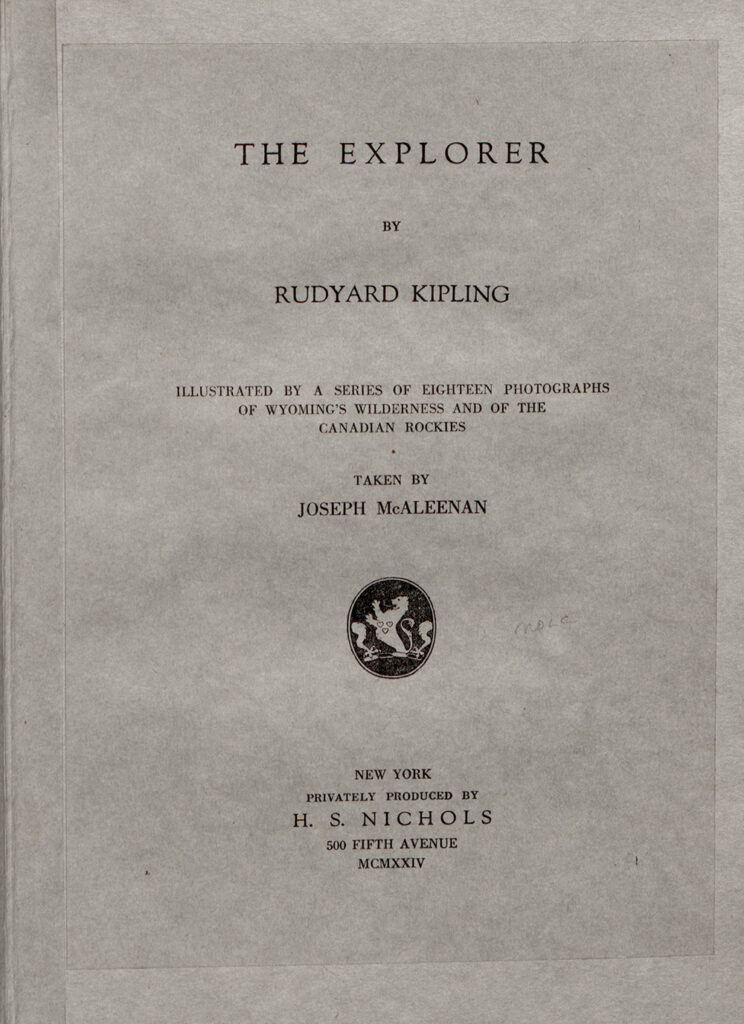
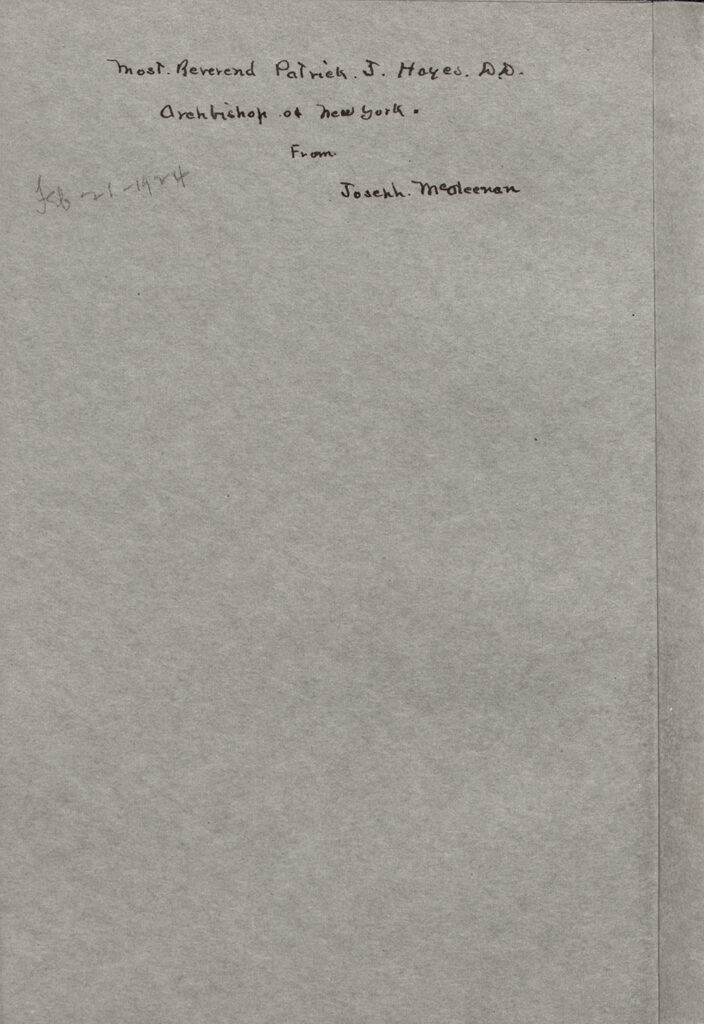
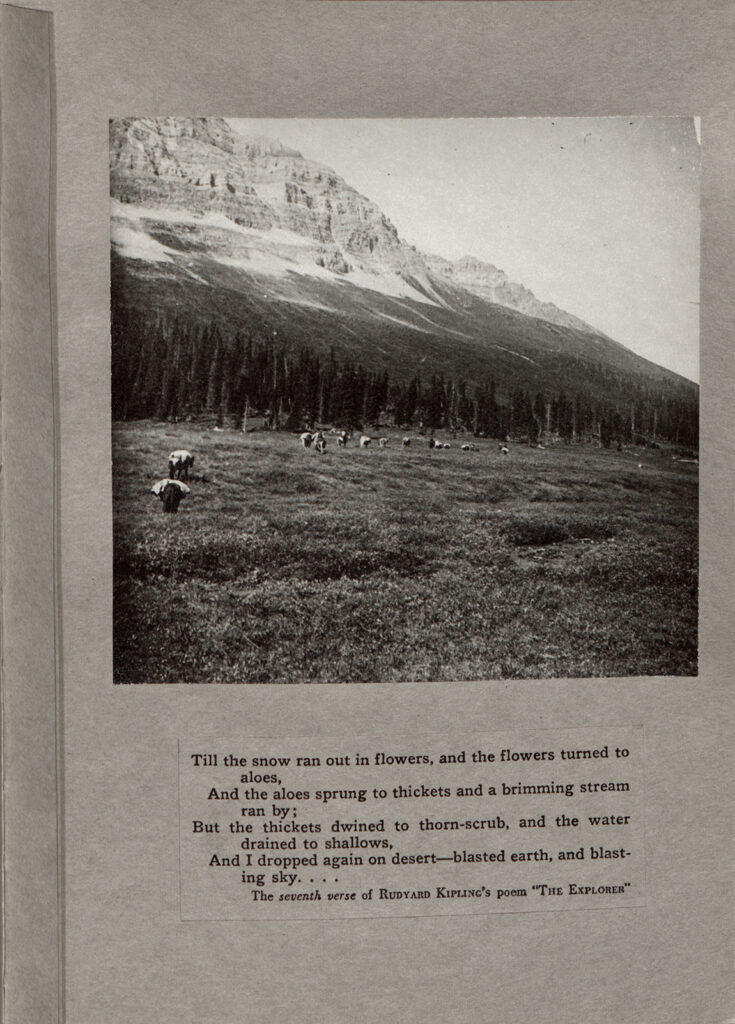
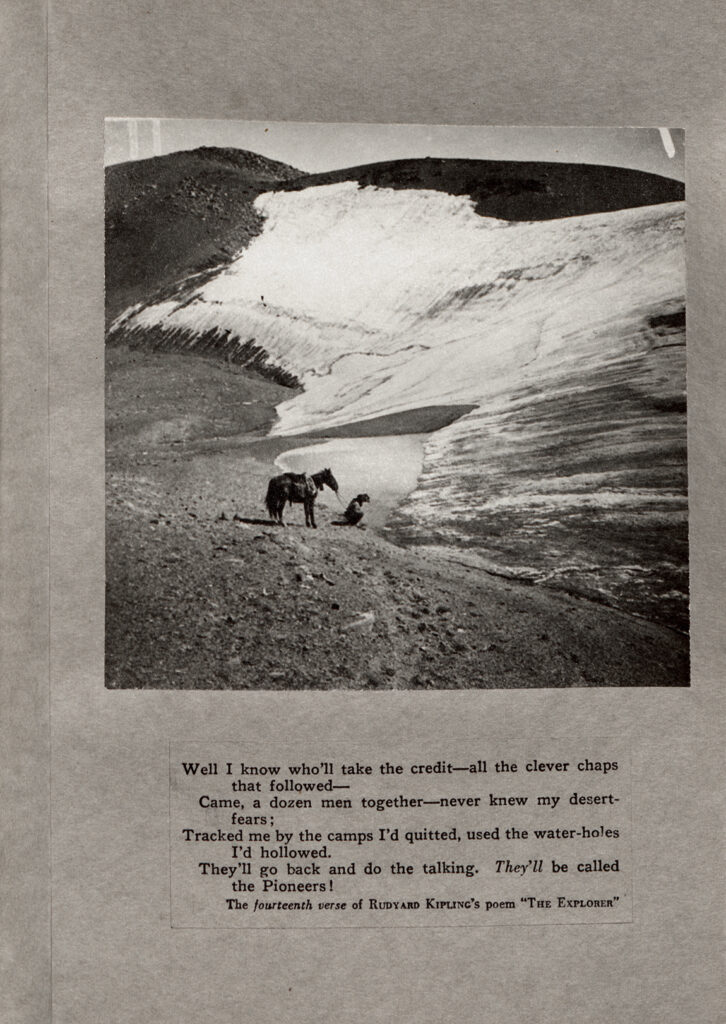
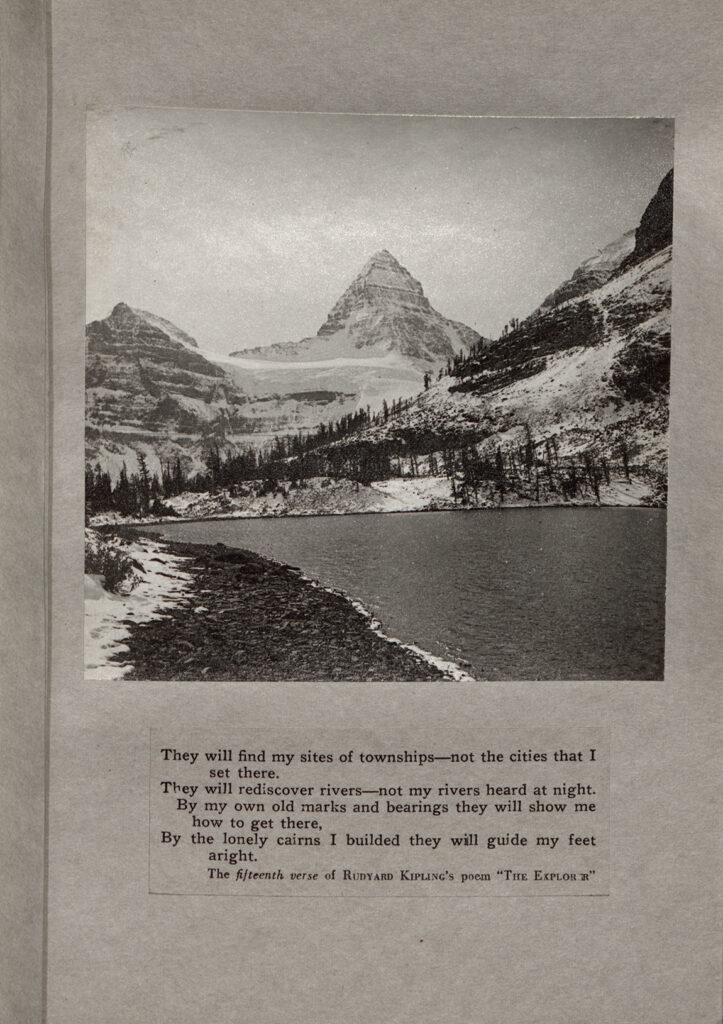
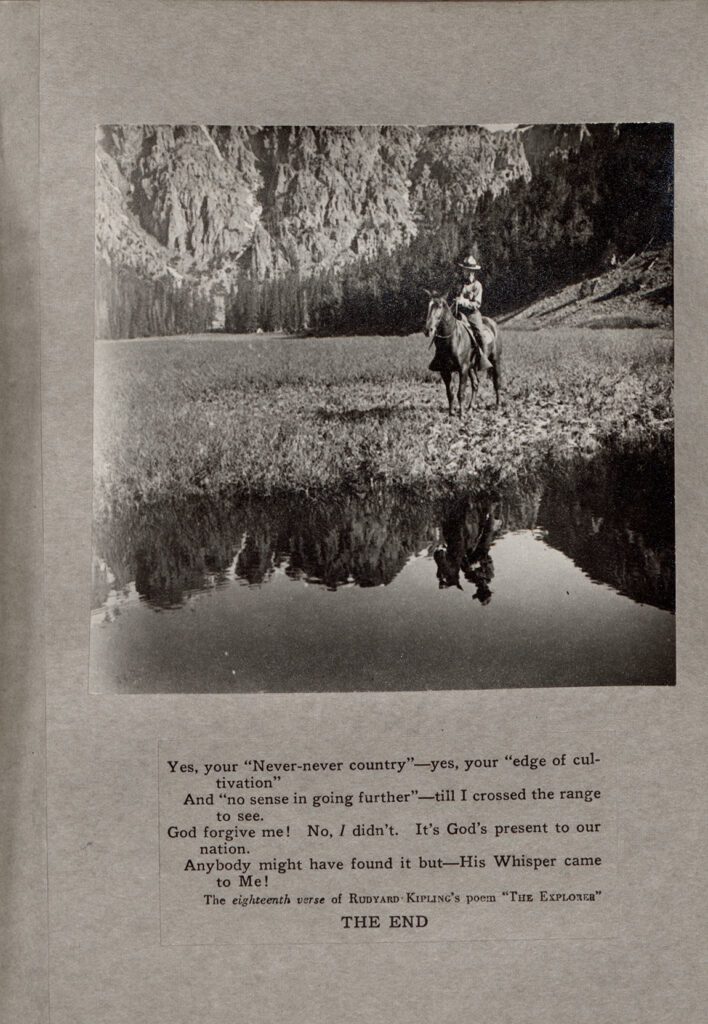
The pages are tipped in gray boards, each with a single mounted black-and-white photograph of Wyoming and the Canadian Rockies. Below each photograph is a single stanza of the poem, printed on separate paper, cut out, and pasted neatly but not perfectly, making it resemble a photo album or scrapbook more than a professionally produced text. The title page states that it was “Privately produced” by H.S. Nichols, which in this case means that Nichols’ small book-trade business was responsible for the printing, assembly, and binding of the book. It also states that Joseph McAleenan took the photographs and, given that he was the one who inscribed the book, he commissioned its creation. Something about the other books Nichols produced for McAleenan
Learn about the book’s provinance