Something from McAleenan’s writing…
https://magazine.alumni.ubc.ca/2020/best-of-2010-2020/features/the-beastly-art-of-taxidermy
https://www.canadiana.ca/view/oocihm.8_00008_1/149
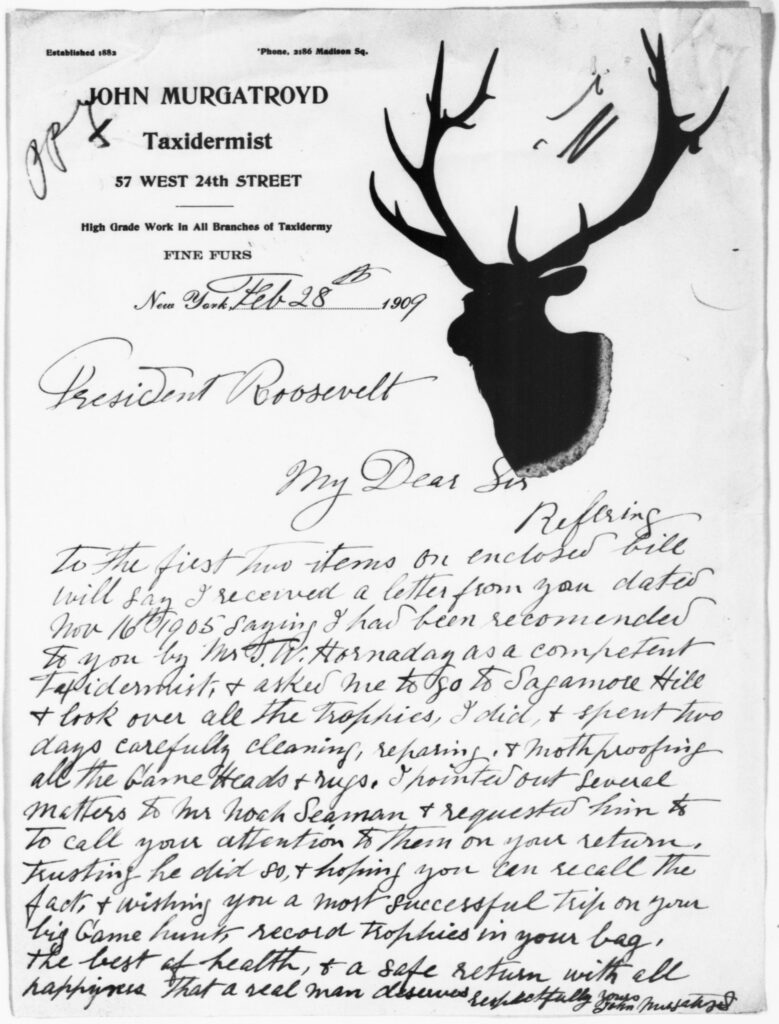
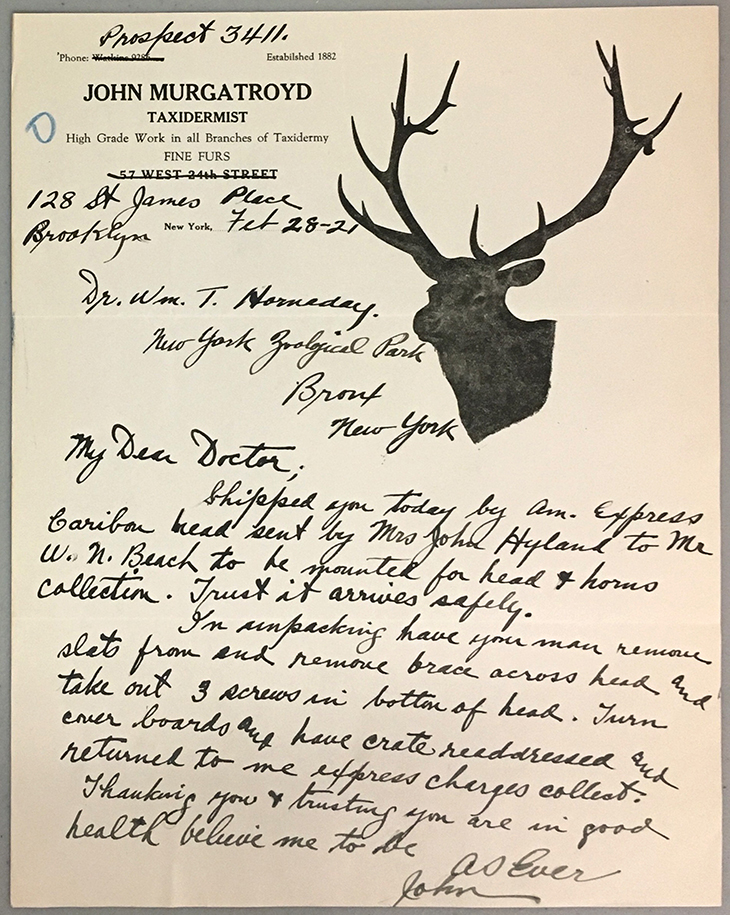
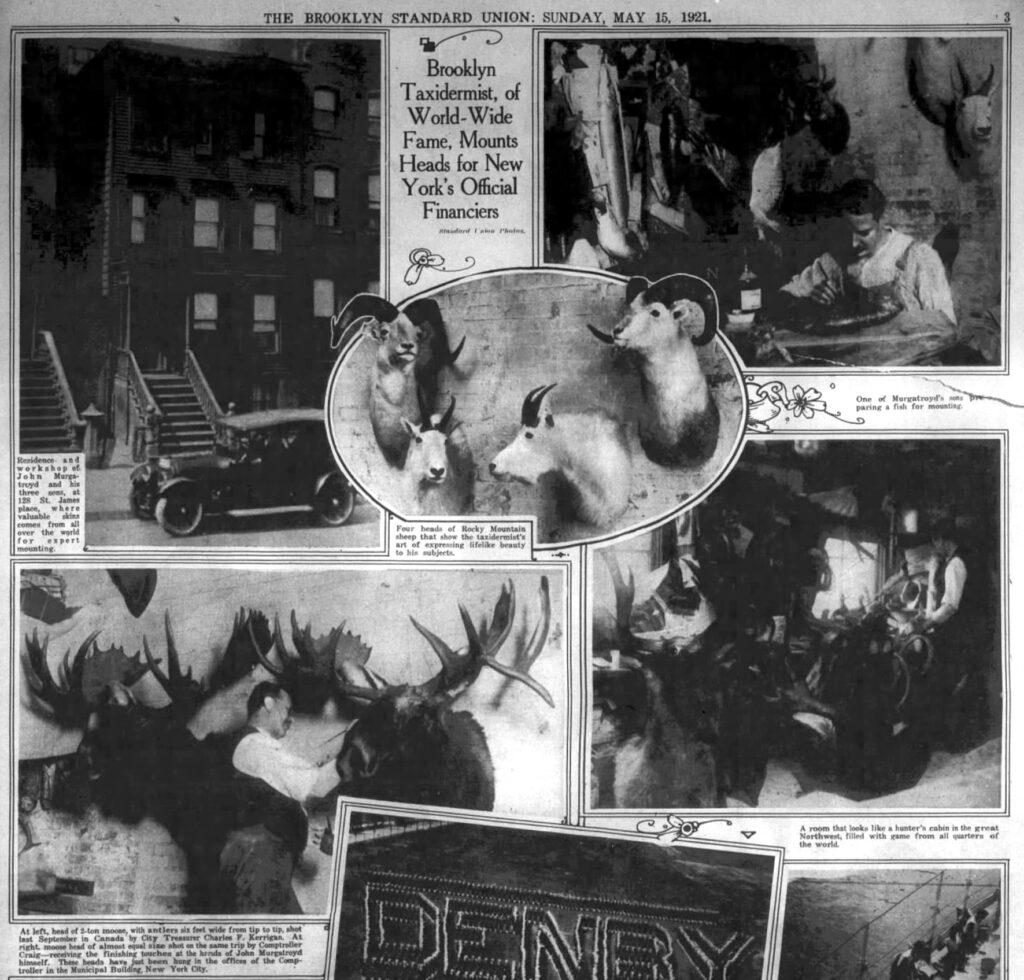
John Murgatroyd (1861-1943) was a well-respected taxidermist whose clients ranged from everyday hunters to the New York elite, such as Cornelius Vanderbilt and Harry Payne Whitney, to Elihu Root, Theodore Roosevelt’s Secretary of State, and Roosevelt himself (Daily Eagle 1924 and Brooklyn Eagle 1938). Hi nickname, “Red John,” was given based on his propensity to sunburn (Brooklyn Eagle 1938)
Born in Yorkshire, England, Murgatroyd met his wife, Elizabeth McLaughlan (1963-1924), in Québec, Canada, where he may have moved to work in the fur trade or in an adjacent business. The couple married in 1882 and immigrated to the United States later in the decade, by which time Murgatroyd was an established taxidermist (1900 Census). In 1900, the Murgatroyds purchased a home on St. James Place in Brooklyn where they raised their six children, four sons and two daughters, and Murgatroyd ran his taxidermy business (Daily Eagle 1924 and Brooklyn Eagle 1938).
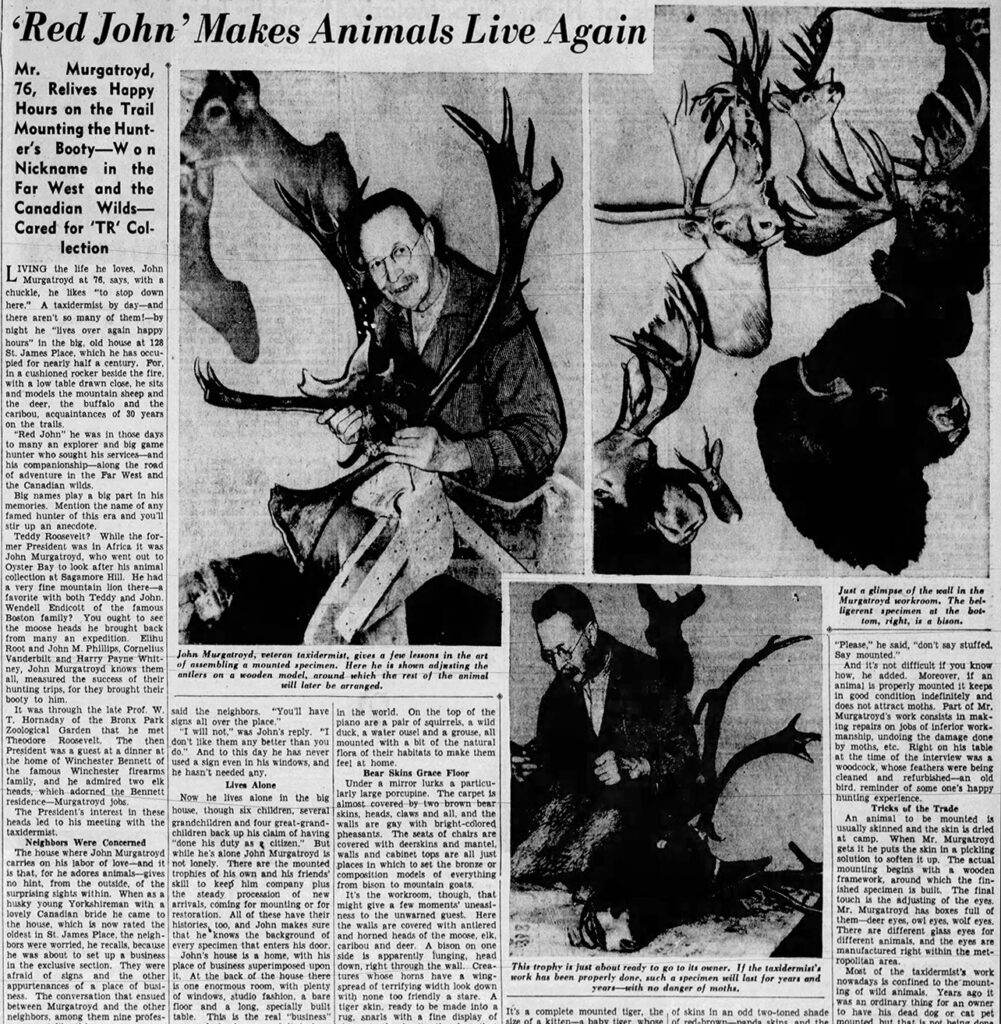
The home, being described in a 1838 Brooklyn Daily Eagle article…
“Under a mirror lurks a particularly large porcupine. The carpet is almost covered by two brown bear skins, head claws and all, and the walls are gay with bright-colored pheasants.” (Brooklyn Eagle 1938)
“It’s the workroom, though, that might give a few moments’ uneasiness to the unwarned guest. Here the walls are covered with antlered and horned heads of the moose, elk, caribou and deer. A bison on one side is apparently lunging, head down, right through the wall. Creatures whose horns have a wingspread of terrifying width look down with none too friendly a stare.” (Brooklyn Eagle 1938)
“An animal to be mounted is usually skinned and the skin is dried at camp. When Mr. Murgatroyd gets it he puts the skin in a pickling solution to soften it up. The actual mounting begins with a wooden framework, around which the finished specimen is built. The final touch is the adjusting of the eyes. Mr. Murgatroyd has boxes full of them—deer eyes, owl eyes, wolf eyes. There are different glass eyes for different animals, and the eyes are manufactured right within the metropolitan area.” (Brooklyn Eagle 1938)
Taxidermy as Conservation
“At this second the New York City taxidermists are all really busy, although their operations are somewhat restricted by the game laws. They are not by any means in favor of ruthless and indiscriminate slaughter of game animals and birds. Mr. Murgatroyd, of 57 West Twenty-fourth street, is especially outspoken in denouncing the butchers who are not satisfied with a reasonable amount of game, but whose desire is to kill the greatest possible number of animals whether they have any use for them or not.” (Amateur Sportsman 1910 27)
https://archive.org/details/taxidermyzoologi00horn/page/n11/mode/2up
photo exhibit https://bklyn.newspapers.com/image/542168785/?match=1&terms=%22John%20murgatroyd%22
Famous Clients
‘Red John’ he was in those days to many an explorer and big game hunter who sought his services—and his companionship—along the road of adventure in the Far West and the Canadian wilds (Brooklyn Eagle 1938)
While at Winchester Bennett home (Winchester firearms) he saw two elk heads that he admired that were done by Murgatroyd. Hornaday introduced them. (Brooklyn Eagle 1938)
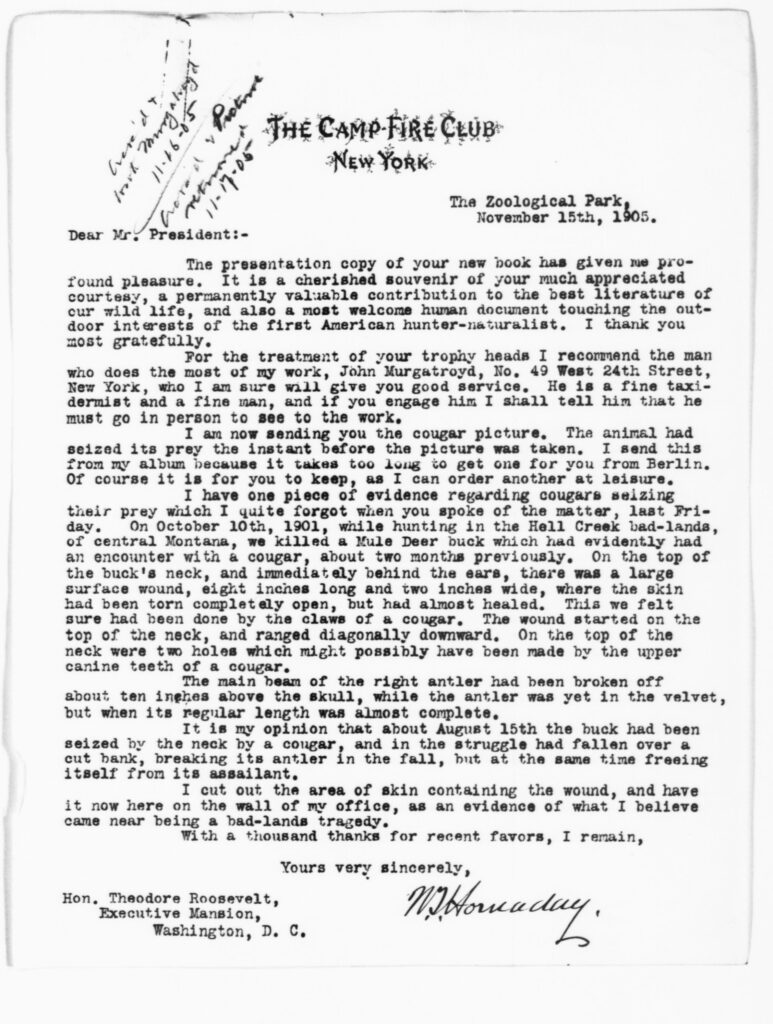
It was William Hornaday who recommended Murgatroyd to Roosevelt in a letter in 1905. Hornaday wrote, “For the treatment of your trophy heads I recommend the man who does the most of my work, John Murgatroyd, No. 49 West 24th Street, New York, who I am sure will give you good service. He is a fine taxidermist and a fine man, and if you engage him I shall tell him that he must go in person to see to the work” (Hornaday to Roosevelt, November 15, 1905). Four years later, upon leaving the presidency, Murgatroyd was charged with looking after his animal collection at his home in Sagamore Hill (Brooklyn Eagle 1938) while he was on his famous hunting trip in Africa.