
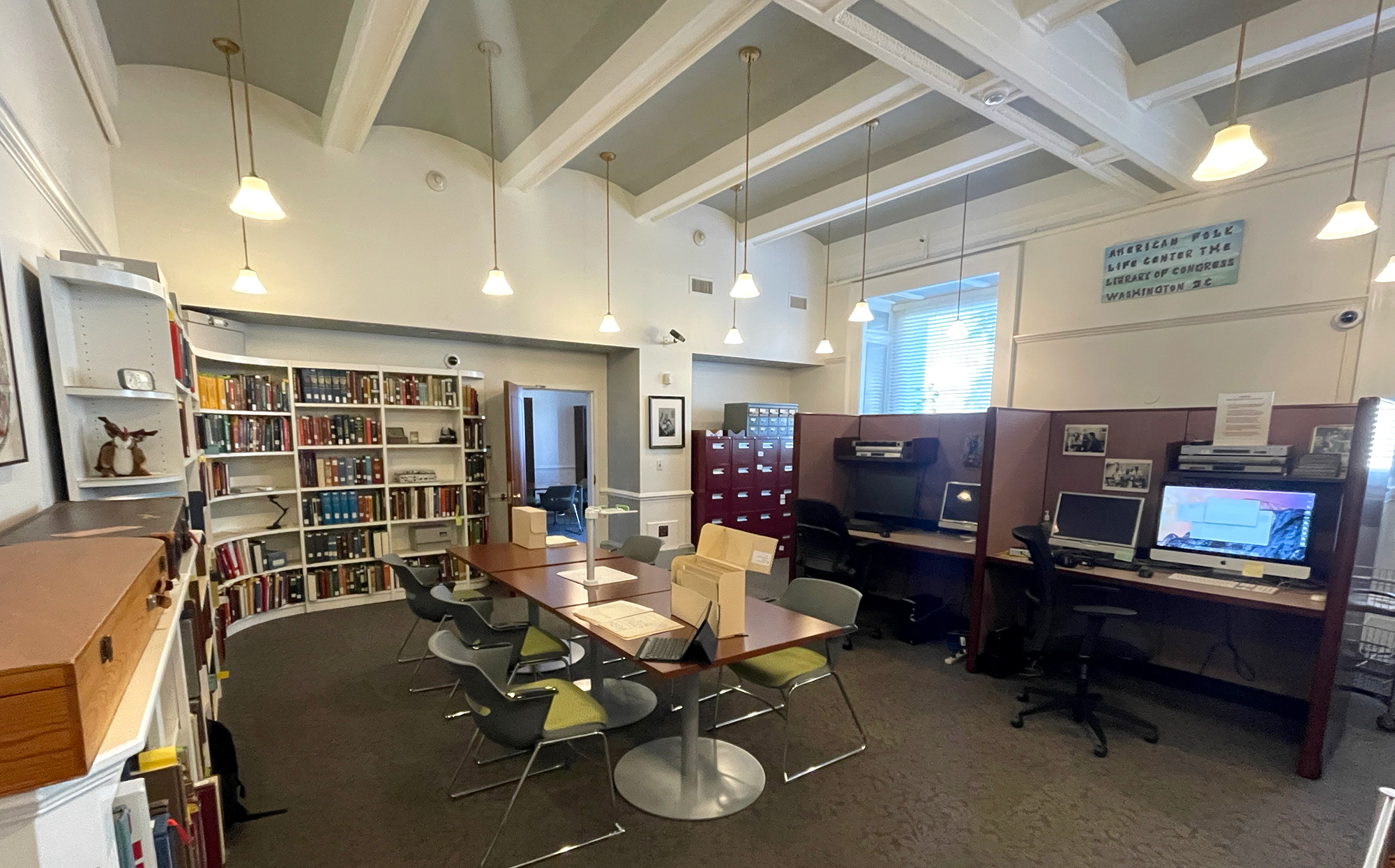
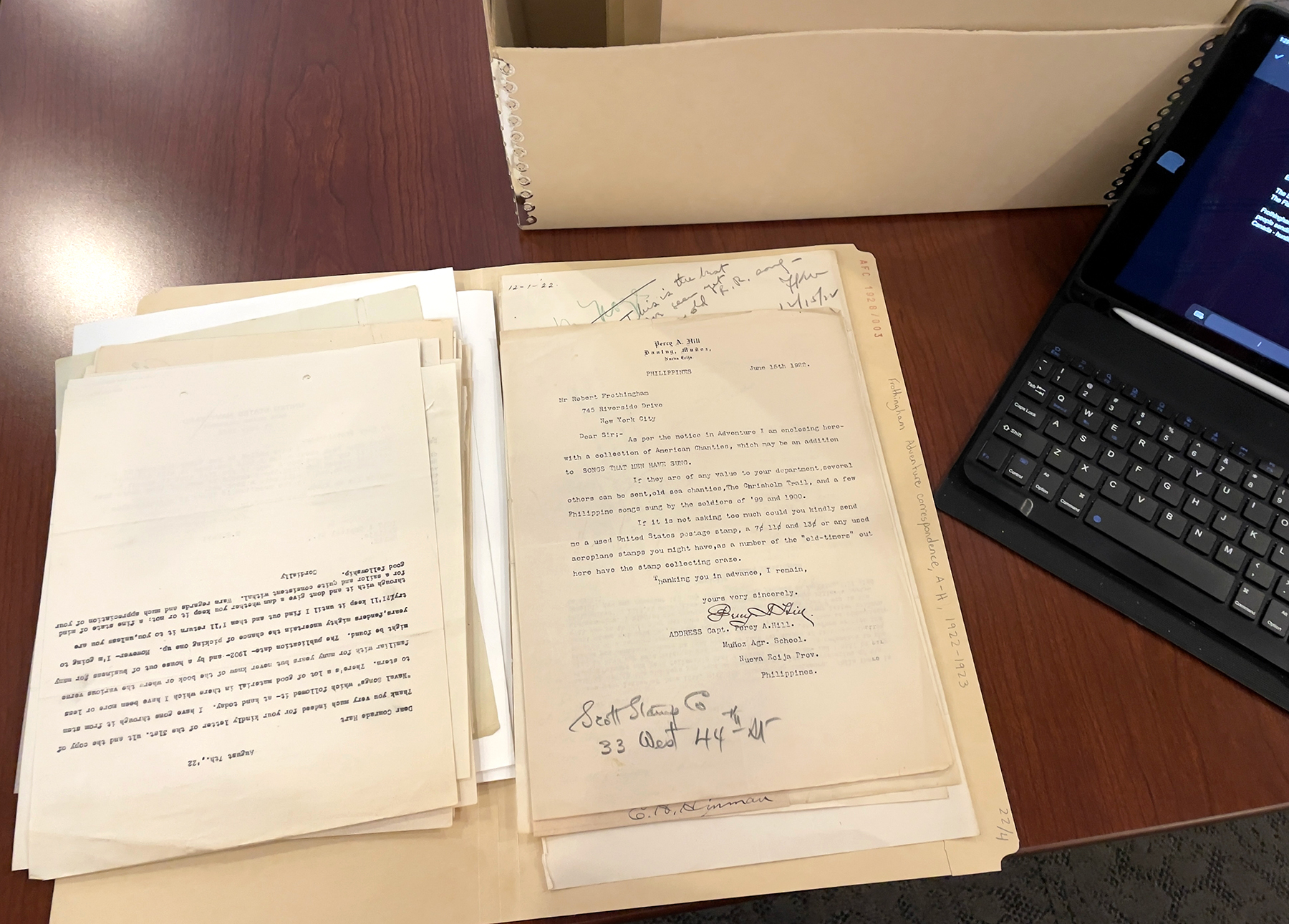
Originally founded by Robert Winslow Gordon (1888-1961) in 1928 as the Archive of American Folk Song, the Library of Congress’s Folklife Center houses materials of traditional culture from all around the world, including the Gordon’s papers. Within that collection is where I found Frothingham correspondence (LOC). Gordon, a highly prolific folklorist, traveled the United States collecting thousands of American folksongs in the form of recordings and print, which became the foundation of the archive’s original materials (LOC).) …Intro text about the place
Context
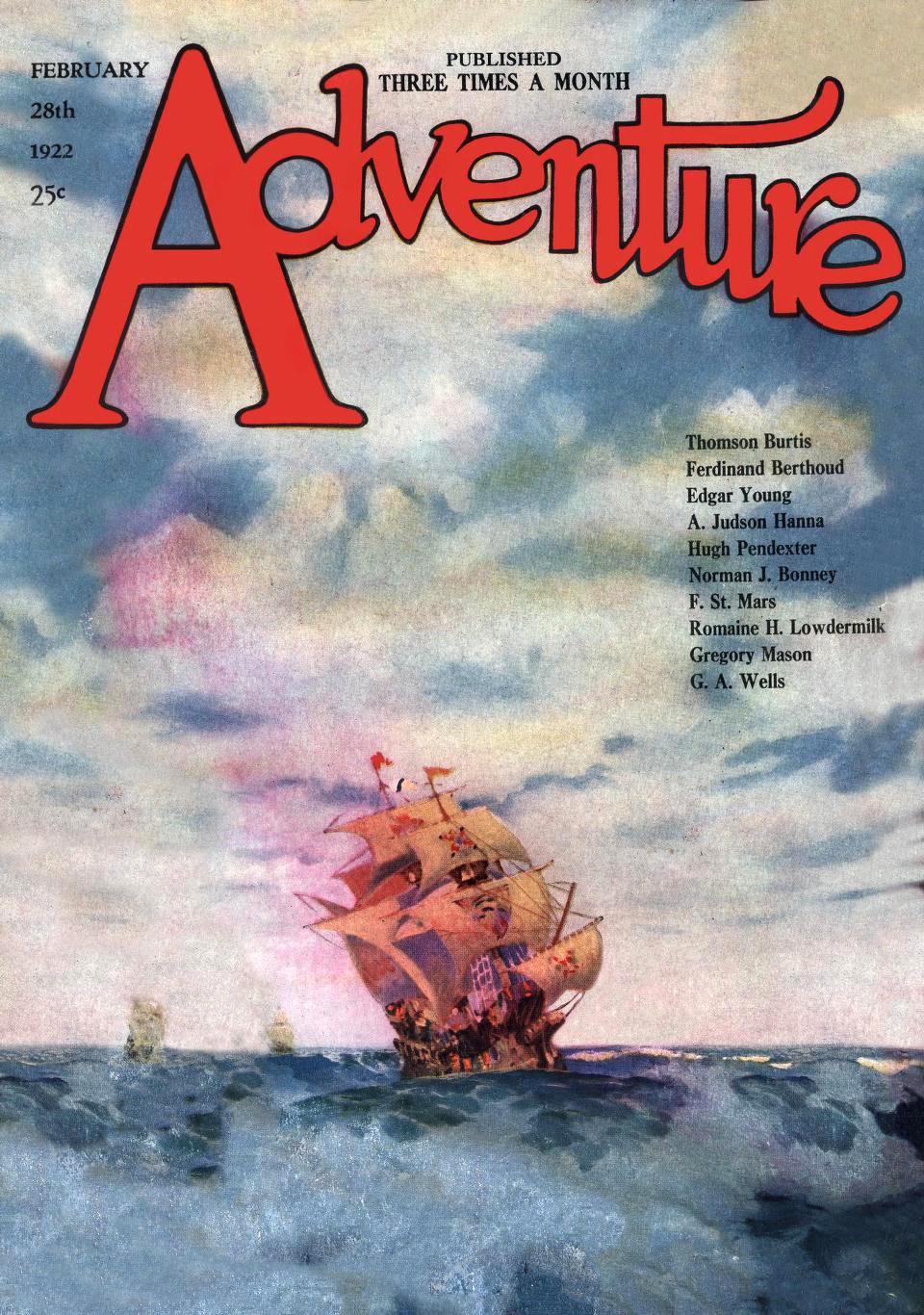
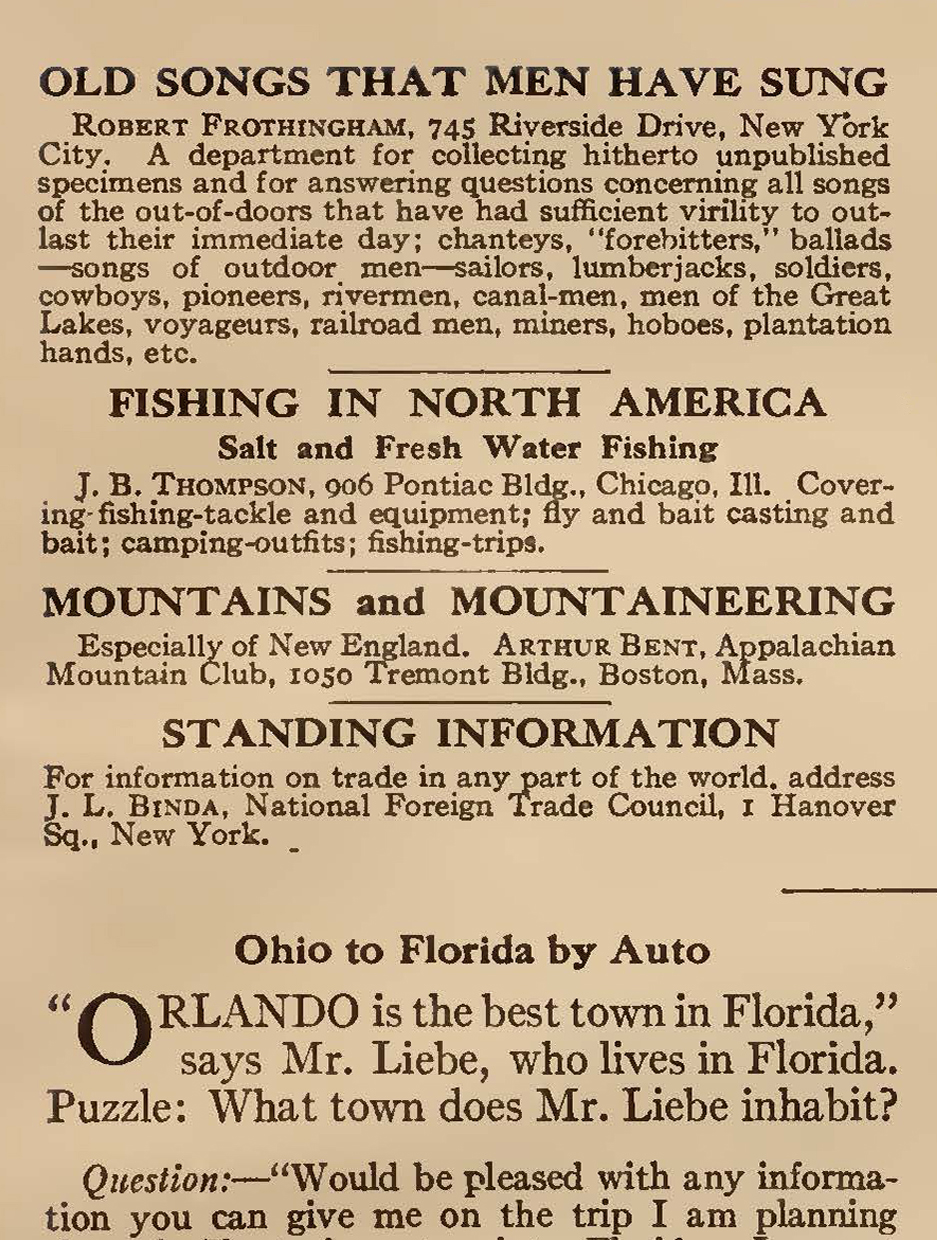
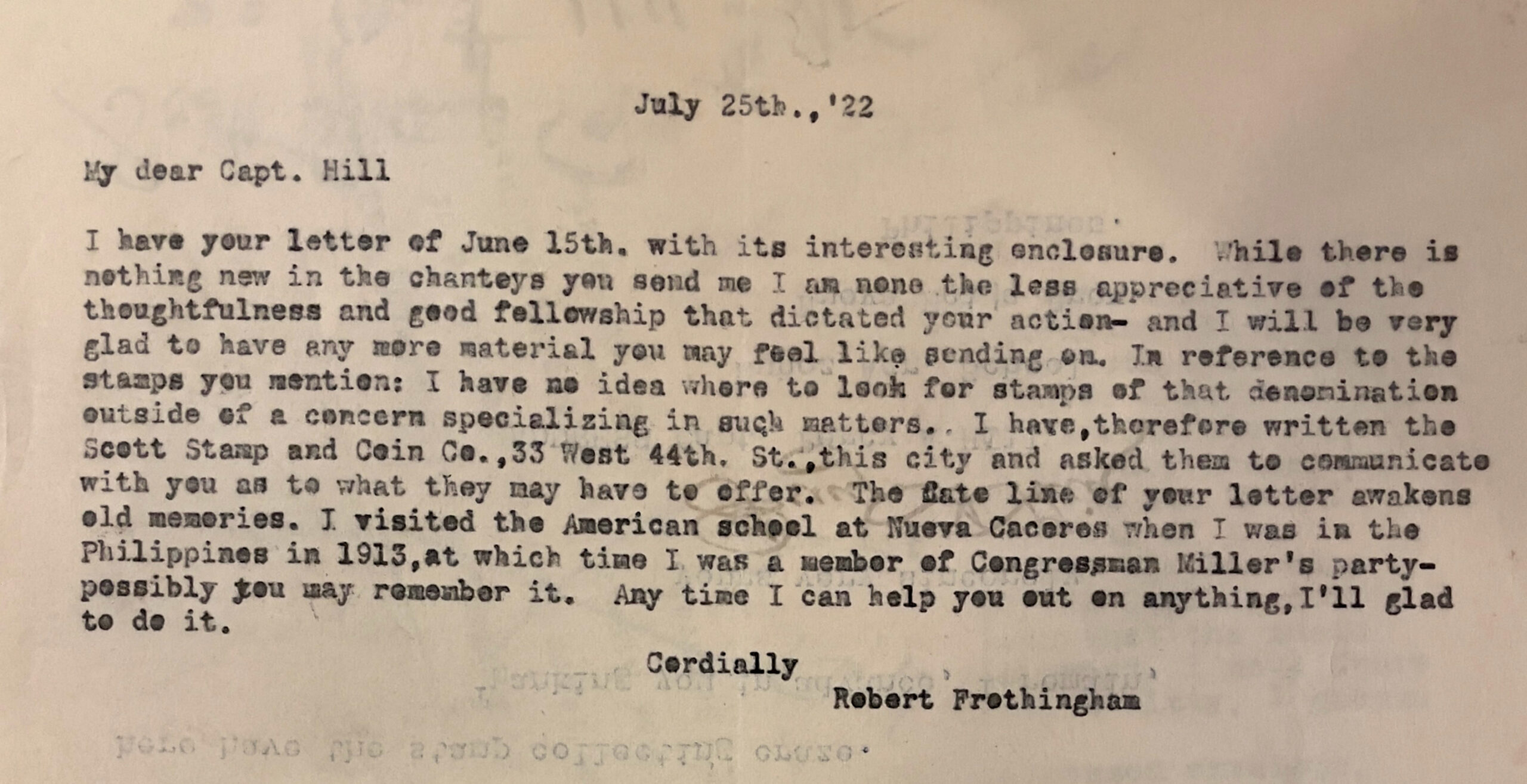
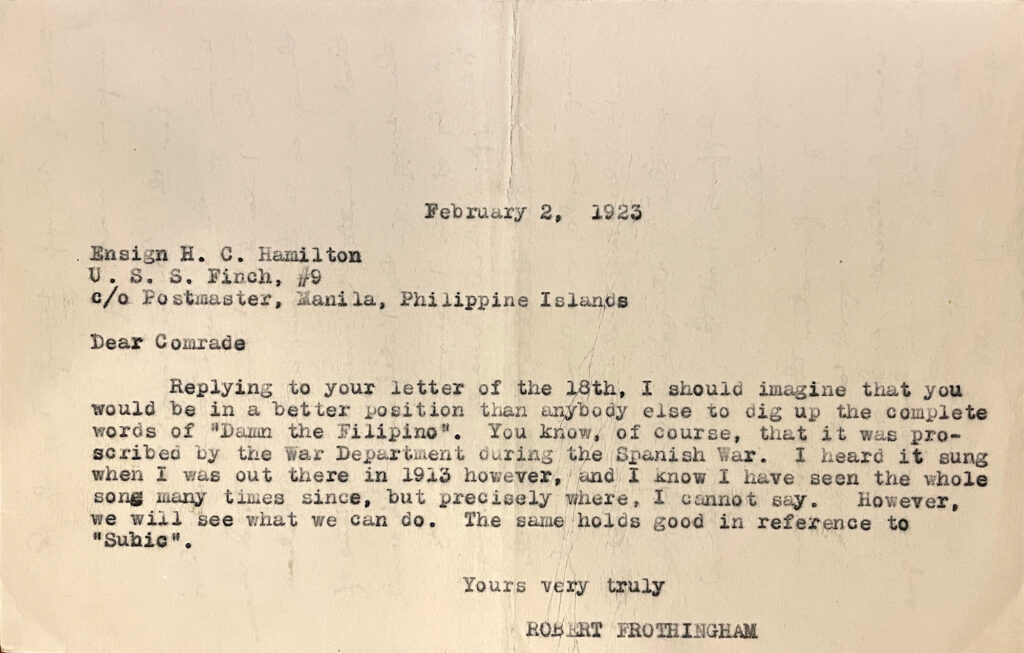
Frothingham’s correspondence is primarily between him and people submitting folk songs to a column in a pulp Adventure magazine called “Old Songs That Men Have Sung,” which he founded in 1922 to collect unrecorded songs. Gordon took over the column in 1923, which explains why Frothingham’s work is in the archive—it was added to the many thousands of songs that made up Gordon’s collection.
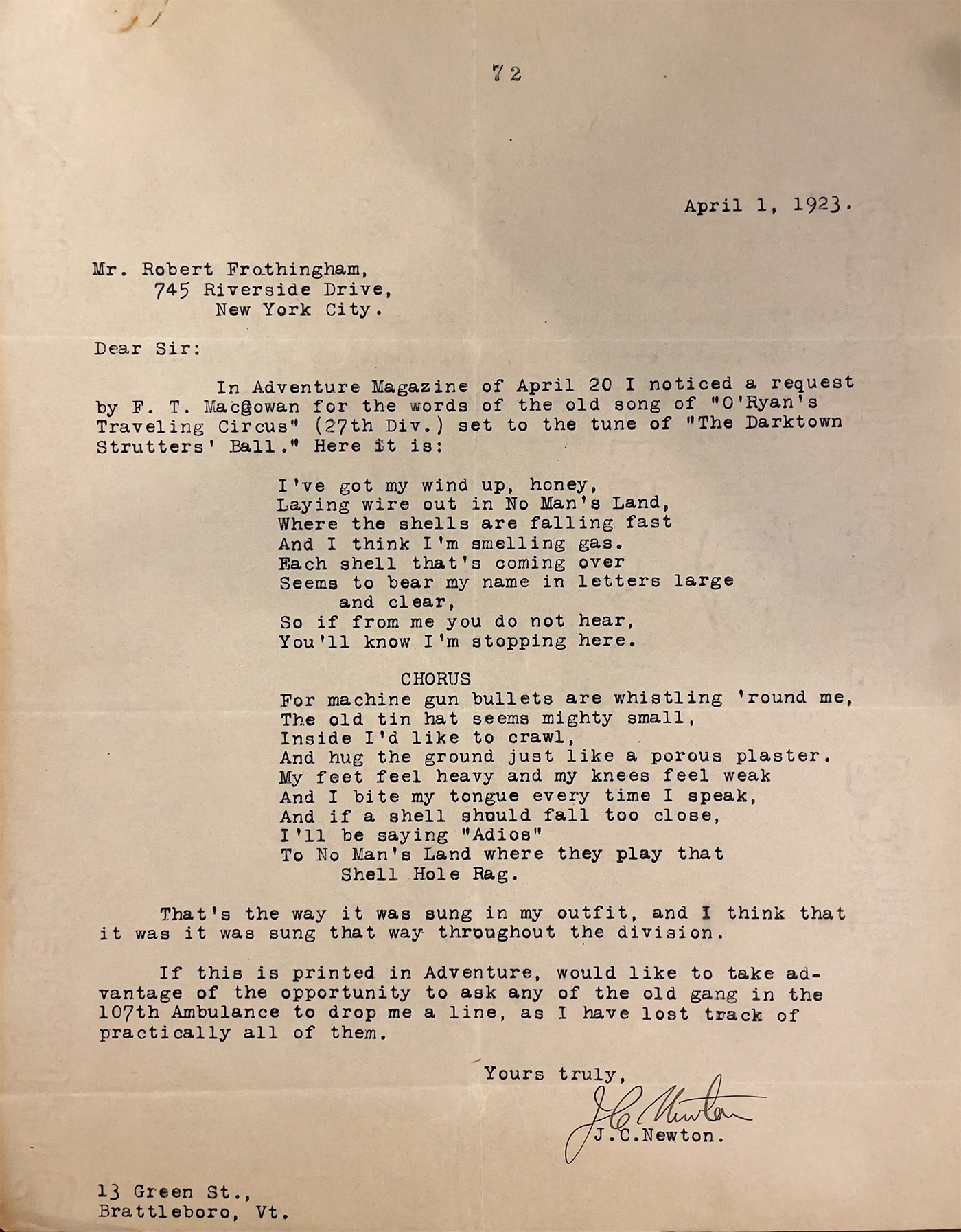
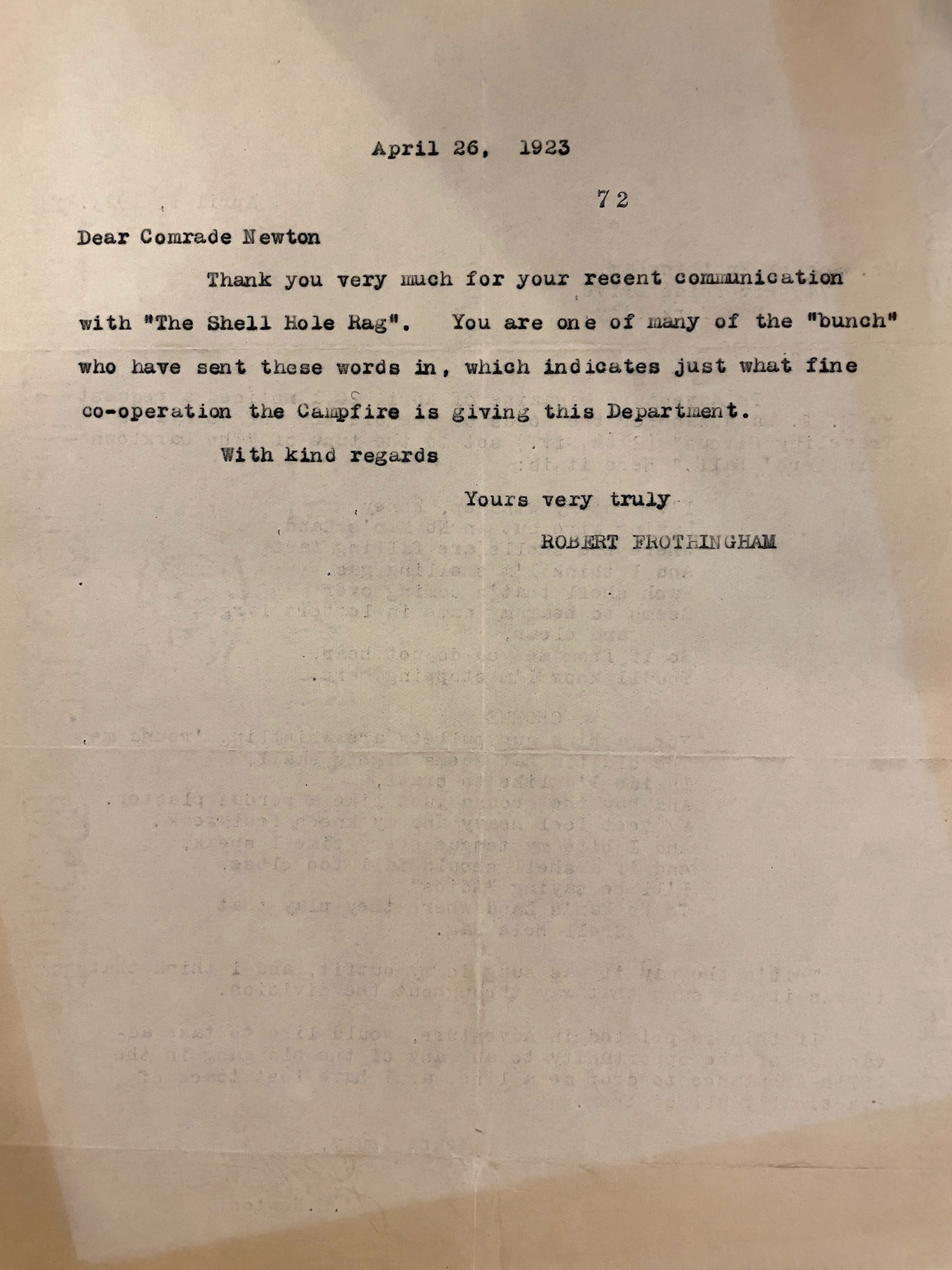
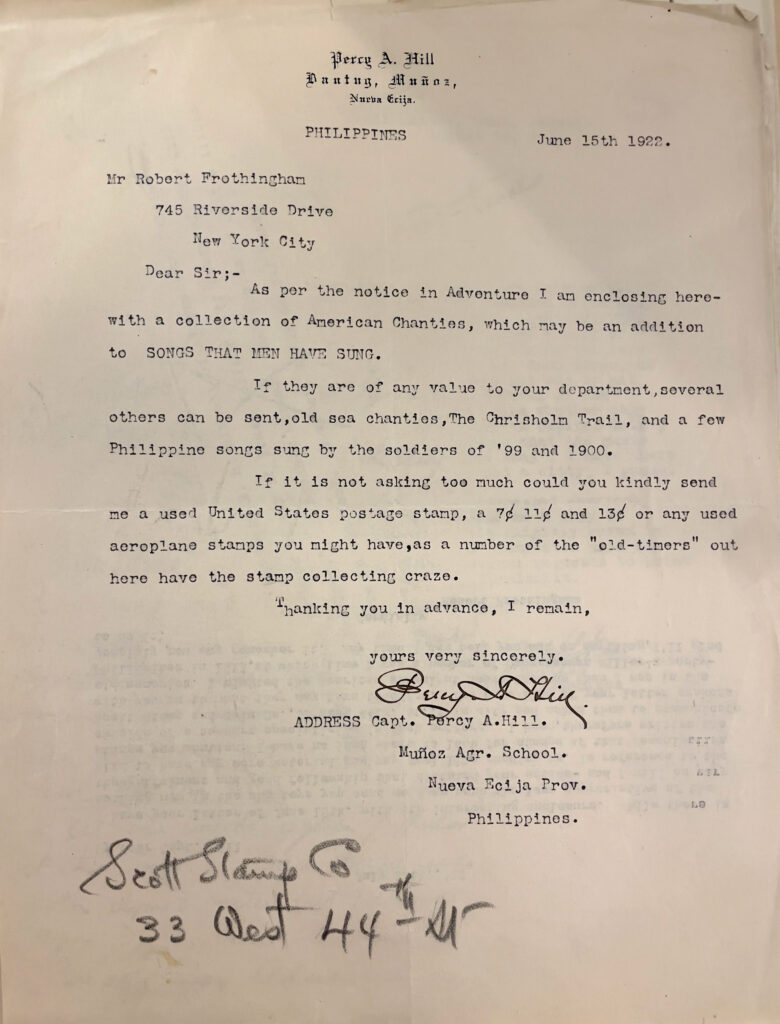
Initally, I wasn’t sure how to understand the letters within the context of my research. (What did they tell me about this time and place?) They were filled with men mentioning songs, which Frothingham thanked them for and possibly included a quick note or anecdote, or people asking to buy songs, and Frothingham telling them that is not what the column is for. (This apparently happened a lot.) But then I started to see that the coorispondance as representing a cutural demand. These songs, a least among a certain population, were a point of great interest.
Raises questions about what kind of identity they were trying to preserve. For Frothingham, based on his anthologies and writings, he was interested in “the”red blooded” American
[Discuss population]. Why? Folksongs are cultural artifacts that tie into a people’s identity. Collecting them can be an act preserving that identity.
“Colloquially speaking, this is a bunch of verse intended to appeal to red-blooded men and women. Strong, virile stuff, it sings the Great Outdoors from the Arctic Circle to the Tropics, from the Occident to the Orient. It runs the gamut of man’s emotions in-so-far as they can be stimulated by wanderlust, camp and trail, pioneering, seafaring, piracy, sport, battle afloat and ashore, gold-seeking, vagabonds, animals, the Great War, the joy of accomplishment and the bitterness of failure. Our own glorious West is here with its ever-present glamour of mountain peaks, mining camps, cowboys, desert and illimitable plains.” Frothingham, Songs of Men
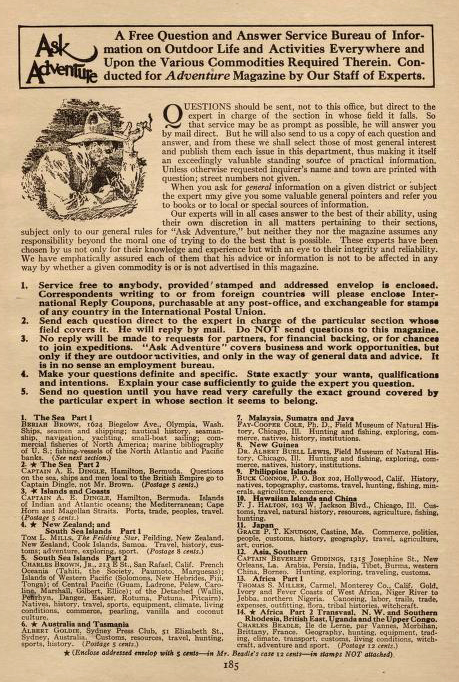
Ask Adventure column staffed by experts
through Adventure that Gordon, a prolific folklorist… incorperated into his collections (LOC).
While going through the coorispondance, I did not find any monumental, like a letter he received by someone of great signifigance (at least in the context of my research) but I did began to understand more about Frothingham. I knew he had a passion for language, as illustrated by the many articles he wrote for outdoor magazines like Field and Stream (here’s one), the lectures about the hunting trips and excursations he went on, the eventual publishing of books, Trails Through the Golden West, such as and the loquaciousness of his letters to Jimmy Simpson. (The man loves a good turn of phrase.) But I had not been thinking as much about the masculine nature of his work, how he celebrates the quality, and how indicative of this time period it is.
which can be applied to women as well. The colunm, after all, is called “Old Songs That Men Have Sung,”
Nastalgia
. (I mean masculine more in the abstract sense as a quality that can be aligned with either men or women.) the name of the column illustrates this point in a gendered way, “Old Songs That Men Have Sung,” but there is also one of his
and that he eventually became
fancied himself a writer and orater, even before he was paid to do so. (His loquaciousness
what was likely Frothingham’s, the founder of the colum, chose for its title, “Old Songs That Men Have Sung.” Frothingham communicated through the ariticles he wrote for outdoor magazines like Field and Stream (here’s one) and the publishing of book anthologies
“Old Songs That Men Have Sung” in the pulp magazine Adventure, Forthingham was in charge of the column from 1922-1923
Forthingham seems to be particularly interested in the masculin… collecting to prevent loss, collecting to construct an identity
Gordon launched a collateral program of long-range research. In 1923, he began to edit the column “Old Songs That Men Have Sung” in the pulp magazine Adventure. By printing songs that his reader s requested and advertising for additional texts and verses, Gordon used the column to build up an immense and eclectic collection of folksong as well as a broad network of correspondents and informants from all over the United States and overseas. His reputation as “the Adventure man” made his name familiar to many sailors, convicts, and hoboes in the Bay Area before they met him with phonograph in hand.
Americanness
Robert Winslow Gordon papers
Forthingham’s books = made me think of “Americana” and went to LOC
Approximately 137 letters containing queries and songs for Robert Frothingham, editor of the “Old Songs that Men Have Sung” column of Adventure Magazine, 1922-1923 as well as correspondence to and from Frothingham while he was editor. Gendered, Forthingham collecting and in the case of his anthologies curating
Not disimilar from the the idea of collecting natural specimins as conservation, what is collected shapes the narrative, who controls the content, how do they frame it. In the first issue of the Journal of American Folk-Lore, and they use darogatory terms
How is American identity constructed and recorded—who gets recorded.
https://tile.loc.gov/storage-services/service/gdc/gdcfindingaidpdfs/af023011/af023011.pdf
Robert Winslow Gordon papers Finding Aid
“Off the Beaten Path in the Philippines” lecture in December 1923 (16) at the Brooklyn Institute of Arts and Sciences’ Department of Education, for which Frothingham was a member of the Board (2). (1923-1924 Prospectus)
←Smithsonian Institution Archives | Library of Congress Manuscript Division→