
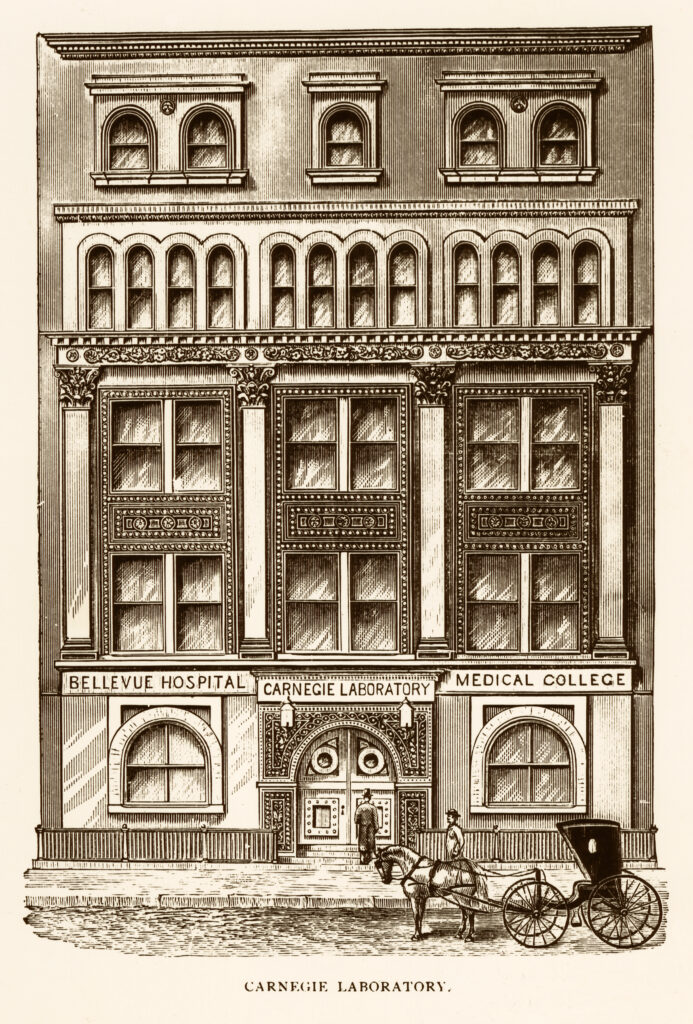
Louise Davis Brooks (formerly Dudley Davis) (1872-1941) graduated from Bryn Mawr College in 1887 with a degree in chemistry and biology (citation). While enrolled, she attended the renowned Marine Biology Laboratory, where she studied embryology (MLB). In her last year of college, she studied bacteriology at the Carnegie Laboratory (who’s who), where she met her husband, renowned pathologist Harlow Brooks (obit).
A print of an engraving of the front entrance to the Carnegie Laboratory (Image courtesy of The Lillian and Clarence de la Chapelle Medical Archives at NYU)
Division of Pathology, Bacteriology, and Disinfection
In 1888, Louise began working in a laboratory at the Division of Pathology, Bacteriology, and Disinfection (citation). Founded in 1883, the Division was part of a major leap in New York City’s efforts to detect disease and prevent and control it. She worked under the lab’s director, William H. Park (1863-1939), and Anna Wessels Williams (1863-1954), both major figures in the study of disease, who made major breakthroughs. Williams, working in Park’s directed lab, isolated a strain of dipptheria bacillus, the crucial breakthrough needed to create an antitoxin (NIH citation), which was given freely to to impoverished New Yorkers (NIH citation).
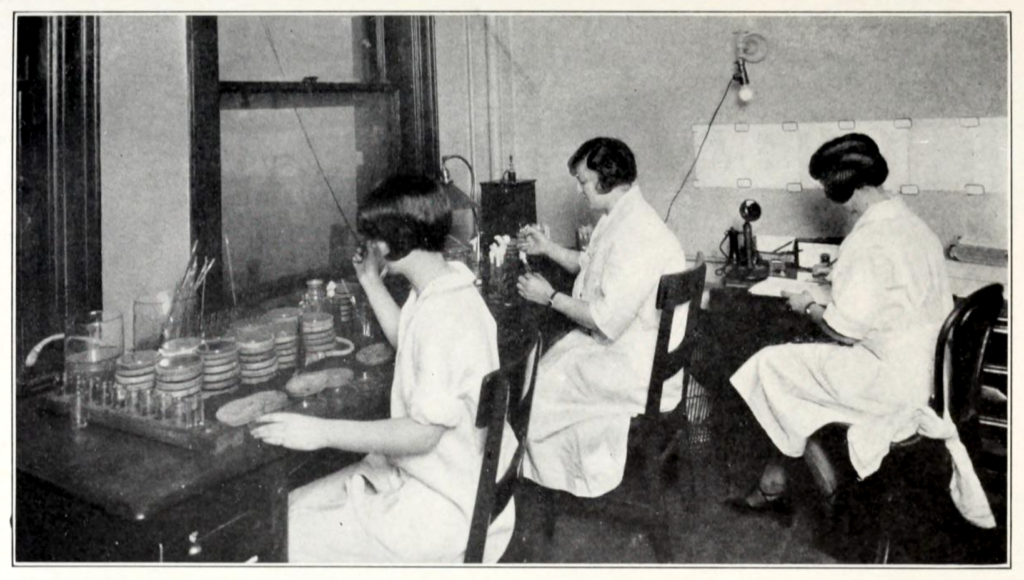
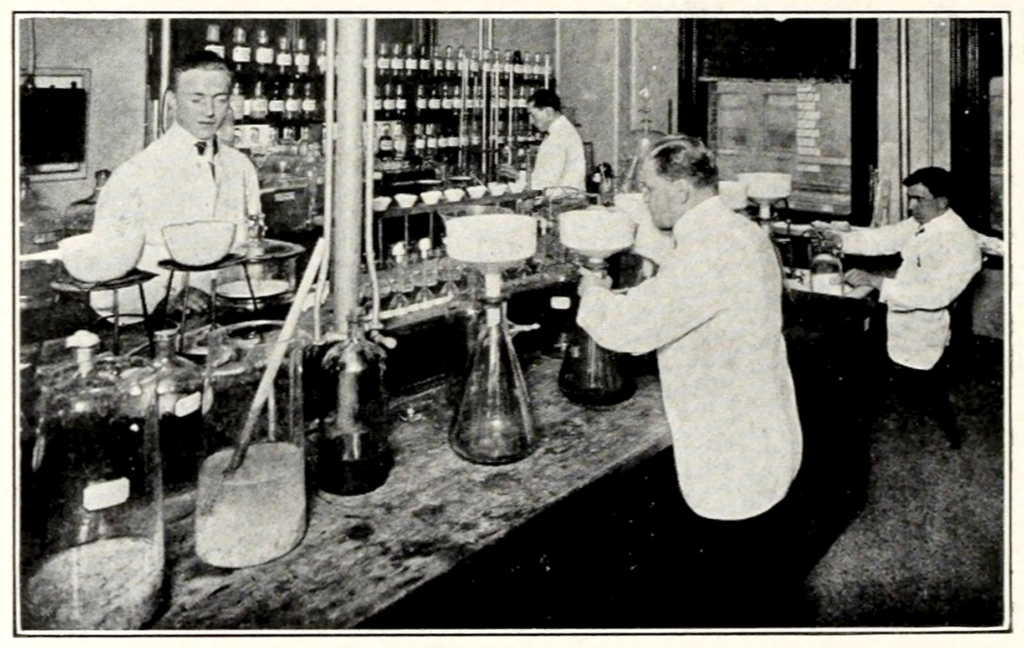
At the Lab, Louise did her own diphtheria-related study on scarlet fever cases associated with it and wrote the paper “Preliminary Report on Bacillus Resembling the Bacillus Diphtheria Found in Certain Scarlet Fever Cases,” which Park presented at a gathering of the New York Pathology Society (Proceedings and Medical Record 1898). The title appears to have changed for its 1898 publication in Medical News, where it is called, “A Bacillus Resembling the Diphtheria Bacillus in all Cultural Characteristics, but not Producing Diphtheria Toxin.”
Images from Who’s Who of Among the Microbes, written by William H. Park and Anna W. Williams