

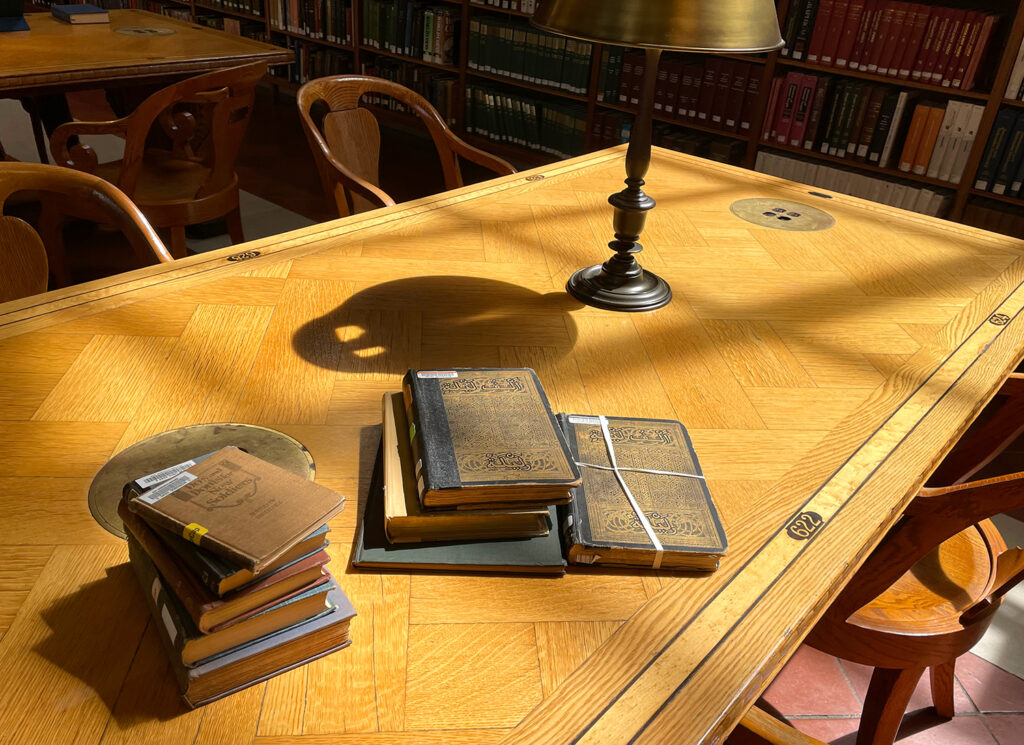
I searched the New York Public Library’s catalog on the chance that they would have anything: It did not surprise me that they had more widely published works by Nichols—they are fairly common—or even Frothingham, but I was a quite surprised they had Harlow Brook’s Do’s and Don’ts for Soldiers, which is on the rare side, and I was even more surprised to find one of McAleenan’s actual books, Leaves from a Wyoming Diary, and original HS Nichol catalogs from his shops in London and New York.
Some of the books I requested from them were in off-site storage—something I could see when viewing their information in the catalog. With this in mind, I made sure to request them a day or two in advance to ensure they were there waiting for me. It is also worth mentioning that some of the books had been digitized and made available in places like HathiTrust. While these are useful resources, they did not help me understand the physicality and decorative nature of the books, which, in some cases, were more important to me.
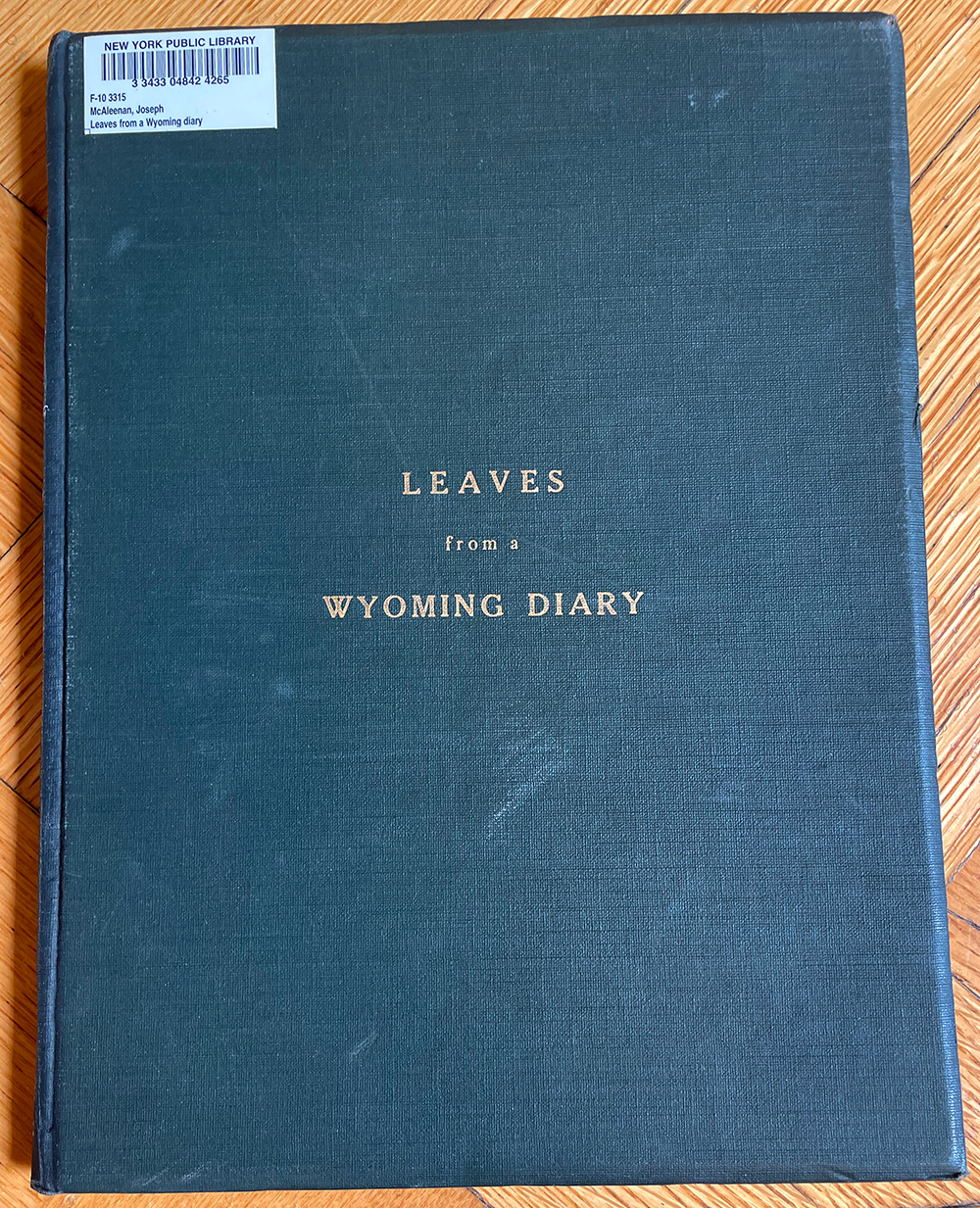
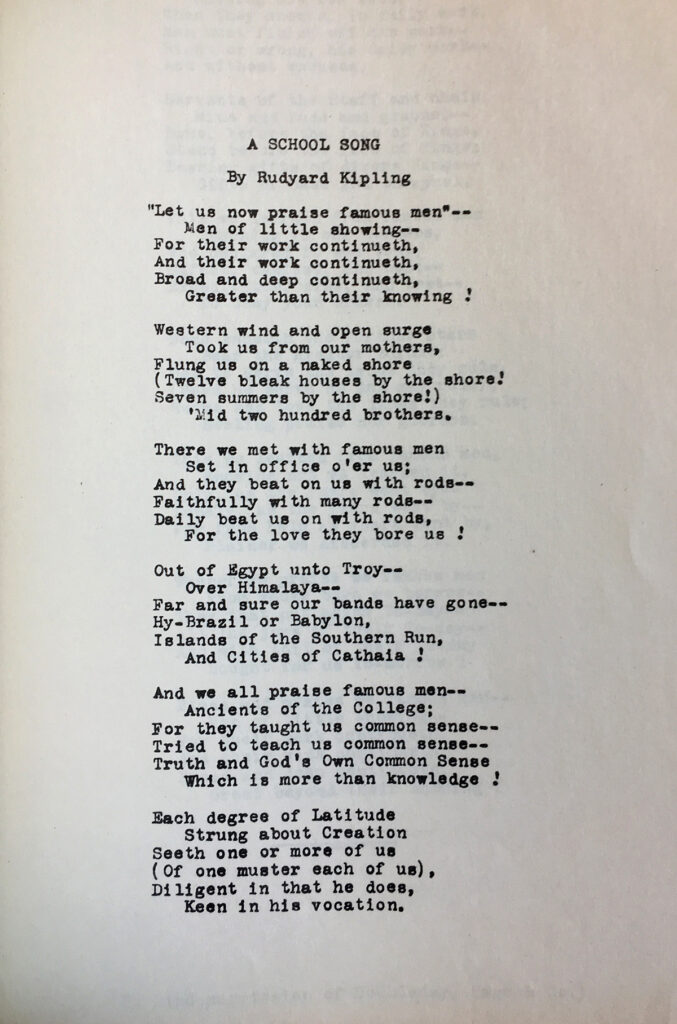
Leaves from a Wyoming Diary was a humble text, physically speaking. The typeface is utilitarian, like that of a typewriter… Its title is striking, as it’s reminiscent of Walt Whitman’s Leaves of Grass. The green binding, though considerably more muted, is also reminiscent of its first edition. When you open it up, the first page reads, “But thirty copies of this volume have been produced by a special photographic process. Each of these is autographed by the author.” The “special photographic process, likely means Nichols used a Photostat machine, an early copy machine, essentially. This explains why it looks like it was written with a typewriter rather than typeset and printed on a press, because it probably was.
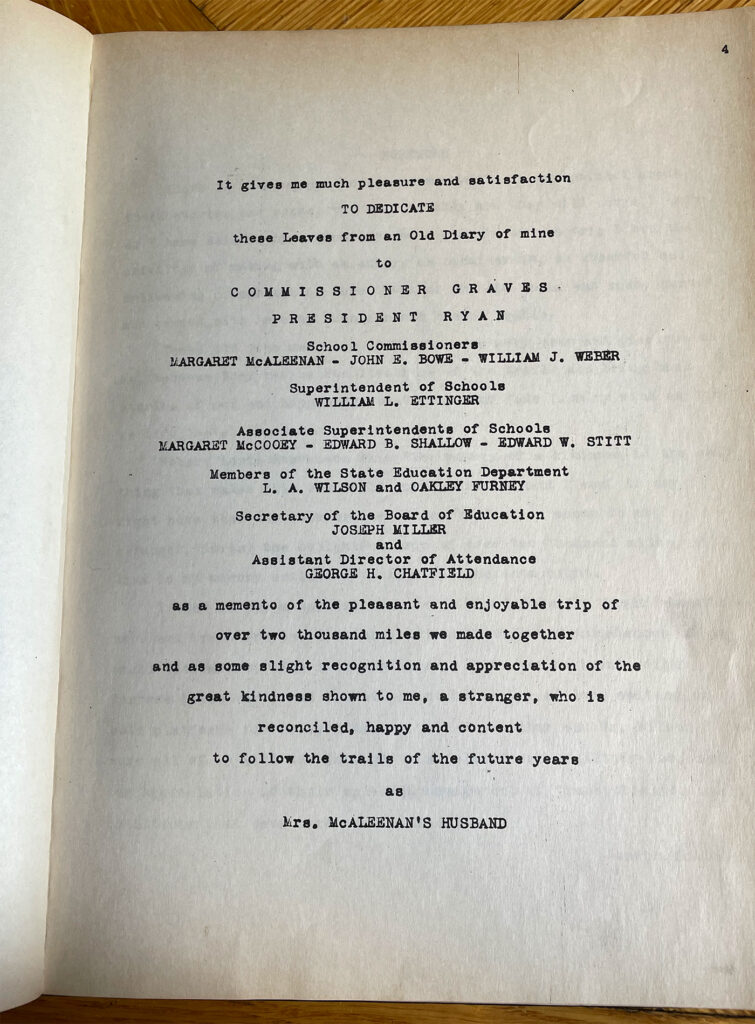
The book’s contents are more eclectic than McAleenan’s other books. Dedicated to members of the New York City Board of Educaiton upon which his wife, Margaret, served.
—-, it seems like an effort to entertain the audience with a collection of—-.
On its dedication page, there is a wonderfully telling bit of text, McAleenan refers to himself as “Mrs. McAleenan’s HUBAND,” emphasizing the word husband by putting it in all capital letters. It became clear from letters McAleenan wrote to Hayes and Simpson, as well as mentions here and there in his books, how much he loved and respected his wife, Margaret, calling her —–
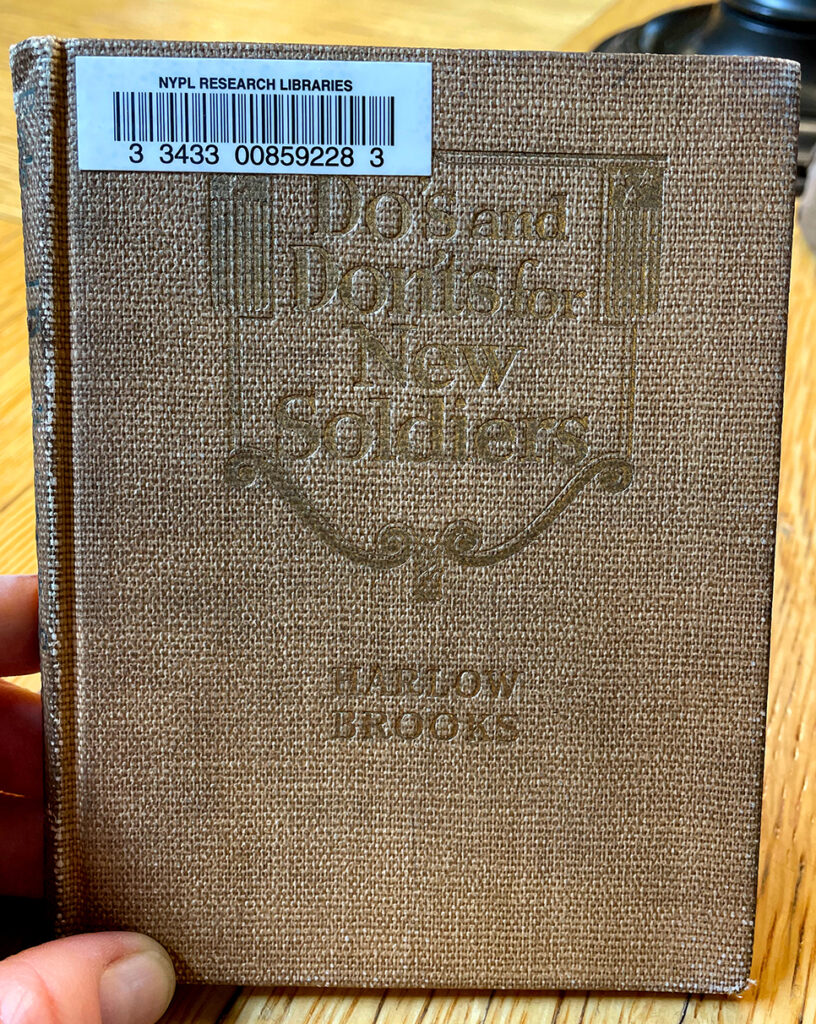
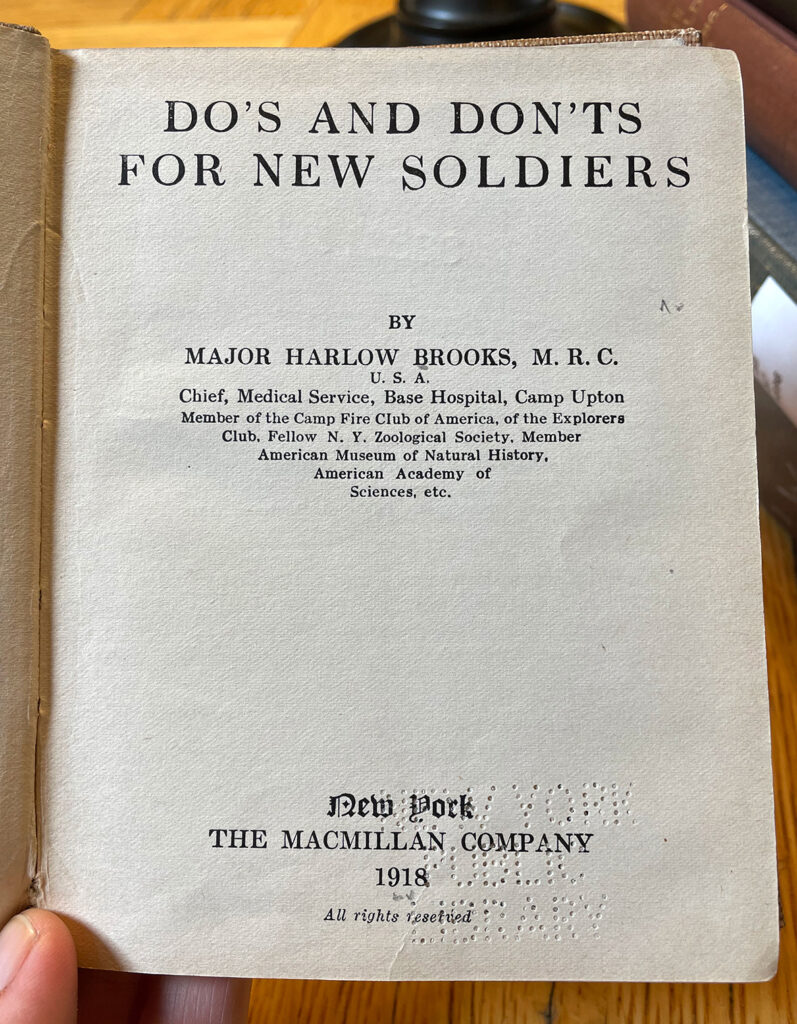
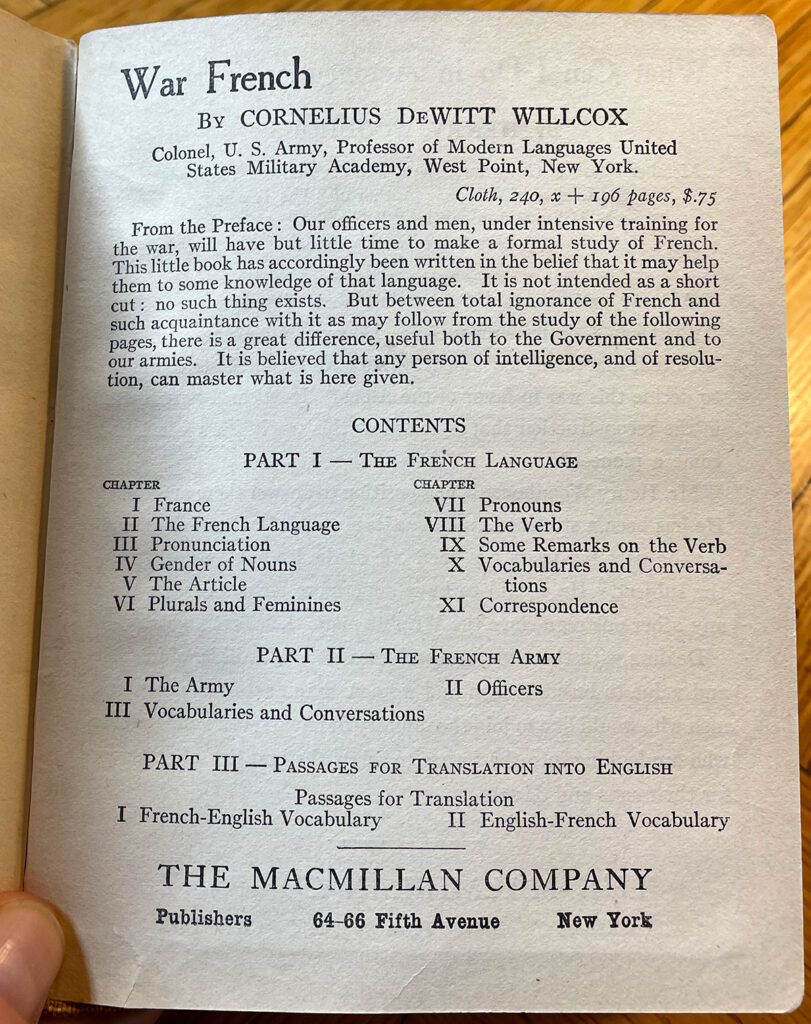
I was struck by the physicality of Brooks’ Do’s and Don’ts for New Soldiers, which is meaningful in its design. It is thin and light, its binding is durable, and it would fit in a soldier’s pocket. (There is a digitized copy of the book in HathiTrust, which is useful for accessing its content, but it fails to give a sense of the book’s materiality, which turned out to be the most important information for my understanding of the text.)
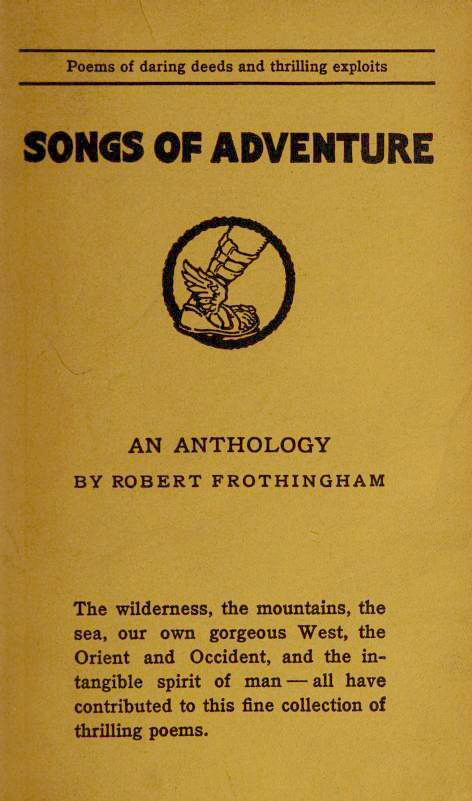
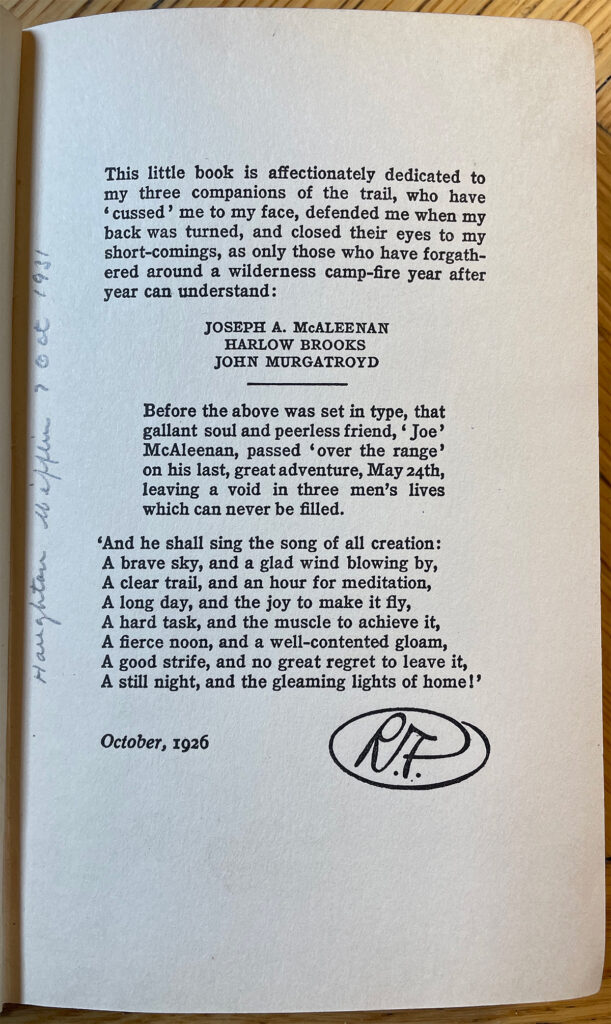
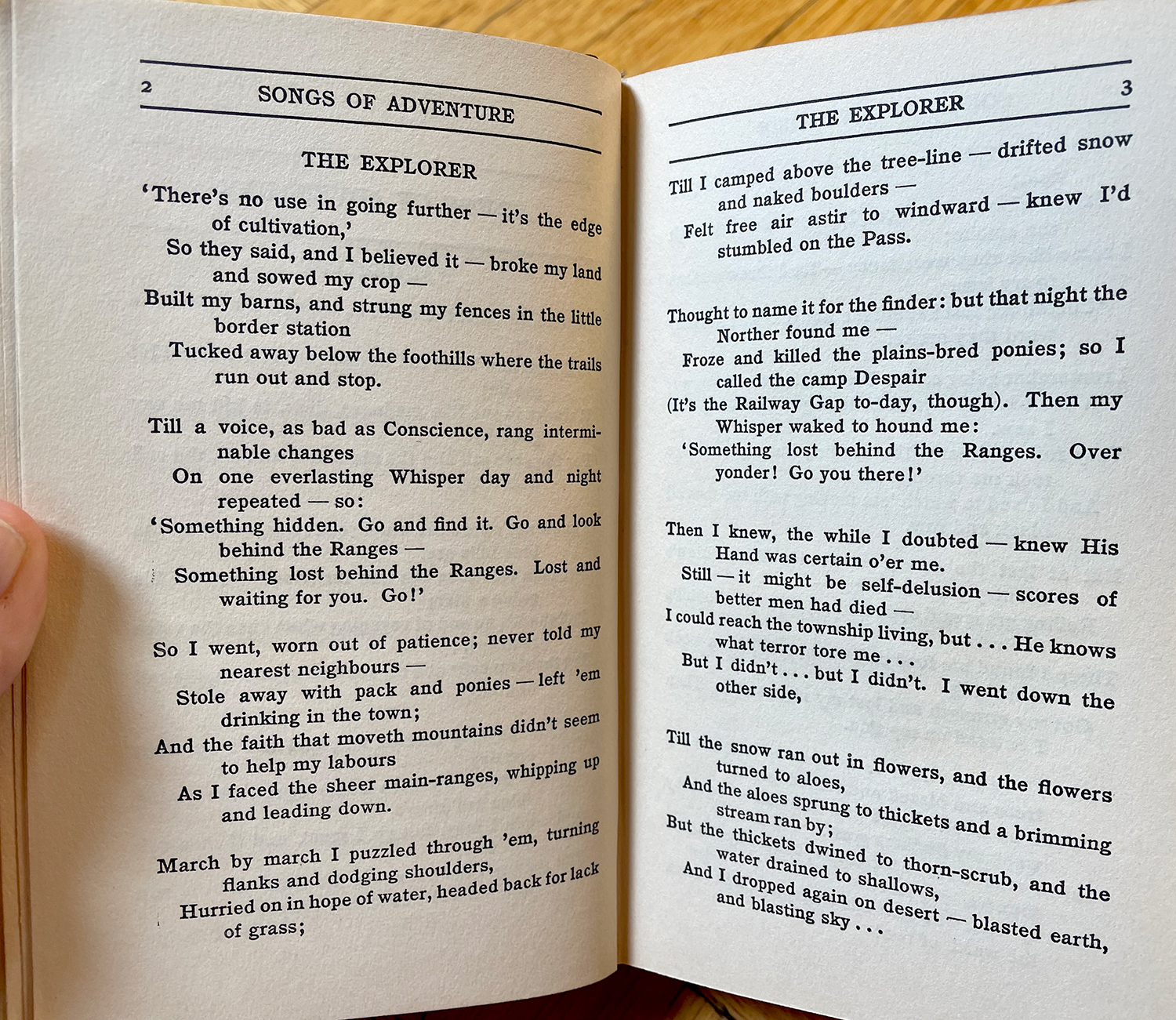
The physicality of Frothingham’s Songs of Adventure (1926) was also instructive. Though not as small and light as Brook’s work, it would easily fit in a backpack or a large coat pocket. It is simple, utilitarian in appearance, durable, with thicker, higher-quality paper, indicated by its excellent condition after being handled and stored in a library all these years.
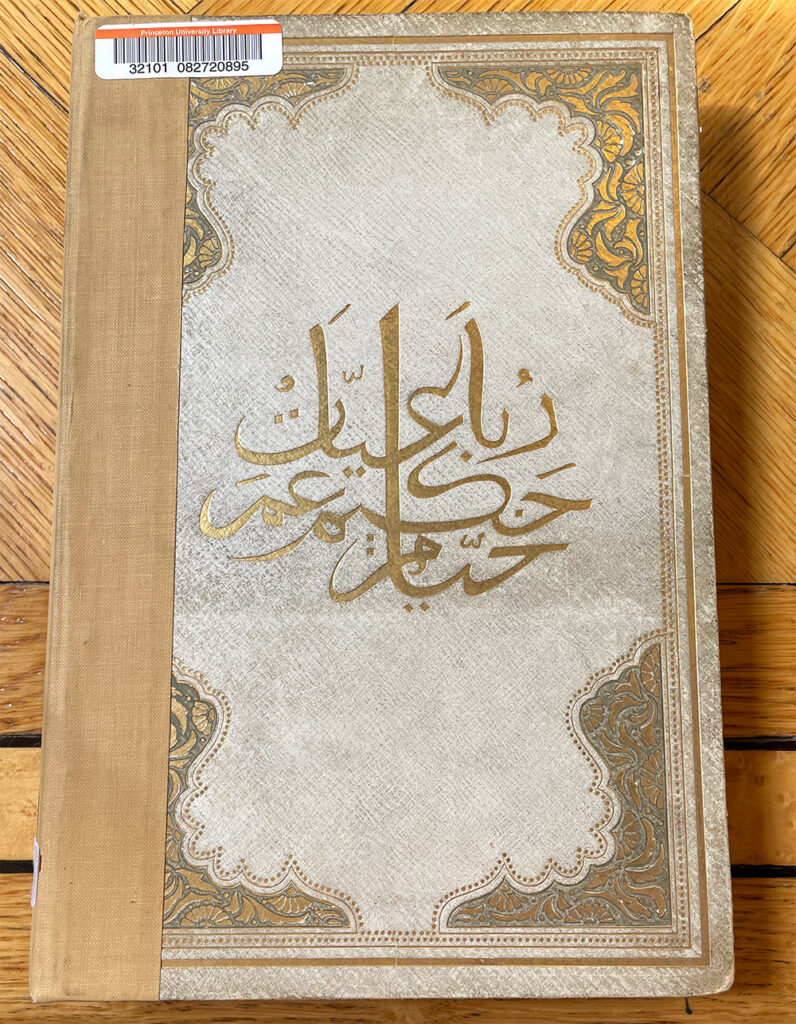
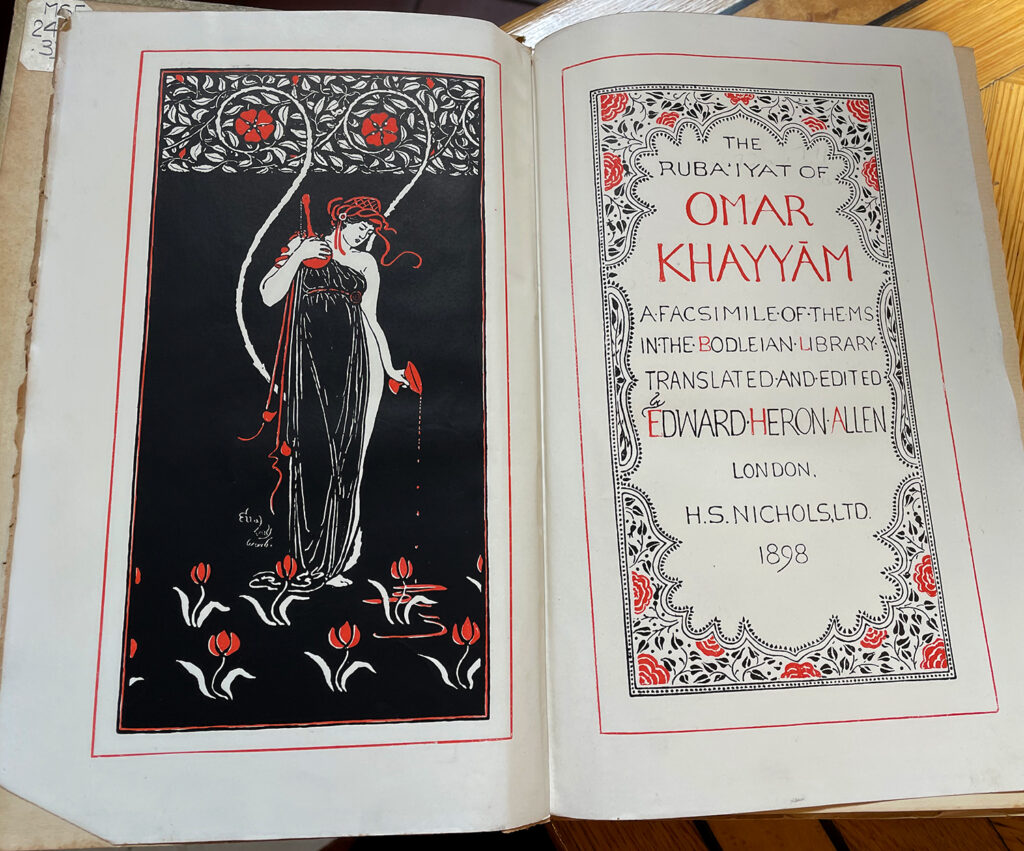
Unlike Frothingham’s book, Nichols’ are highly decorative and larger in size, intended as much to be objects of display as text to read. They were far more tattered than the other books, with binding tape having been applied to hold them together. It is likely they have been handled more, so the wear is to be expected, but they also have an artificialness to them, a bit of style over substance, with the level of their decorativeness not being matched with the same level of materials and construction. Through my research on Nichols, I would come to see this façade as indicative not just of Nichols’ work but of his character.
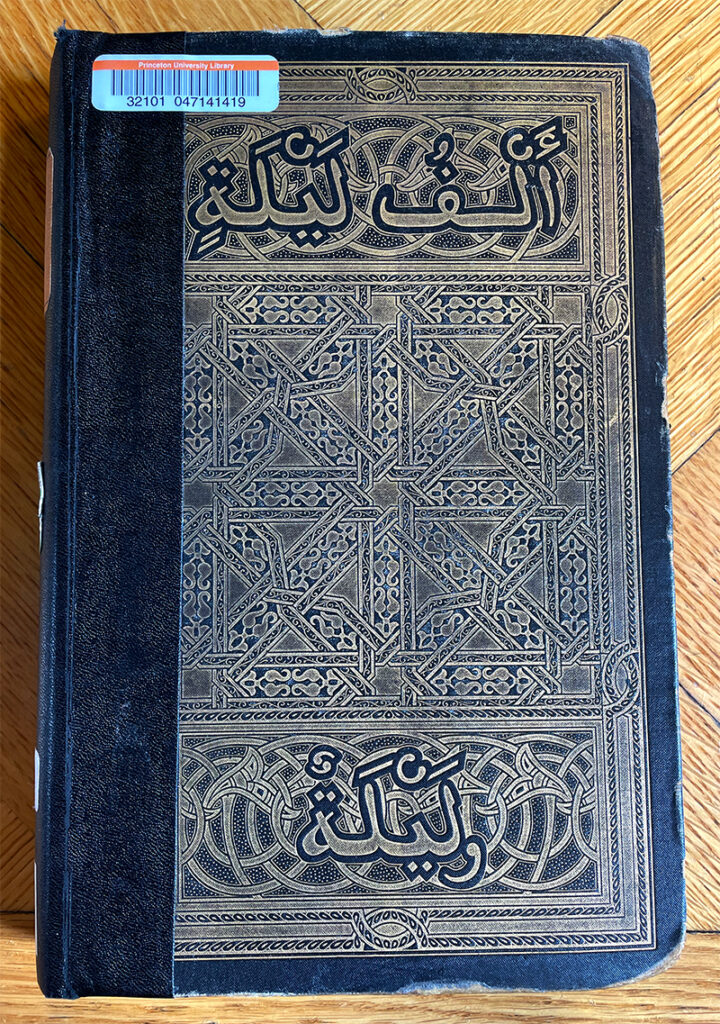
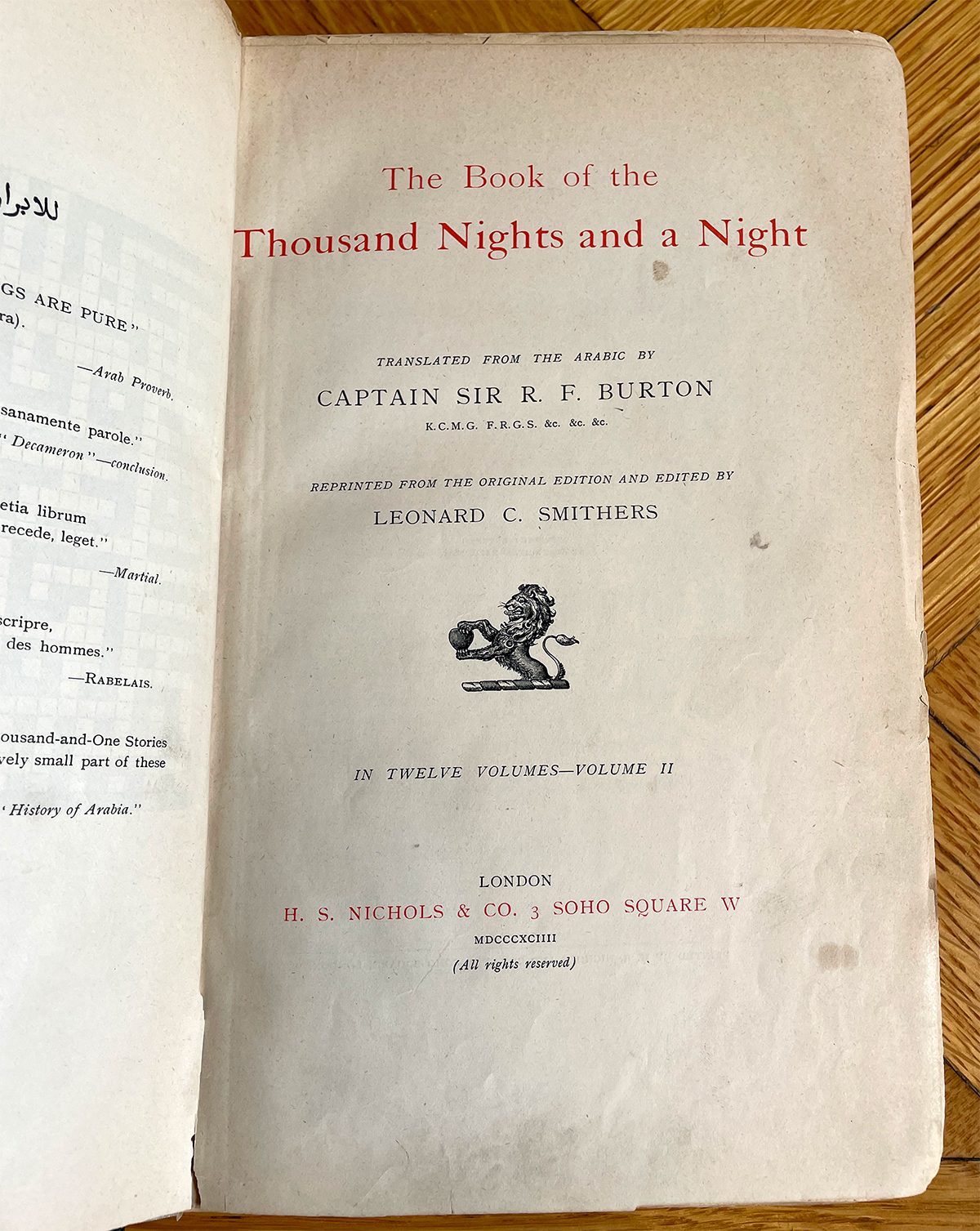
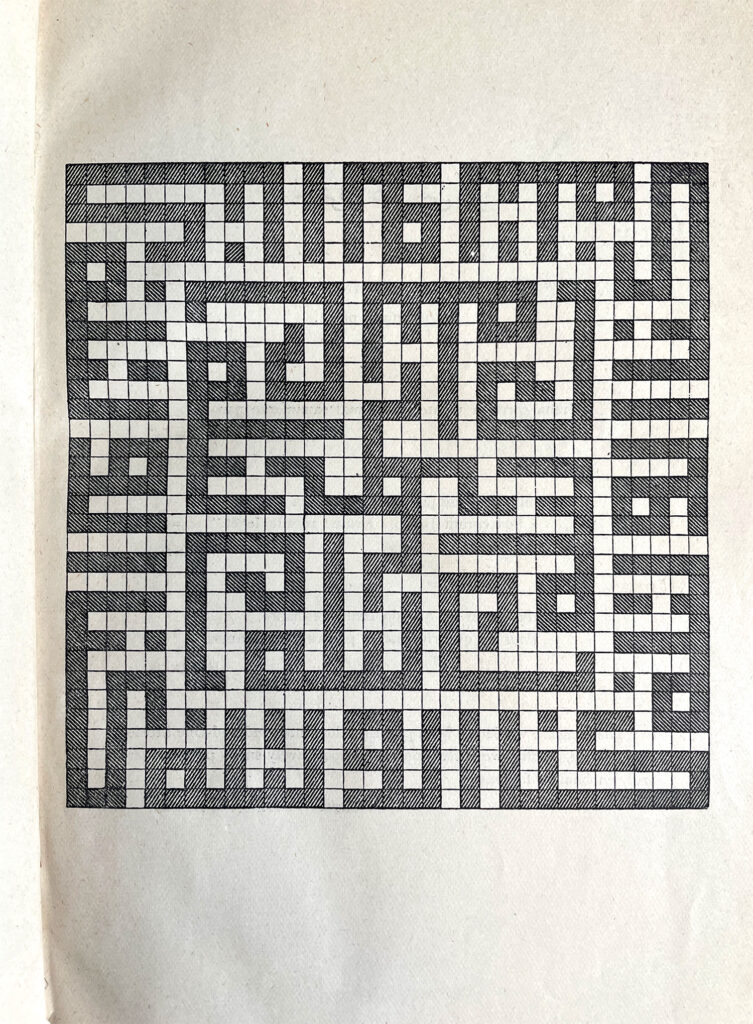
The Book of the Thousand Nights and a Night, one of Nichols’ most famous publications, was one he produced with his partner at the time, Leonard C. Smithers [describe]… Nichols role in its publishing led to an affiliation with an edition later produced by Richard Burton’s widow, Lady Isabel Burton, which I gained insight into through letters housed at the Huntington Library.
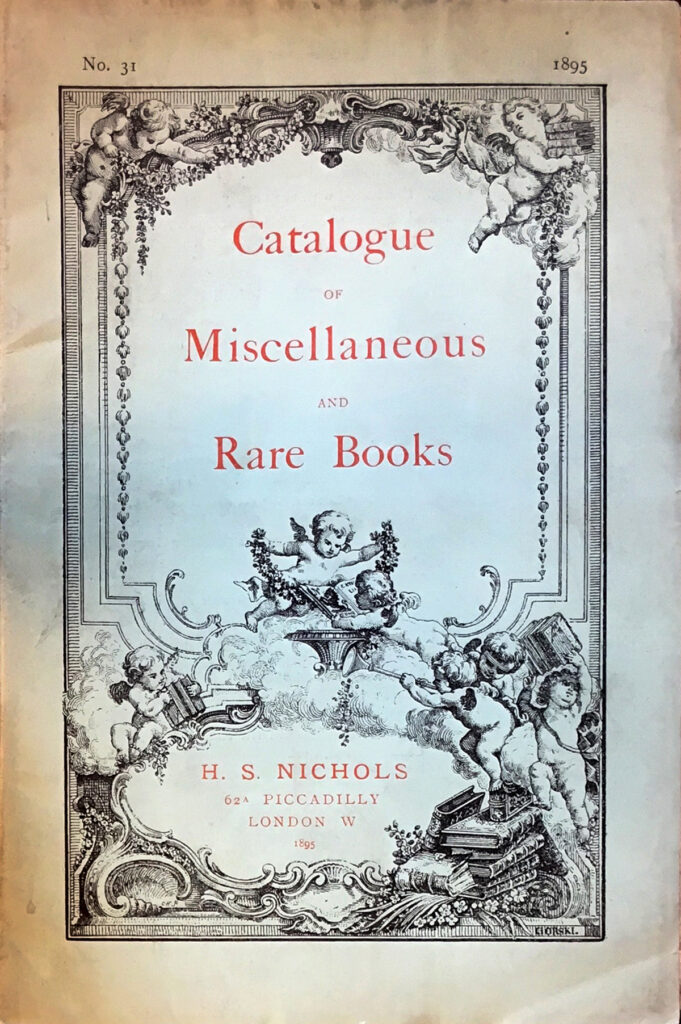
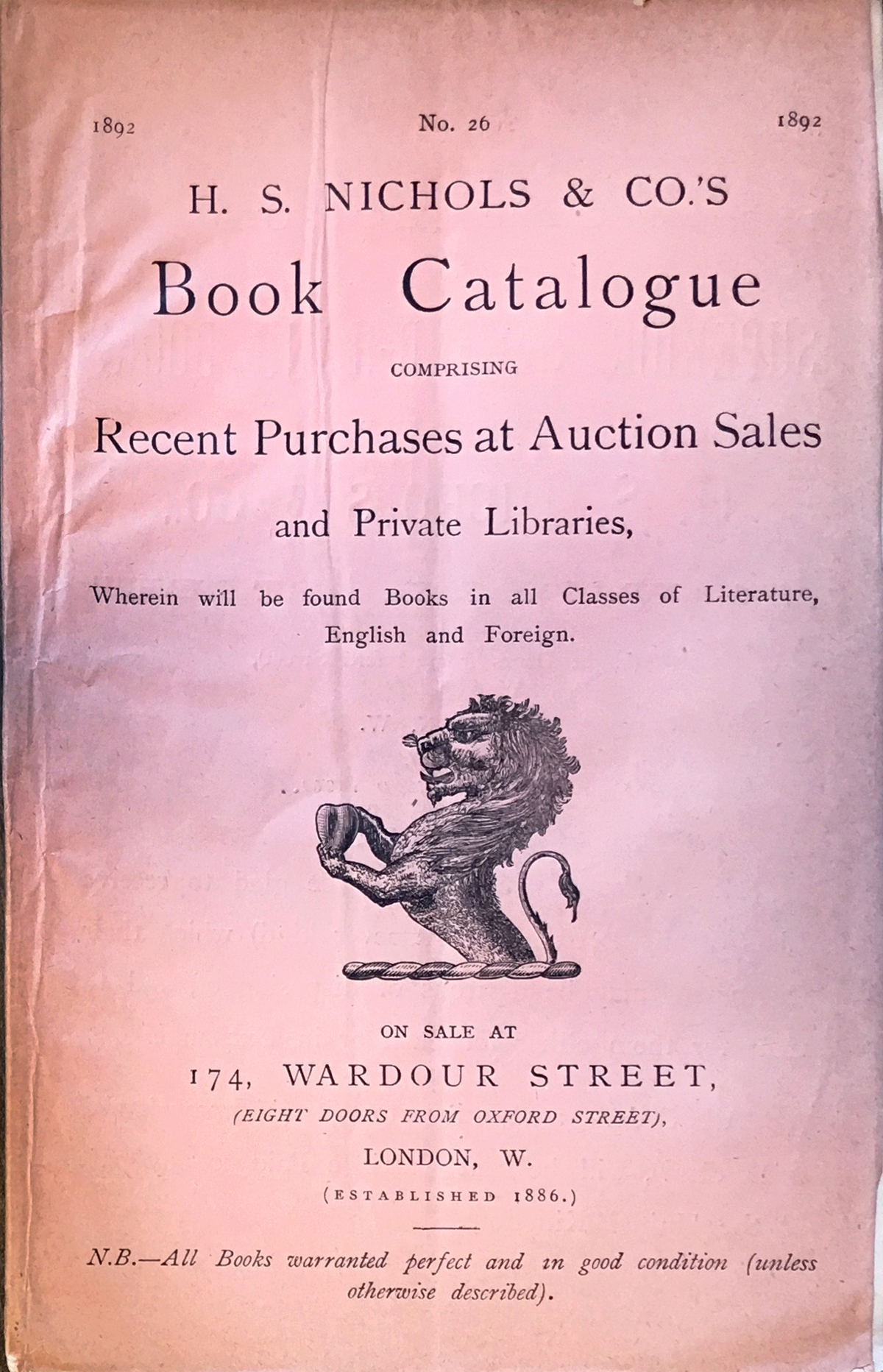
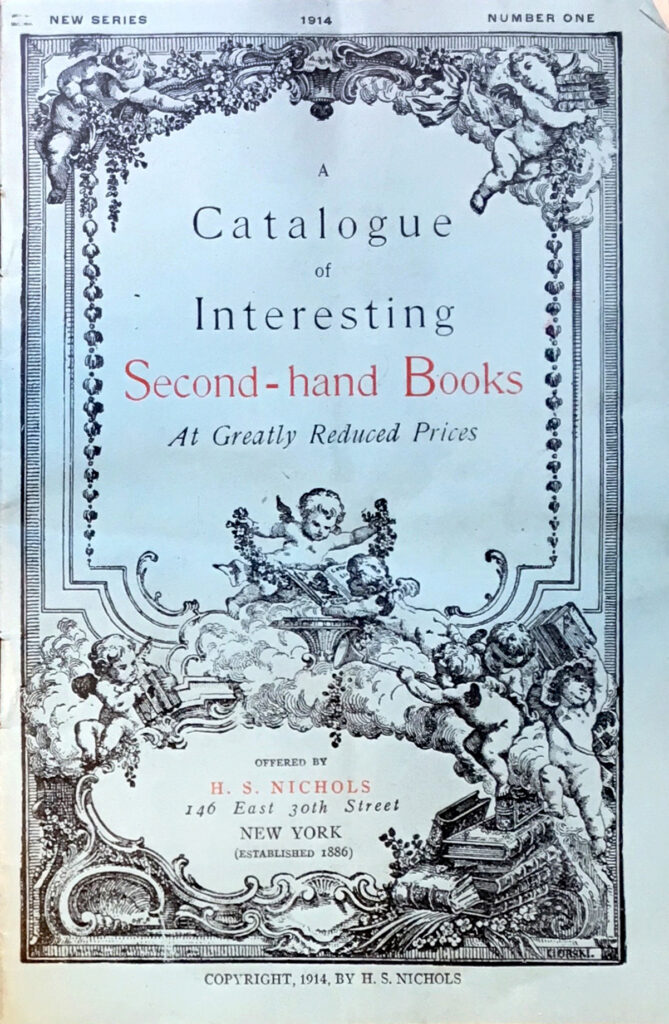
I was delighted to see that the NYPL had Nichols’ catalogs. There were seven catalogs in total, spanning 1888-1914 and reflecting his time in Sheffield, London, Paris, and New York. Their condition was considerably poor. This is not surprising given they are ephemera, meaning they were created for short-term use, and I was just lucky they had been preserved at all and not disposed of long ago. They listed a wide range of works from Classical and canonical to subject-driven books on politics, science, history, travel, among others. The clientele he sold to would have been on a subscription list and would have received the catalogs in the mail.
While their content was interesting, what they helped me understand most about Nichols was how he marketed himself — the amiable book salesman with pristine products and a willingness to do whatever it takes to get what you need. Correspondence I later read at the Morgan Library between him and Bella DaCosta Greene, J.P. Morgan’s famous librarian, indicated these same characteristics; the correspondence I read at the Huntington Library between him and Lady Isabel Burton did not.