
Intro text…
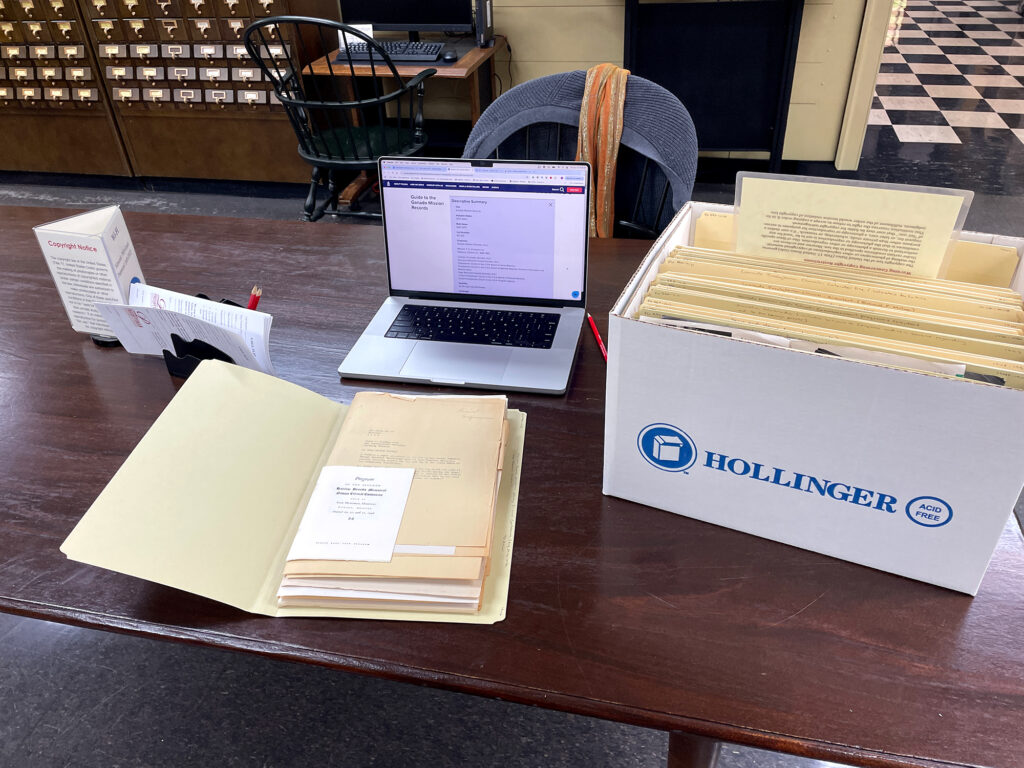
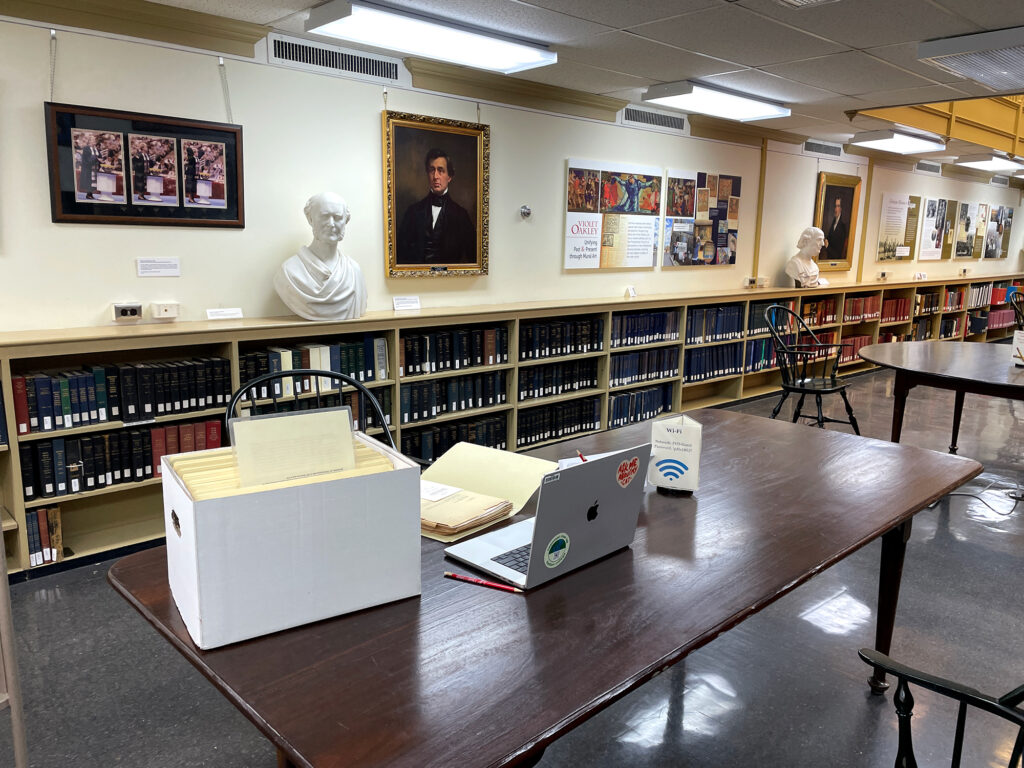
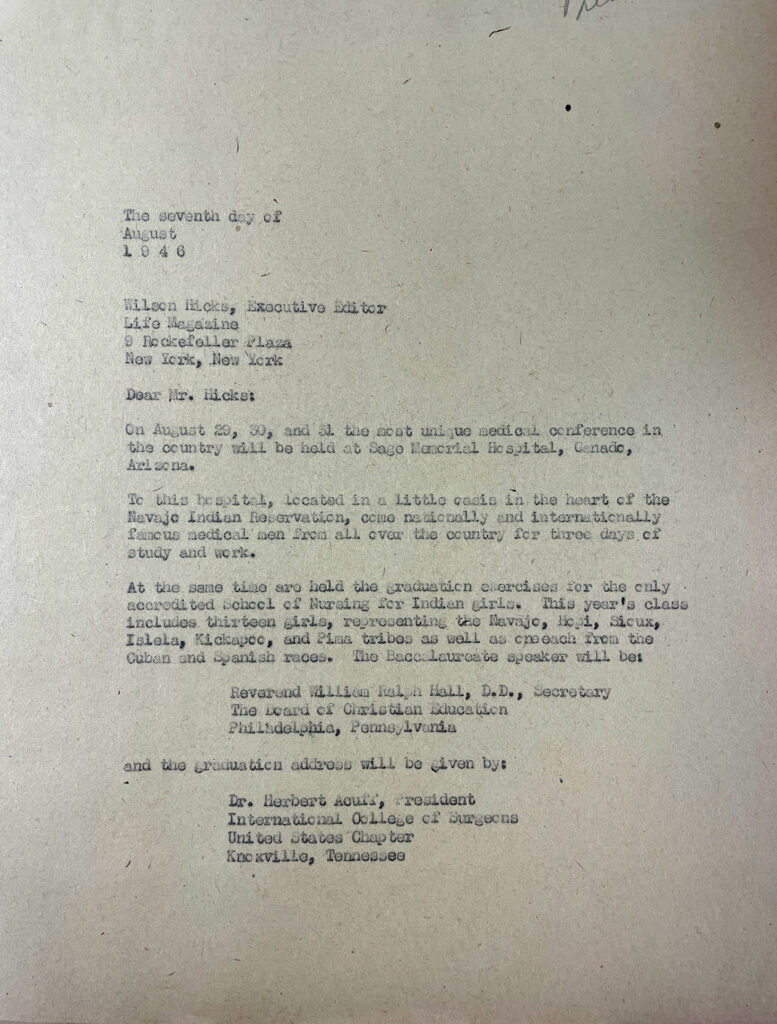
The Philadelphia Presbyterian Historical Society is the national archive of the Presbyterian Church in the U.S.A. (PCUSA) with collections that include archival records, books, pamphlets, artifacts, and more. Ganado Mission Records, the collection I was there to explore, contains materials pertaining to the Sage Memorial Hospital, to which Harlow Brooks offered his expertise over the last three summers of his life.
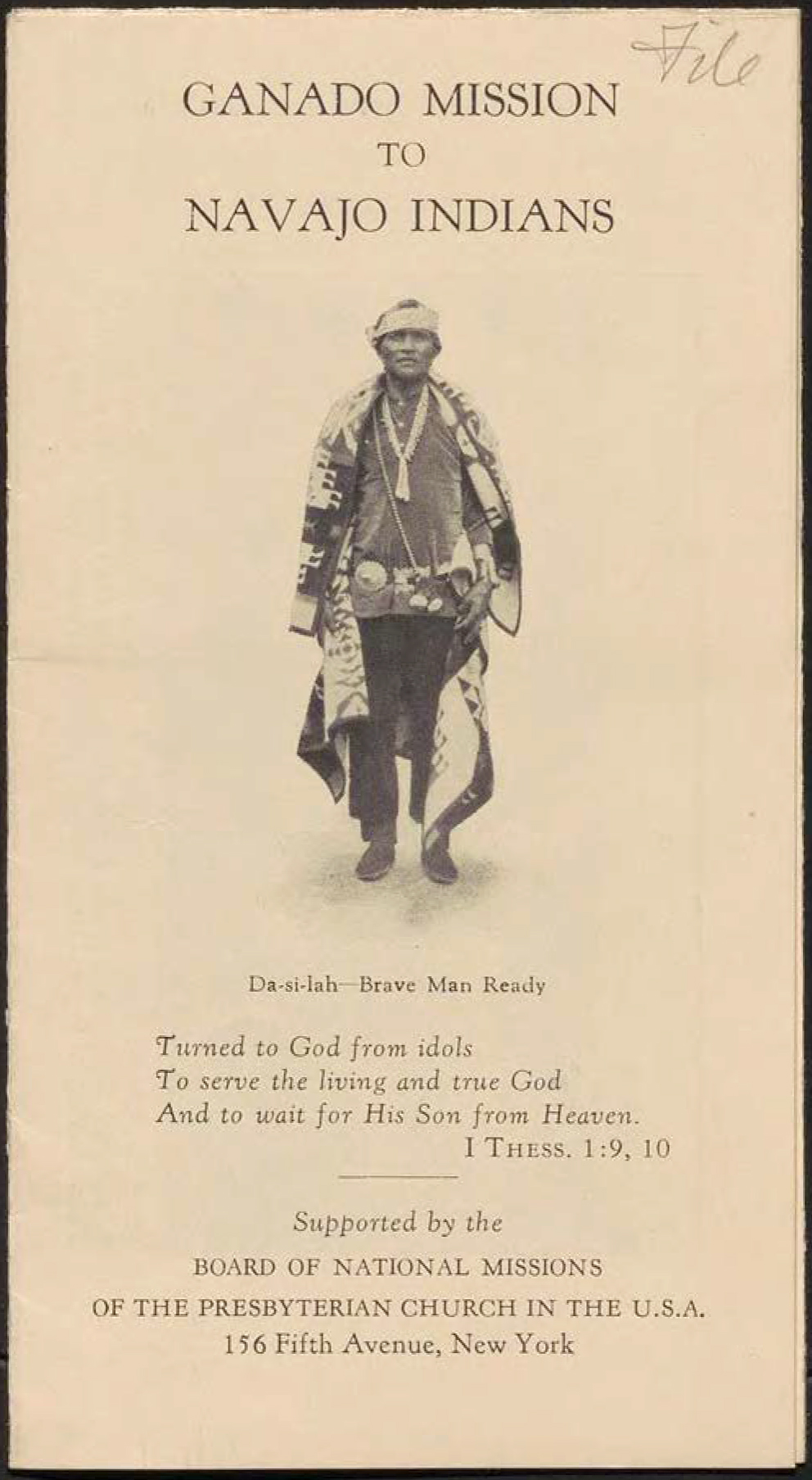
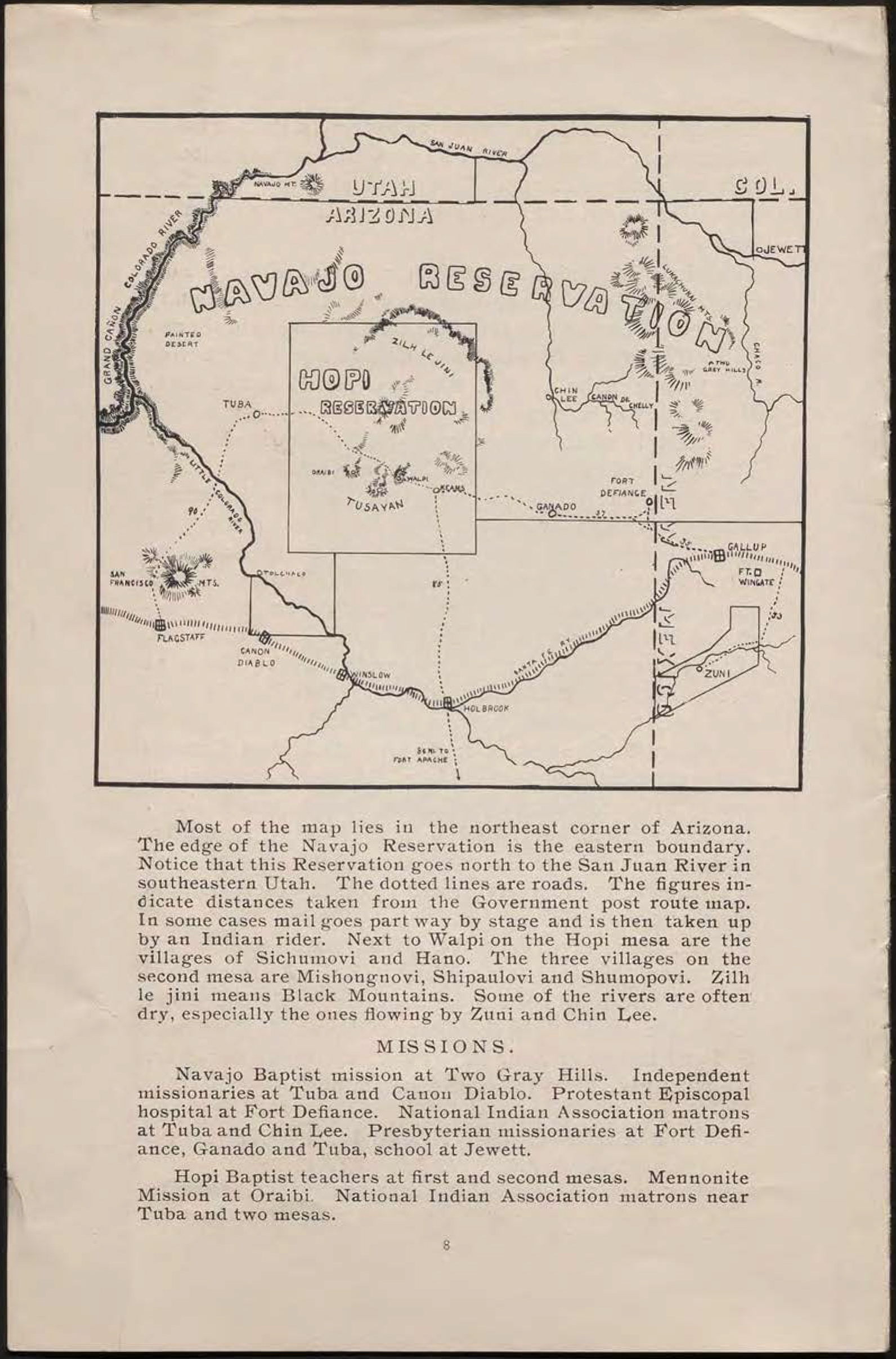
The Ganado Mission, established by the PCUSA in 1902, was located in Ganado, a chapter of the Navajo Nation in Apache County, Arizona (CITE). The goals of its missionaries and mission administrators were the “cultural assimilation and conversion of the Navajo (Diné) and Hopi peoples primarily through the avenues of Christian education, evangelism, and medicine/medical care” (CITE). Sage Memorial was established in 1930… (p.2 IMG_8100).
Context
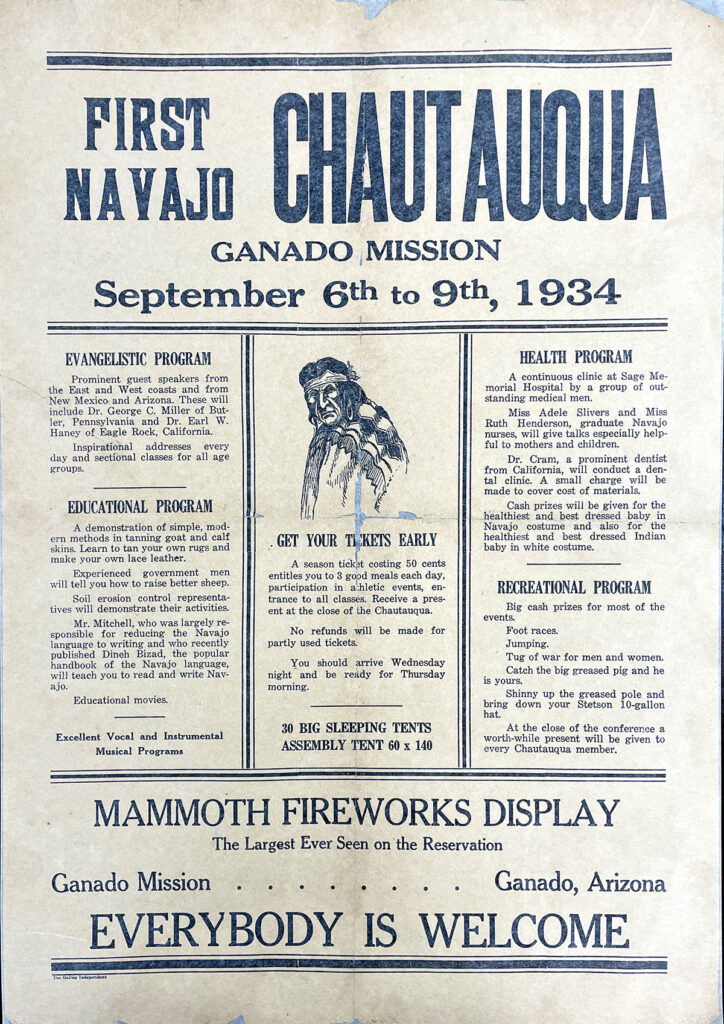
Harlow Brooks’ connection to Sage Memorial Hospital started with his lifelong interest in Native American culture, which he pursued through archaeological studies on tribal lands (Moorehead 222). Brook’s focus on the past led him, through his interactions with modern tribal communities, to see the poor conditions in which they lived and how these conditions affected their well-being, particularly their health (Moorehead 222(?). Brooks’ interest in Native American peoples became more focused on the Navajo, having acquired substantial knowledge of their cultural practices and, presumably, through this endeavor, strong relationships with tribal members (Moorehead 223). His work at Sage Memorial began in 1933 and lasted until his unexpected death in 1936. During that time, he… and worked at the Navajo Chautauqua, treating not just Navajo patients, but others in the surrounding area who came in cars, wagons, on horseback, and even on foot (Moorhead 225).
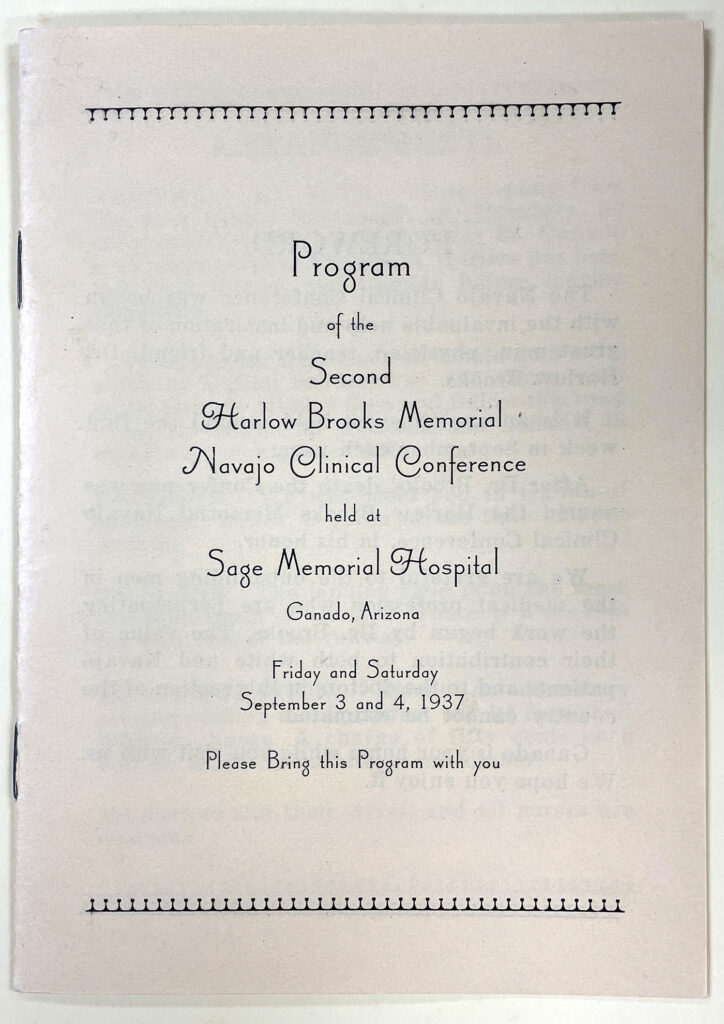
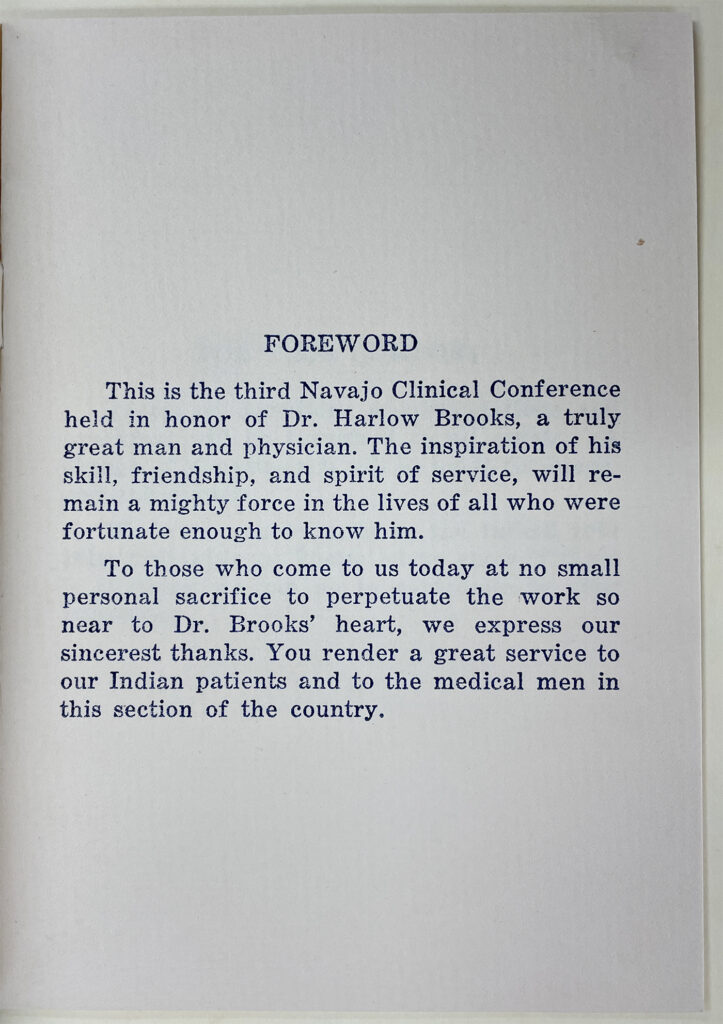
While there weren’t many materials directly connected to Brooks, the ones they had told a clear story: his time at Sage Memorial was brief, but his impact was great, as evidenced by the establishment of a medical conference in his name, “The Harlow Brooks Memorial Navajo Clinical Conference,” to which physicians from around the country came. In the 1938 conference program, Brooks is described as “a truly great man and physician,” and, regarding his impact, it is said, “the inspiration of his skills, friendship, and spirit of service will remain a mighty force in the lives of all who were fortunate enough to know him” (IMG_7990).
HEADER
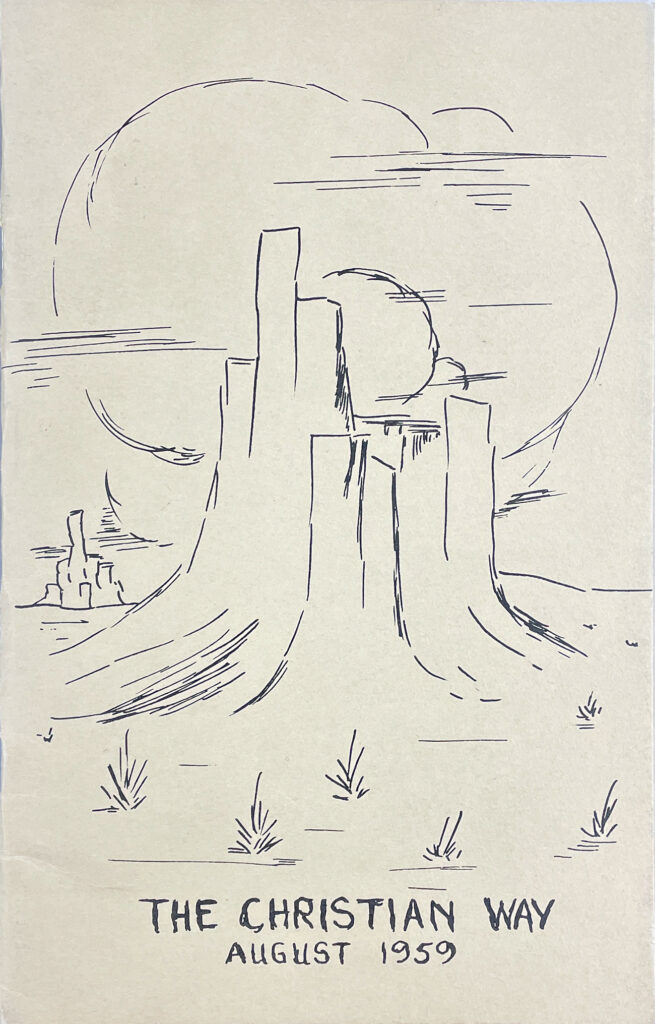
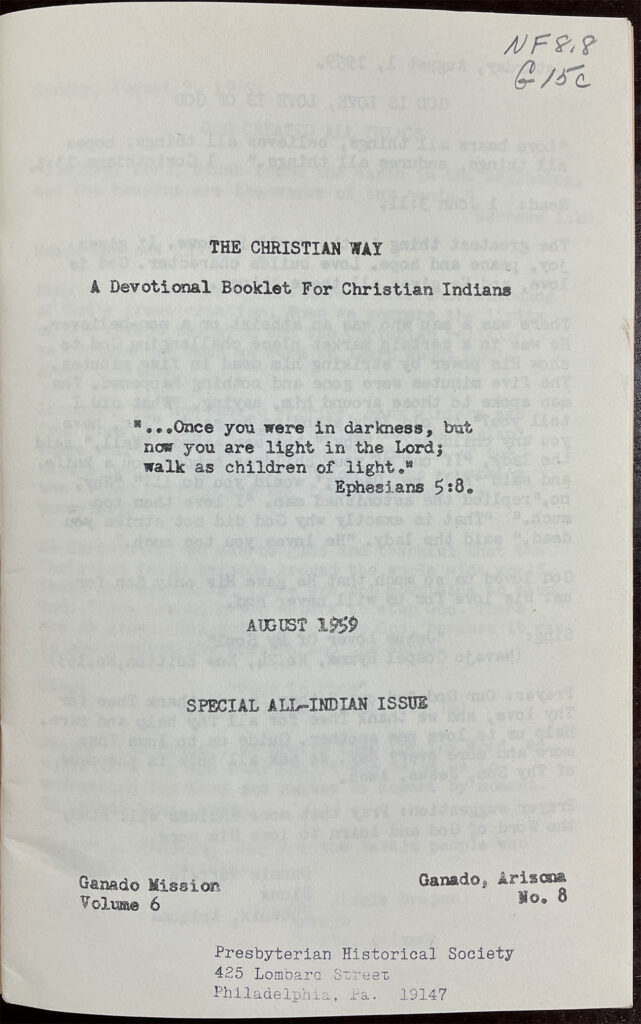
One object that caught my attention was a booklet titled The Christian Way. It was from 1959, long after Brooks was affiliated with Ganado, yet it seemed relevant. Initially, I was struck by the booklet’s intention—it was meant to persuade Navajo to convert to Christianity and put aside their traditional beliefs and cultural practices. The quote on the title page from Ephesians 5:8 says it all, telling the reader that the non-Christian way of the Navajo is “darkness” and that Christianity is the way: “…Once you were in darkness, but now you are light in the Lord; walk as children of the light” (CITE). I was struck by the troubling and degrading way the booklet treated Navajo culture, and the fact that it was written by Navajo Christian converts.
Discomfort
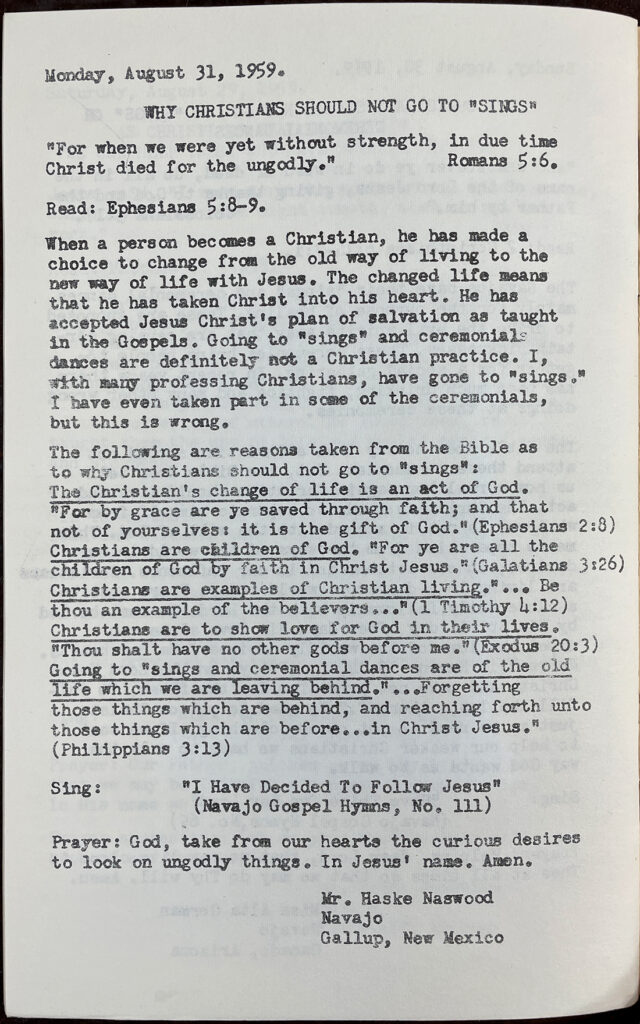
I flipped to the last page, which read, “Why Christians Should Not Go To ‘Sings’” (CITE). EXPLAIN
I knew what a sing was only because I had recently read an article about them written by Brooks for The American Journal of Surgery, titled “A Navajo Medicine Sing.” In it, Brooks argues the merit of traditional medical practices:
“It is reasonable to suppose that such a race had something worth our recognition, a people who devised symphiosiotomy, cesarean section, amputations, who used artificial extremities after injury or loss, who were well able to reduce dislocations and set fractures long before a freebooting Italian on a lost Spanish ship blundered on this western hemisphere.”
And argues for the study of such practices:
One method of study of ancient American medicine still exists, one which should receive more attention from our historians and which still offers a rich reward to the student. It is through the study of the traditional practices which are still in vogue among our more advanced tribes. Tradition in the medicine clans and practices, we have reason to believe, are still very carefully carried out and the accuracy of its transmission has been demonstrated time and again in archeological research” (Brooks 184).
The rest of his article is devoted to the observations he made while attending a Navajo sing—[Describe]–being done to help a young woman…
I discovered the “Sing” article after reading in Harlow Brooks: Man and Doctor, a biography written by John J. Moorhead, M.D., a colleague and great admirer of Brooks, about Brooks relationship to indiginious peoples and his interest in their medical practices: “Brooks made an intensive study of the herbs used by medicine men, realizing that some of their remedies not only have a sound therapeutic basis, but actually possess specific healing qualities as well” (Moorehead 223). Moorehead noted Brooks strong connection to the Navajo, in particular, which led to me seaching online for “Harlow Brooks” Navajo and stumble I upon the article.
While I had found Brooks’ article interesting, especially in its description of the actual sing, I had not thought that much about its significance, especially since it aligned with…
In the book Harlow Brooks: Man and Doctor, a biography by John J. Moorhead, M.D., a colleague and great admirer of Brooks, there are mentions of Brooks’ interests in and respect for indigenous peoples’ traditional medical practices: “Brooks made an intensive study of the herbs used by medicine men, realizing that some of their remedies not only have a sound therapeutic basis, but actually possess specific healing qualities as well” (Moorehead 223).
Amrind, “primative”
Brooks helped create a record. Did he see value in Navajo medical practices? “Yes.” Is his value calaberated based on a colonial value system? yes
Sage Memorial Hospital https://digital.history.pcusa.org/islandora/46601?search_api_fulltext=ganado
“The history of early American medicine is very difficult to discover. This is due to the fact that most of the Amerinds left no written or pictorial record of their lore or practices and those who did, left it in forms which we are as yet entirely unable to read or translate. When our scholars shall have found a method by which the coptics, sculptured and painted records which they have left us may be translated, we shall probably find that early American medicine had as much of value to give us as we have received from any other primitive source” (Brooks 184).
“It is reasonable to suppose that such a race had something worth our recognition, a people who devised symphiosiotomy, cesarean section, amputations, who used artificial extremities after injury or loss, who were well able to reduce dislocations and set fractures long before a freebooting Italian on a lost Spanish ship blundered on this western hemisphere. One method of study of ancient American medicine still exists, one which should receive more attention from our historians and which still offers a rich reward to the student. It is through the study of the traditional practices which are still in vogue among our more advanced tribes. Tradition in the medicine clans and practices, we have reason to believe, are still very carefully carried out and the accuracy of its transmission has been demonstrated time and again in archeological research” (Brooks 184).
Caught my attention because I had found an article by Brooks about Sings
←Library of Congress Manuscript Division| Digitized Sources→