
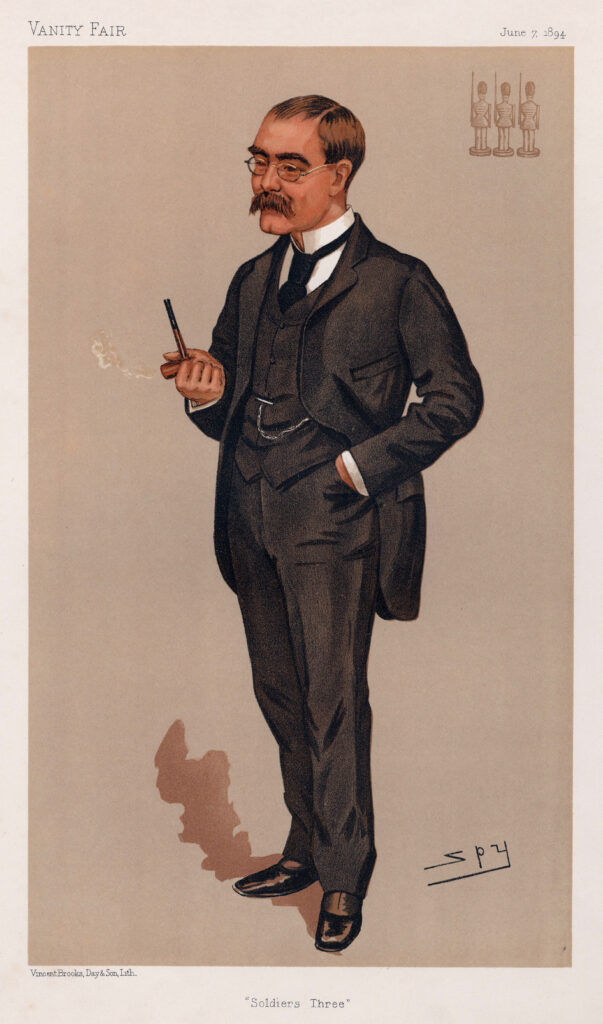
Rudyard Kipling, the journalist, short‑story writer, poet, and novelist, was born in 1865 in Bombay (Mumbai today), India. His English parents had relocated to the city prior to the births of Kipling and his sister, Beatrice (“Trix”); his father, John Lockwood Kipling, taught art at Bombay University. Educated in England, Kipling graduated from United Services College in Devon and returned to India at the age of sixteen to begin an editorial apprenticeship at a newspaper in Lahore, where his parents were living at the time (SOM 37 & 39). In time, Kipling became a journalist, working at The Pioneer in Allahabad, and eventually a prolific author whose works were ubiquitous, published and republished in magazines, newspapers, and volumes across the English-speaking world, including in the Unites States, where, arguably, he was at times more popular than in the British Empire.
America’s Kipling
Kipling first set foot on American soil in 1889 at the age of twenty-three, taking the long route, so to speak, from India to England. Along the way, he documented his travels for the Anglo-Indian newspaper The Pioneer. After arriving in San Francisco, he journeyed north to British Columbia, then south through Yellowstone Park, Salt Lake City, Omaha, and Chicago, before reaching the East Coast, where he sought out and interviewed one of his greatest literary idols, Mark Twain. While they differed considerably in their politics, Kipling, being a staunch imperialist, and Twain, being anti-imperialist, the two would develop a friendship and mutual admiration upon Twain reading Kipling’s work (Stewart xvi).
During his travels, Kipling produced striking portraits of the late nineteenth‑century America, with particular attention to the western frontier. In a manner reminiscent of Twain, he used humor and hyperbole to form his narratives, though his satire often carried a sharp critique of the American character. Reflecting on his visit to Yellowstone, Kipling demonstrated this disapproval with a bitting quip: “It is not the ghastly vulgarity, the oozing, rampant Bessemersteel self‑sufficiency and ignorance of the men that revolts me, so much as the display of the same qualities in the women‑folk” (Kipling, Yellowstone 87). Kipling wrote prolifically during this four month period, recording his various adventures in the form of letters and journals, which eventually became multiple articles for the Indian English-language newspapers, Civil and Military Gazette and the Pioneer, the two volume publication, From Sea to Sea and Other Sketches: Letters of Travel, and two essays, “American Notes” and “On America,” an echo of Charles Dickens’s 1842 work of the same name.
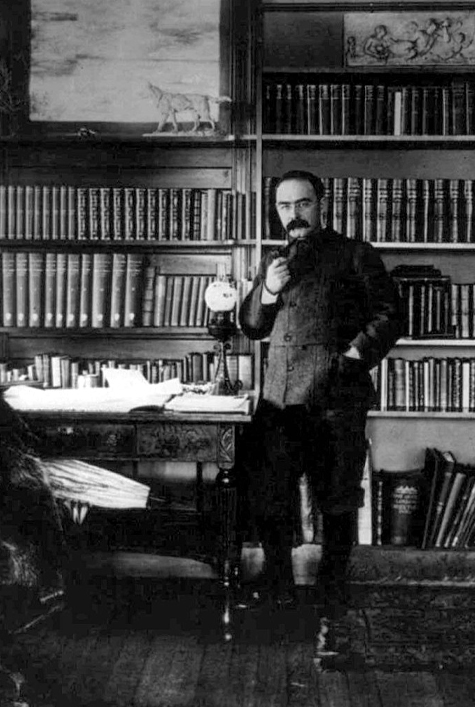
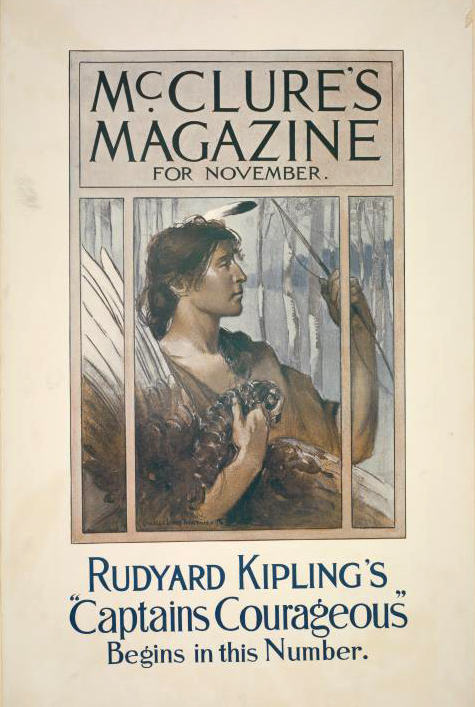
In 1892, Kipling returned to the United States with his new wife, Carrie Balestier, an American, to begin their life together. They settled with her family in Brattleboro, Vermont, a place that Kipling immediately fell in love with [CITATION]. For Kipling his time living in the US, while brief, was a happy and prolific period during which he wrote many of his most notable works including his collection of short stories, A Day’s Work, that contained tales set in the United States, numerous poems, his most beloved children’s novels, The Jungle Book and The Second Jungle Book as well as Captain Courageous, his novel set in America. According to Christopher Benfey, the author of If, a history of Kipling’s life in America, his time there “was a place of promise, of freedom, of experimentation, relatively free, in his view, from the class and caste divisions that marred England and India, a place where he could reinvent himself, as so many American writers had done before him.” (Benfey 6). Kipling’s time in 1896, when he moved his family to England in response to the emerging an Anglo-American crisis concerning Venezuela, and a rift between Kipling and his volatile brother-in-law, Beatty Balestier. When Kipling first stepped onto American soil, he was a moderately known British author. By the time he left he was world renown.
Popularity & Influence
In his 1899 autobiography, Mark Twain wrote, “Kipling’s name and Kipling’s words always stir me now, stir me more than any other living man’s” (qtd. in Krauth 215). What stirred Twain so deeply may well have been what Jack London later described as Kipling’s “love of actuality”—his gift for concise, realistic portrayals of life, rendered in a plain, often colloquial and conversational style (69). In his 1901 essay “These Bones Shall Rise Again,” London observed that Kipling “has sung ‘of things as they are.’ He has seen life as it is, ‘taken it up squarely,’ in both his hands, and looked upon it” (London 69). This commitment to realism was a defining feature of Kipling’s work and one that profoundly influenced a generation of late nineteenth- and early twentieth-century American authors associated with realism and naturalism, including London, Stephen Crane, Frank Norris, Ambrose Bierce, and Ernest Hemingway. Yet their kinship with Kipling extended beyond stylistic realism. Equally significant was the thematic terrain they shared: fiction rooted in lived experience, masculinity, and adventure, often centered on young men confronting the world and the wilderness, venturing westward, or heading into war.
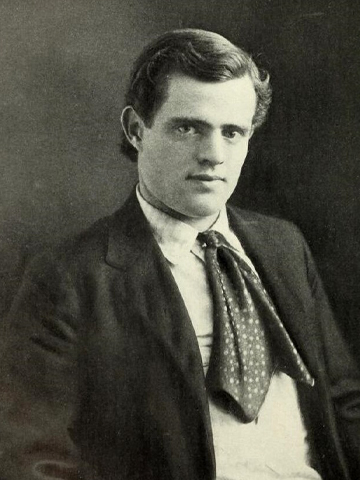
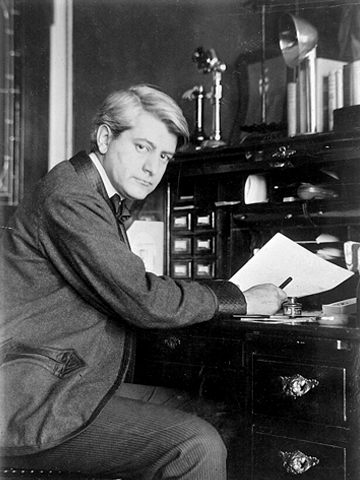
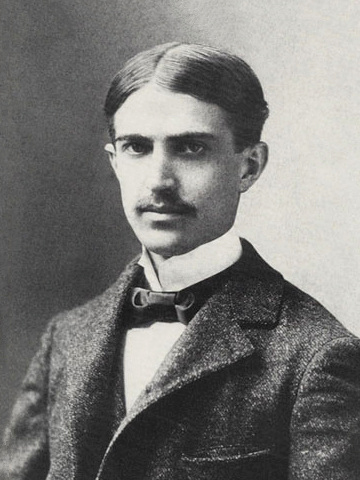
It was these motifs that caught Theodore Roosevelt’s attention in the 1890s when he and James Brander Mathews, a friend, a literary critic, and a professor of literature at Columbia University, sought to create a new American literary canon. Roosevelt, who would become America’s most literary president, strived to create a canon that promoted what he and Mathews saw as “true Americanism,” essentially manliness (Oliver 95). Some of the authors they emphasized were Ralph Waldo Emerson, Henry David Thoreau, James Russell Lowell, Owen Winster, and, the only non-American in the group, Rudyard Kipling (Oliver 95).
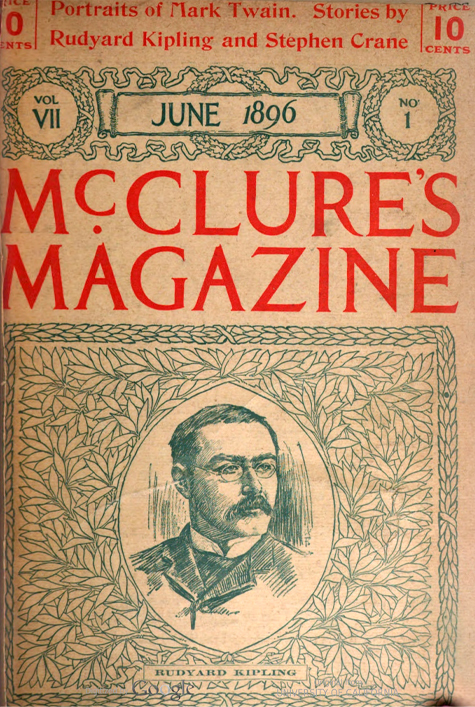
Kipling’s awareness of his American audience is visable in his publishing choices. Between 1890-1928, he published first pritings of seventy short stories, four serialized novels, and fourty-one poems in American magazines and journals (CITATIONS). Many of his works were printed in McClure’s Magazine, which was owned by Doubleday & McClure Company (later Doubleday, Page & Company), the publisher of the American version of his books. Kipling was a boon for the magazine with his short stories being one of, if not the most, successful fiction series they had (The Record). Other authors published in the magazine included Mark Twain, Willa Cather, Arthur Conan Doyle, Jack London, Robert Louis Stevenson, Mark Twain, among other notable figures.
The height of Kipling’s American popularity came with the February 1899 publication of “The White Man’s Burden” in McClure’s Magazine, bringing greater attention to his body of work. Gretchen Murphy, in her book Shadowing the White Man’s Burden, describes the extreme and enthusiastic reception of Kipling following the publication of the poem:
In the following months, newspapers produced supplements devoted to minutiae of Kipling’s life and career; a monthly journal entirely devoted to miscellaneous facts and opinions about Kipling enjoyed a year-long run in New York; publishers took advantage of the fashion by hastily rehashing and printing as free-standing pamphlets brief articles on Kipling taken from monthlies; and all sorts of writers and politicians found ways to comment on Kipling’s writing. (23)
One such artical, “Is Kipling an American or English Product?”, appeared in Literary Digest. In it, the novelist, Maurice Thompson’s argument is reprinted. He claims that Kipling was, in fact, an American product due to his greater popularity in the United States than in Britain (486) and goes on to explain his appeal: “We Americans are delighted with Kipling because of his Americanism” (487).
Kipling’s Popularity Decline
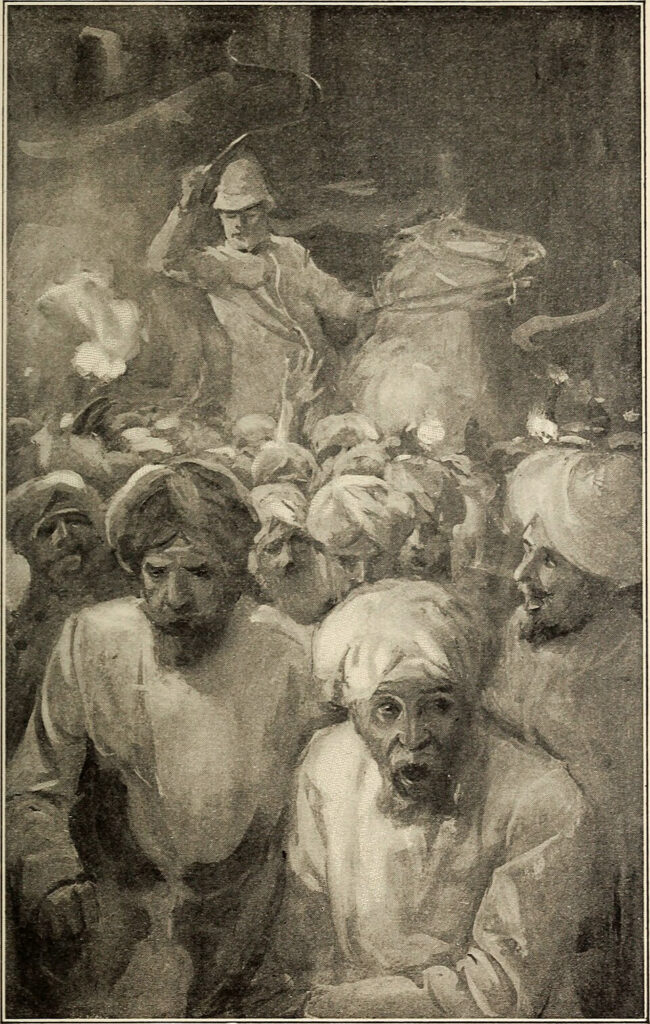
Given how popular Kipling was in his own time, Britons and Americans of the late nineteenth and early twentieth centuries would be shocked to find that he is as unread and unadmired as he is today.
Much of Kipling’s decline in popularity stems from the fact that he was, as George Orwell describes him in a 1941 essay, “a jingo imperialist” with “a strain of sadism in him” (CITATION). While these qualities repel many potential modern readers, some scholars and admirers claim that Kipling’s views were more “complicated than he is given credit for” (McGrath). As Charles McGrath explains in the New Yorker article “Rudyard Kipling in America,” although Kipling was the things he has been labeled—“a colonialist, a jingoist, a racist, an anti-Semite, a misogynist, a right-wing imperialist warmonger”—he was also “a prodigiously gifted writer who created works of inarguable greatness” (McGrath). Understanding Kipling’s complexity is reason one might want to read Kipling…
Orwell’s critique of Kipling’s work is particularly interesting, for what he professes to be its appeal is also its downfall in contemporary times. To some extent, Orwell echos McGrath’s sentiment, but instead of placing Kipling’s work, particularly his poetry, on a pedestal, he proposes what he considers a new, more fitting genre for it: “good bad poetry” (CITATION). As Orwell defines it, “A good bad poem is a graceful monument to the obvious. It records in memorable form—for verse is a mnemonic device, among other things—some emotion which very nearly every human being can share” (CITATION). This is to say that Kipling’s poetry (and his work more broadly) is marked by simplicity, memorability, and emotional resonance. With this in mind, it becomes clearer how his work would lose its appeal. It isn’t just the abject bigotry, it is the skill with which Kipling paints a picture of our imperial and colonial past, a time that evokes shame from many benifactors and pain in those who experienced, and continue to endure, its oppressive and violent effects. For these reasons, the decline of his work cannot be summed up as a loss of appreciation for Kipling’s abilities; rather, it is a deeper recognition of them.
Poems numbers https://www.kiplingsociety.co.uk/readers-guide/kipling-the-poet.htm
Prose numbers https://www.kiplingsociety.co.uk/bookmart_tales_chrono.htm
Oliver, Lawrence J. “Theodore Roosevelt, Brander Matthews, and the Campaign for Literary Americanism.” American Quarterly, vol. 41, no. 1, 1989, p. 93.