
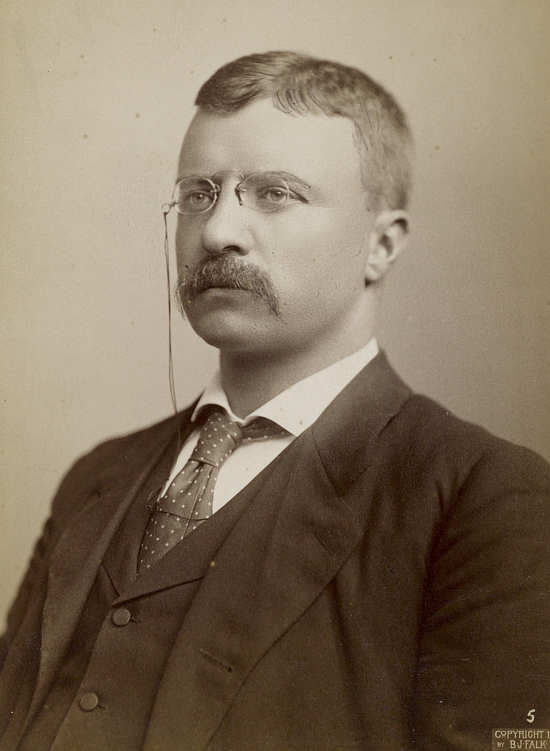
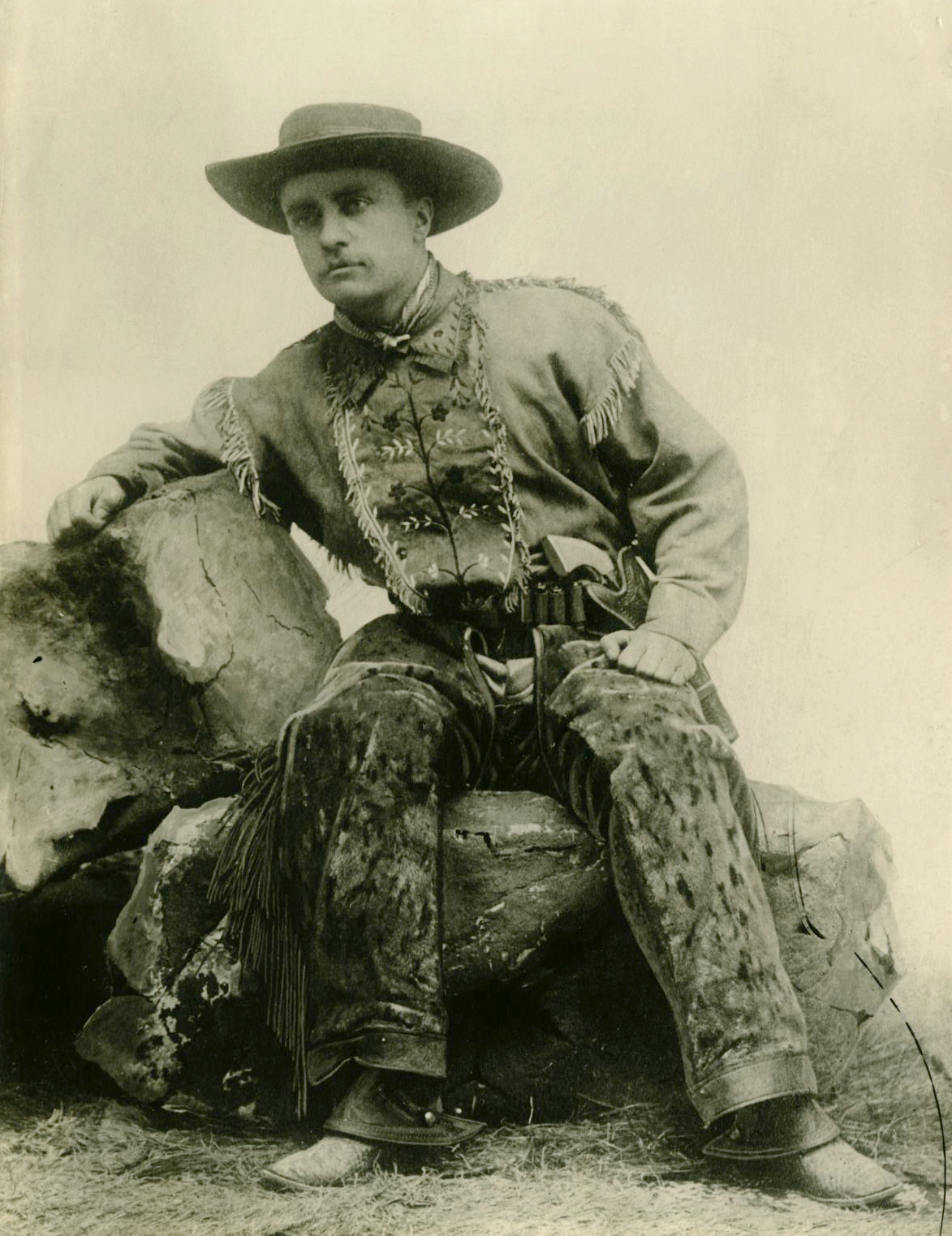
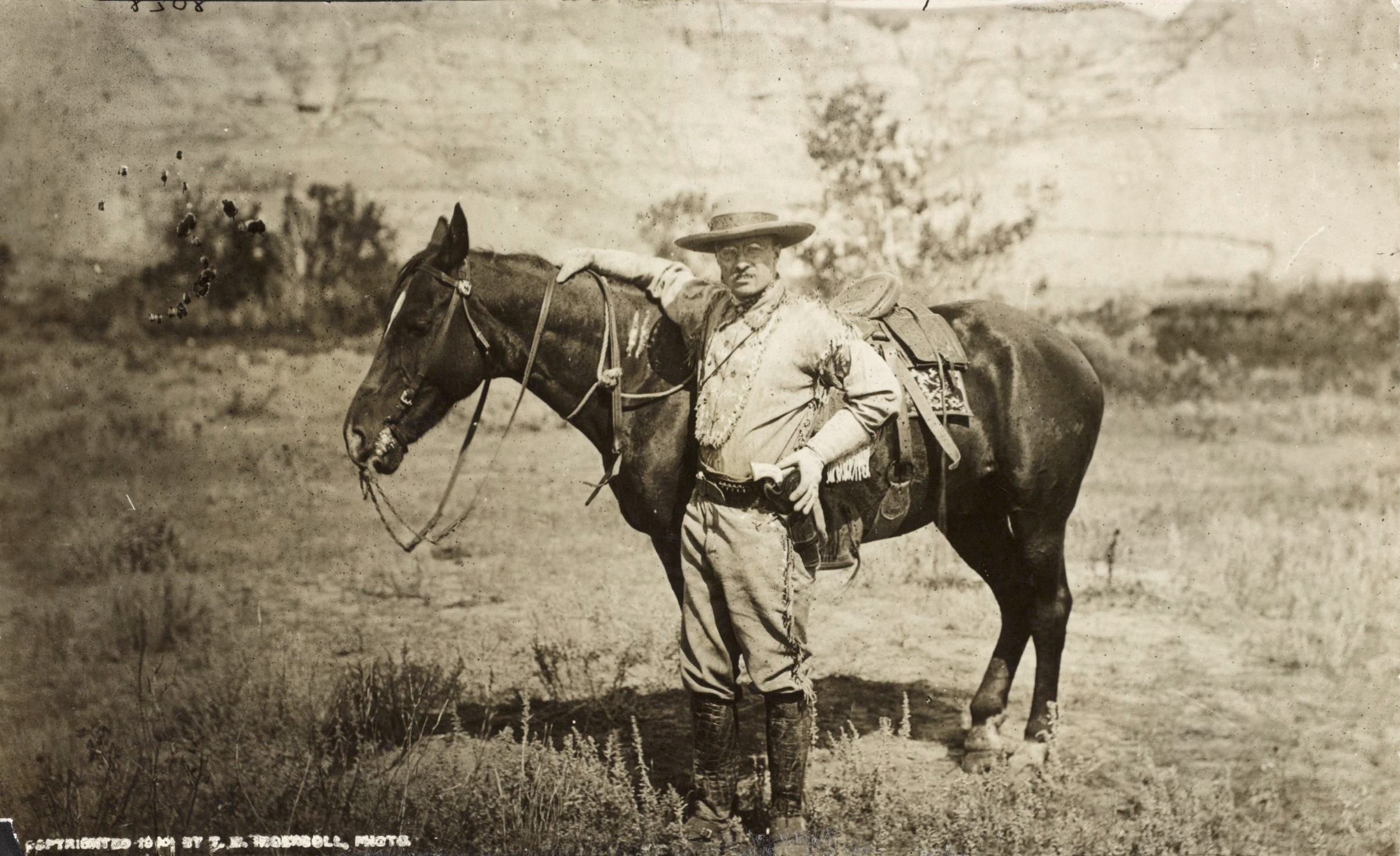
Theodore Roosevelt (1858-1919) was born into a prominent and affluent New York family. He came of age as a passionate naturalist, exploring, recording, and collecting elements of the natural world around him. While his love of nature shaped much of his early life, it was the Dakota Territory to which he fled in 1884 following the nearly simultaneous deaths of his mother and his first wife, Alice —that shaped him most decisively[CITE]. He fled there as a hunter and an aspirational rancher and left years later a conservationist, having witnessed firsthand the near-extinction of the bison. (As president, he would translate these convictions into policy on a staggering scale: approximately 230 million acres placed under public protection, five national parks, 18 national monuments, 51 federal bird reservations, and the establishment of the US Forest Service.) It was his time in the Dakotas that also solidified his philosophy of the “strenuous life,” meaning that a good life is not one of ease and comfort but of challenge, vigor, and struggle willingly embraced, and his reverence for frontier life, which he considered to be at the heart of the American character [CITE].
When he returned to the East Coast in 1887, he was a harder and more resolute man [CITE]. He married his childhood sweetheart, Edith Carow, in 1886, and went on to have five children with her. He returned to public service, having served as a New York State Assembly member from 1881 to 1884. He served as US Civil Service Commissioner, then went on to be President of the New York City Police Board, Assistant Secretary of the Navy, and Governor of New York before joining the 1st United States Volunteer Cavalry, which became known as the Rough Riders in the Spanish-American War, and became a national hero. It was this experience and the reputation he gained from it that made him William McKinley’s choice for vice president [CITE}. Following McKinley’s assassination in 1901, he became president, serving until 1909, when he chose not to run for another term.
[Quote about the Dakotas]
Roosevelt’s time in the Dakota Territory (1883-1887) was transformative. He went as a hunter, shooting his first bison… (Jenkinson 154), [transformation info] but came away with a deep attachment to the landscape and a growing alarm at the pace of its destruction—nowhere more viscerally than in his witness to the near-extinction of the American bison.
Theodore Roosevelt Presidential Library Timeline