
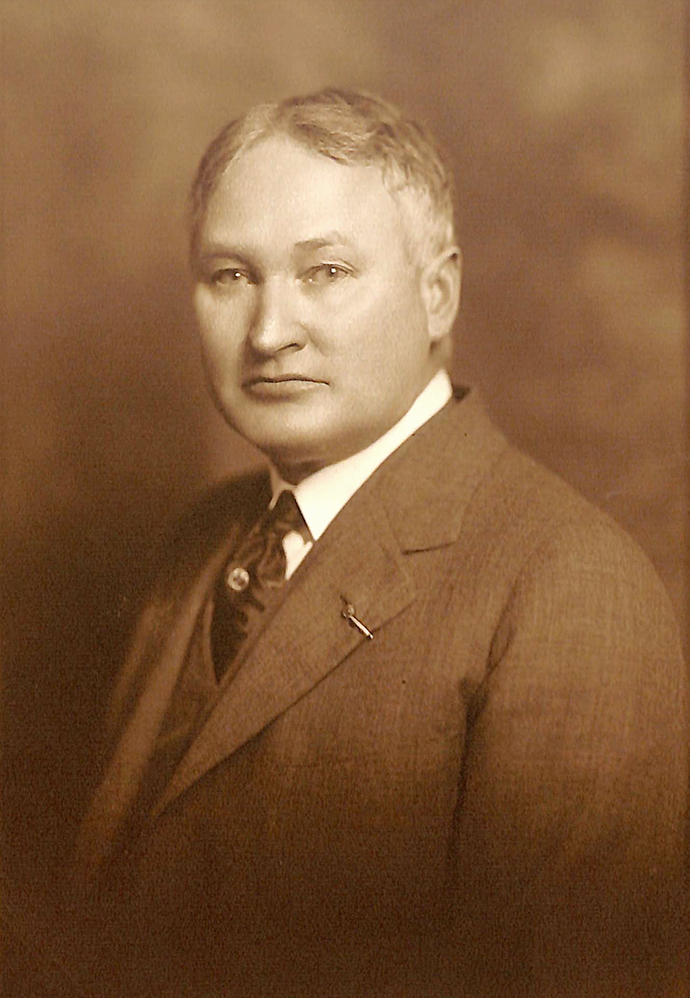
(Henry) Harlow Brooks (1872-1936) was born and raised in Medo, Minnesota [verify], where he was, as he described, a “frontier child” (indigenous medicine talk). After graduating with his MD from the University of Michigan, Ann Arbor (University of Michigan), in 1895 he moved to New York City, where he became a renowned pathologist, thought of as a “doctor’s doctor” among his peers (Time Magazine/ WP). The demand for his skills led to him taking the unlikely appointment of pathologist at the newly established New York Zoological Society, later known as the Bronx Zoo. He studied American Indian medicine and touted its value and effectiveness to his peers. He served as a medical officer on the front lines of France during World War I. He loved archeology and was an avid big game hunter and photographer.
Affiliations: Camp-Fire Club and the Explorers Club
Family
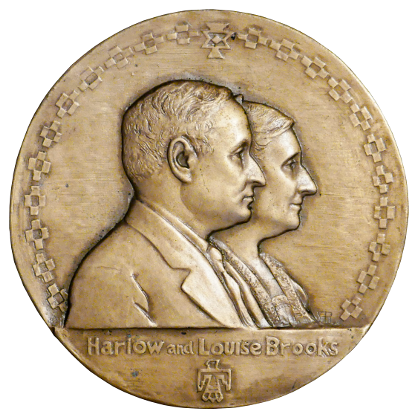
Brooks met his future wife Louise Dudley Davis (date-1941) in [year] at the Carnegie Laboratory, where he was a laboratory staff member, and she, a Bryn Mawr College student in her last year, was working, likely as a technician(?) (citation). Like Brooks, Louise had a love of science and the natural world and within a few year’s time, she would establish herself as a formidable bacteriologist (Louise obituary). They married in 1899, and, as if to further demonstrate their compatibility, they ended their honeymoon early when Brooks was called to Willard State Hospital to deal with an outbreak of diphtheria (14). Louise joined him, and together they set up and ran an isolation hospital for eight weeks (14). In 1902, the couple had a daughter, Nancy, who sadly died two years later. In 1909 they had a second daughter, Ruth Walker Brooks, later Ruth Brooks Hoffman, who became a successful artist. Like her parents, she was a lover of nature, and like her father in particular, a lover of archeology, the American West, and American Indian culture.
Medical Career
After graduating from medical school in 1895, Brooks began his career with a laboratory position at the Pathological Institute of the State Hospital. In 1997, Brooks opened his own office and took positions as an assistant pathologist at Hood Wright and Carnegie Laboratory, where he performed autopsies as part of his responsibilities (Moorhead 7-9 and article). One such autopsy he performed helped lead to the discovery of Bacillus Aerogenes Capsulatus Welchii or Welch’s bacillus, a life-threatening form of gas gangrene from which Brooks would die nearly forty years later (citation). Over time, Brooks took a series of appointments at medical colleges, including Assistant Professor of Pathology and then Professor of Clinical Medicine at Bellevue, and Professor of Clinical Medicine position at New York University Medical College, where he would retire as Professor Emeritus in 1928 (Moorhead).
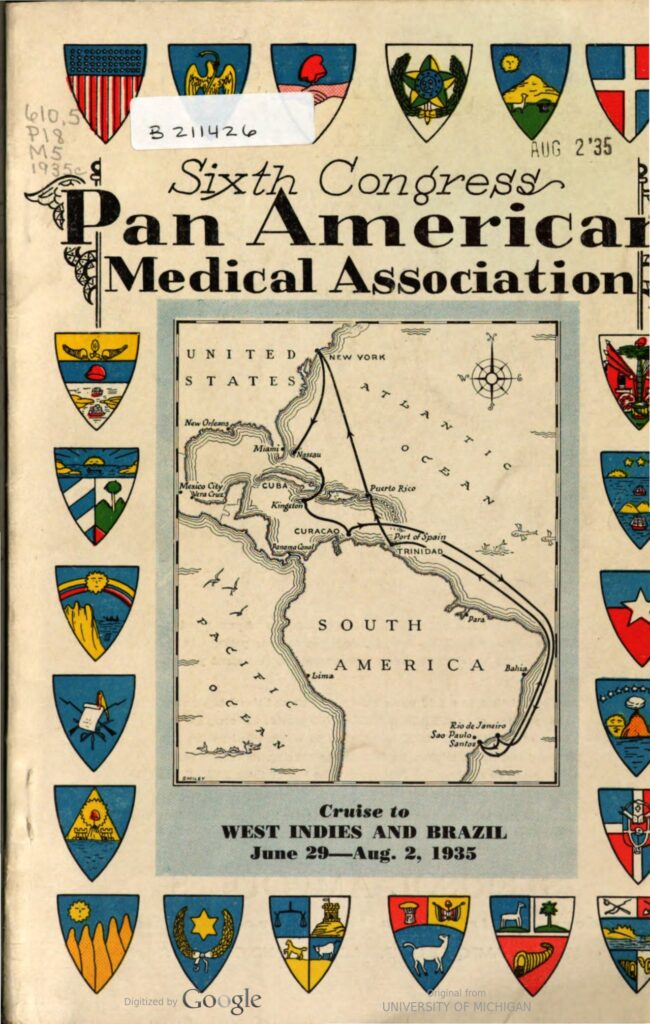
Brooks published… writing even while on family vacations… was an active member of medical societies and his immense interest in tropical diseases, some of which he had seen in his own practice as international travel was increasing (218 and 220-221). For this reason, he was an active member and took leadership roles in the Pan-American Medical Association (PAMA), which sought to facilitate relationships and share knowledge between North, Central, and South America (cite).
Military Service
Brooks is in France doing his work among the fighters. I heard of him from a doctor who was in Frace doing Red Cross work. He said ‘I saw Brooks in the Arrgonne [sic] Forest. He wore the steel helmet and the sweat was running down his face. The officers and men of the old 77th Division think the world of him.’ So do we Jim, and he is worth all that we think of him for he is all men.
In a 19– letter to Jimmy Simpson, McAleenan wrote… (IMG_2471)
In 1896, Brooks joined the Seventh Regiment of the National Guard (93) and moved through the ranks and various roles. In 1900 he was commissioned Assistant Surgeon with the rank of captain. Upon stepping back from active duty in 1912, he was commissioned Lieutenant Colonel, Medical Corp, Depot Battalion in 1916, and detailed on the Second Division’s commanding generals’ staff as Chief Surgeon (96). would weave in and out of and coincide with his civilian career path
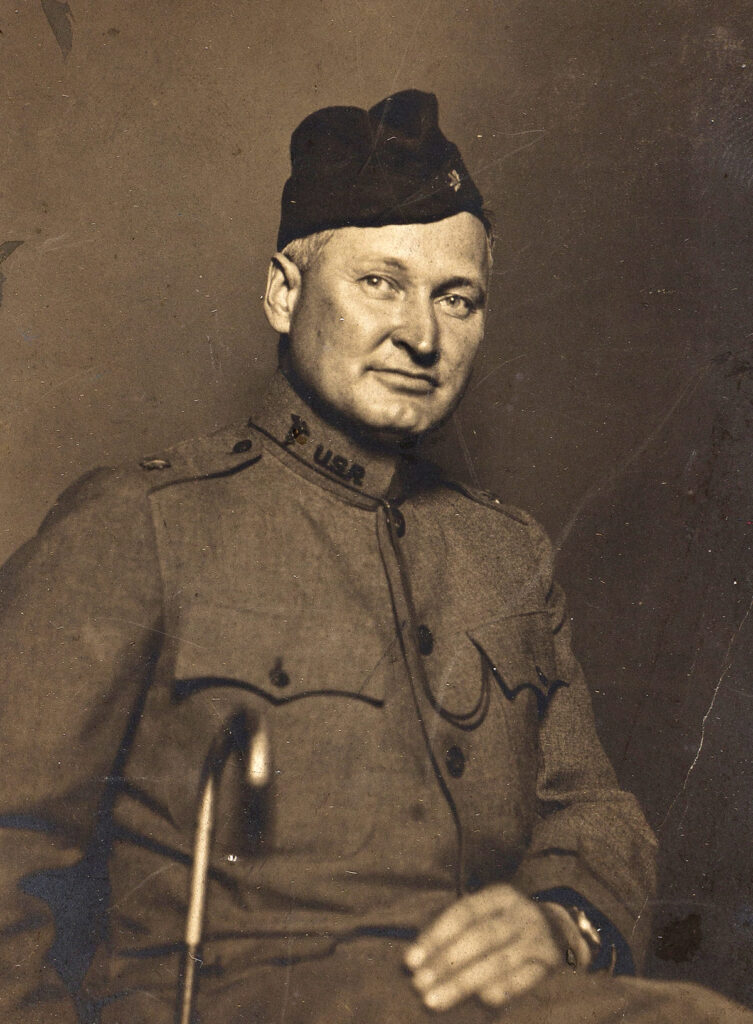
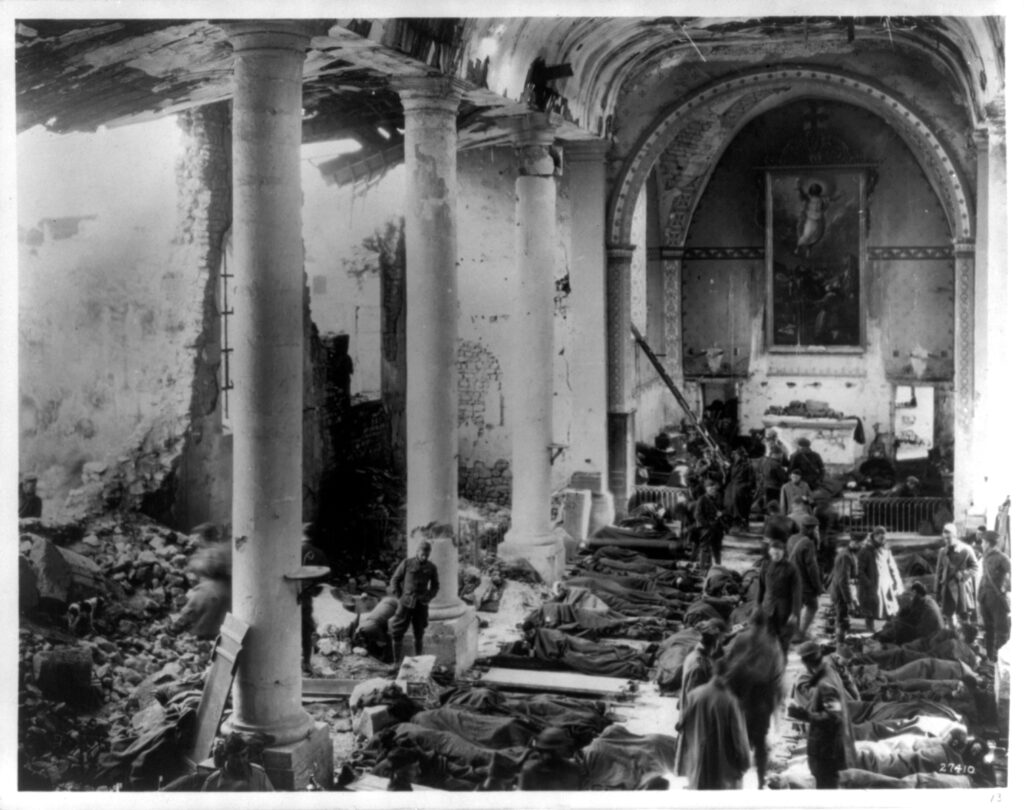
Not long before the US entered WWI, Brooks was relieved and returned to the Medical Section, Reserves Corps (96). Determined to return to active duty and serve in the war, Brooks found himself having to traverse bureaucratic red tape despite his qualifications (98). After a series of communications, Brooks returned to duty, first serving stateside at Camp Upton in Yaphank, Long Island, where he served as Cheif of Medical Service and had such success with running the hospital that he was asked to consult with other military hospitals to help them improve their services (105).
In 1918, the Chief Consultant of the Medical Service, A.E.F., requested he be sent to France, where he was eventually sent to serve on Army field at the front (112). There he worked to quell the spread of disease, including the influenza epidemic, and treated the injured (113-114). With the war ending not long after his arrival, Brooks transitioned from working in field hospitals to studying respiratory diseases that had been circulating (114-115).
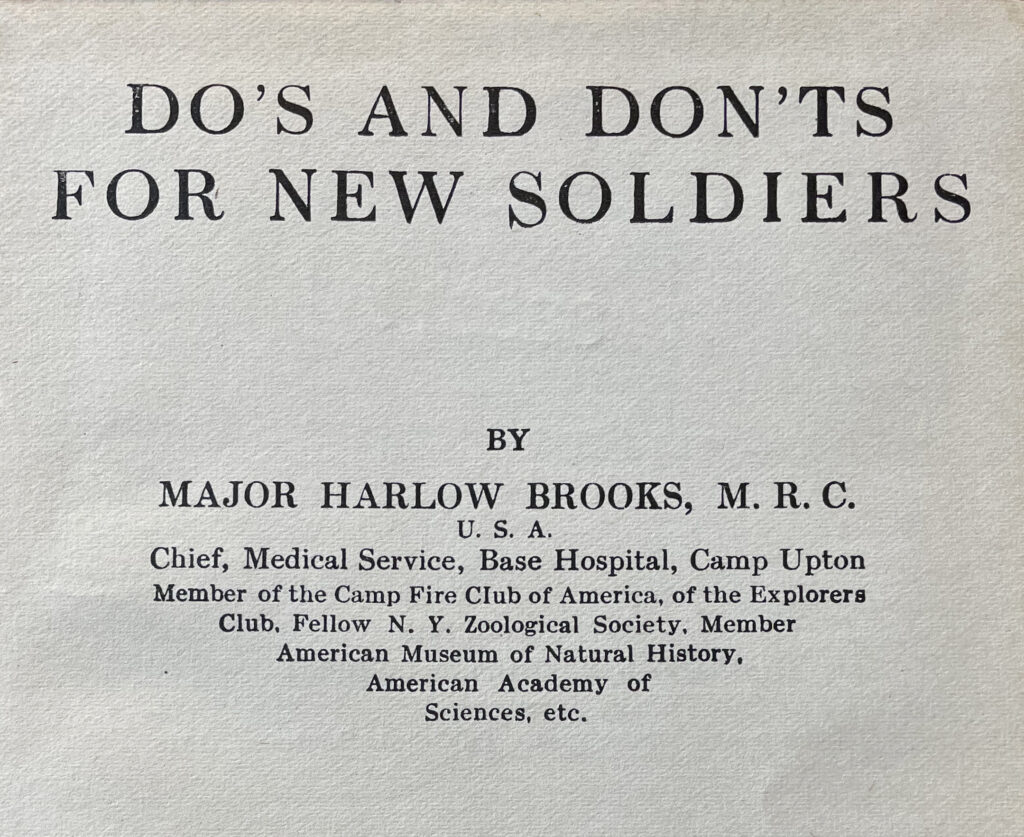
Brooks’ medical and military experience led him to write the 1918 book The Do’s and Don’ts for New Soldiers, a manual for those who were suddenly going to war with no previous military experience. —size of book
“The purpose of this manual is to help my comrades, if it is possible, to prepare themselves for this new occupation. From my own experience so very much has depended on the new viewpoint, on the mental attitude which must be accepted if we are to compete successfully in this great adventure that I have designed this little book particularly to assist in this direction.”
Brooks v
American Indian Medicine
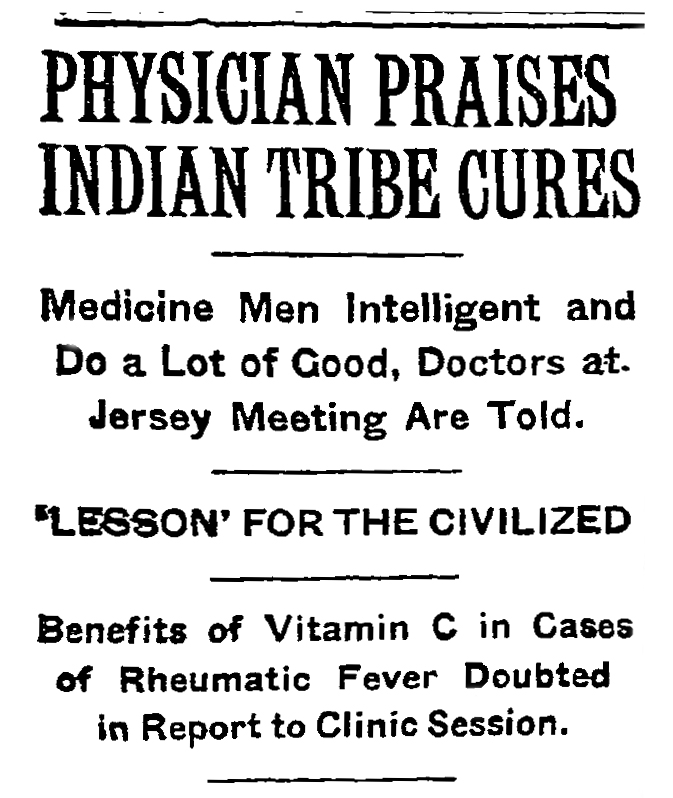
Perhaps some ignorant of early American history may feel that this is an overstatement, but a little contemporary study will soon show that the people who have given us digitalis, cocaine, quinine, belladona, cascara, aloes, a host of diuretics, diaphoretics and untold drugs of like value had a medical history well worth our study. It is reasonable to suppose that such a race had something worth our recognition, a people who devised symphiosiotomy, cesarian section, amputations, who used artificial extremities after injury or loss, who were well able to reduce dislocations and set fractures long before a freebooting Italian on a lost Spanish ship blundered on this western hemisphere.
Harlow Brook speaking at the 11th Annual Meeting of The American Association of the History of Medicine in 1935 (The American Journal of Surgery, 1936)
New York Zoological Society
Quote about him being a good choice, them arguing over him staying
Sed ut perspiciatis unde omnis iste natus error sit voluptatem accusantium doloremque laudantium, totam rem aperiam, eaque ipsa quae ab illo inventore veritatis et quasi architecto beatae vitae dicta sunt explicabo. Nemo enim ipsam voluptatem quia voluptas sit aspernatur aut odit aut fugit, sed quia consequuntur magni dolores eos qui ratione voluptatem sequi nesciunt. Neque porro quisquam est, qui dolorem ipsum quia dolor sit amet, consectetur, adipisci velit, sed quia non numquam eius modi tempora incidunt ut labore et dolore magnam aliquam quaerat voluptatem. Ut enim ad minima veniam, quis nostrum exercitationem ullam corporis suscipit laboriosam, nisi ut aliquid ex ea commodi consequatur? (read more)

Death
Sadly, in 1936, Brooks contracted the very disease he had helped to identify, Welch’s bacillus, and though a team of doctors and devoted peers worked tirelessly to save him, he died (citation). In his obituary… Within a year, his friend and fellow doctor John J. Moorehead wrote a biography of Brook’s life. In it, he describes him as…Would have made a good ambassador (220). Ruth heading to Guyana… Conference in his memory
https://babel.hathitrust.org/cgi/pt?id=mdp.39015083025075&seq=39&q1=harlow+brooks