This hunt, we had promised ourselves, would be largely photographic. Of late years, the camera has appealed to us more than the rifle. Trophes could be carried home on film and plate, and the glad, strong, wild creatures still roam their beloved hills and peaks, and enjoy their right to life and happiness. We hope to get pictures of Big Horn, and surely we were not too ambitious in hoping for view of the of the White mountain goat and the king of North American animals, the silver-tip grizzly. (McAleenan, Hunting with Rifle and Camera, page 3)
This quote from Joseph McAleenan’s book, Hunting with Rifle and Camera in the Canadian Rockies, exemplifies…
McAleenan Hunting Party and Photography
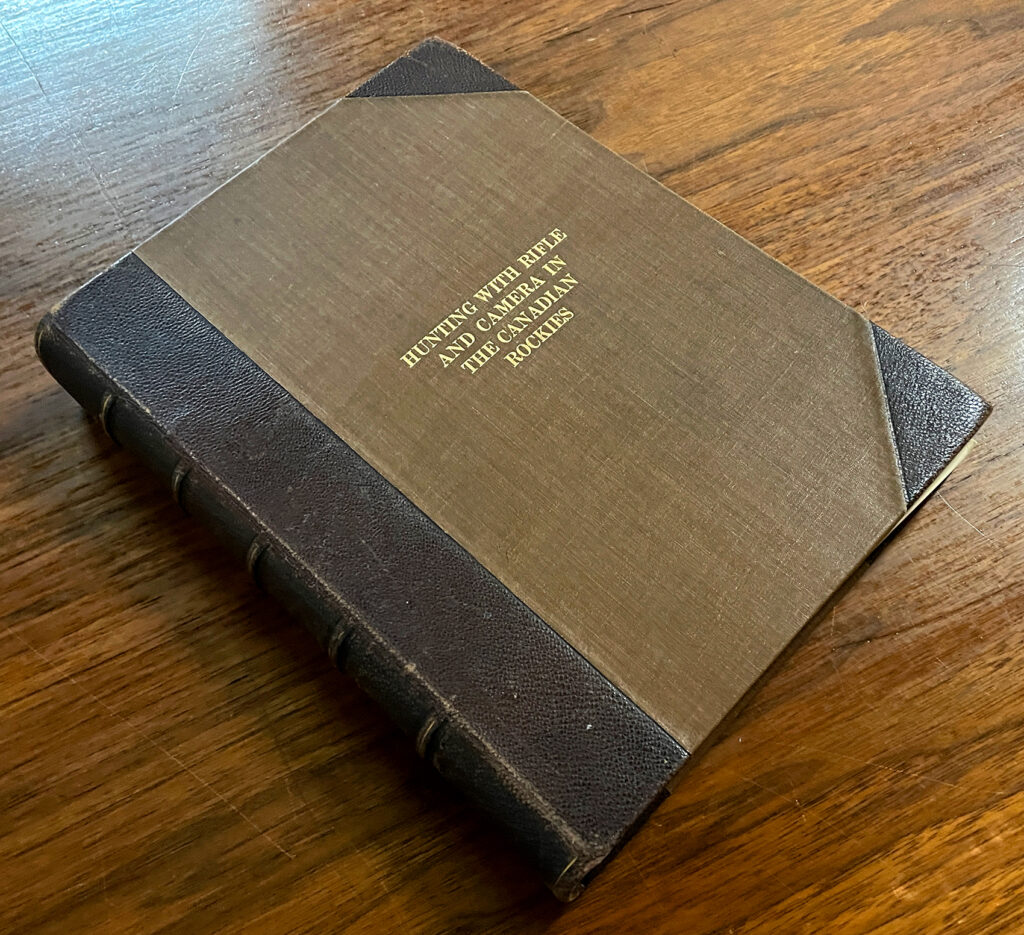
This hunt, we had promised ourselves, would be largely photographic. Of late years, the camera has appealed to us more than the rifle. Trophes could be carried home on film and plate, and the glad, strong, wild creatures still roam their beloved hills and peaks, and enjoy their right to life and happiness. We hope to get pictures of Big Horn, and surely we were not too ambitious in hoping for view of the of the White mountain goat and the king of North American animals, the silver-tip grizzly. (McAleenan, Hunting with Rifle and Camera, page 3)
This quote from Joseph McAleenan’s book, Hunting with Rifle and Camera in the Canadian Rockies, exemplifies…
HEADER
The sportsman who wishes to substitute the camera for the rifle should possess not only a special knowledge of photography, but also many qualifications not absolutely necessary to a successful hunter…The true sportsman is not a game-butcher. When he has shot what he wants, he may well refuse to avail himself of chances to kill, and turn to the camera as a weapon with which to bring home trophies of his abilities as a hunter. -W.B. Devereux, “Photographing Wild Game,” American Big-Game Hunting: The Book of the Boone and Crockett Club
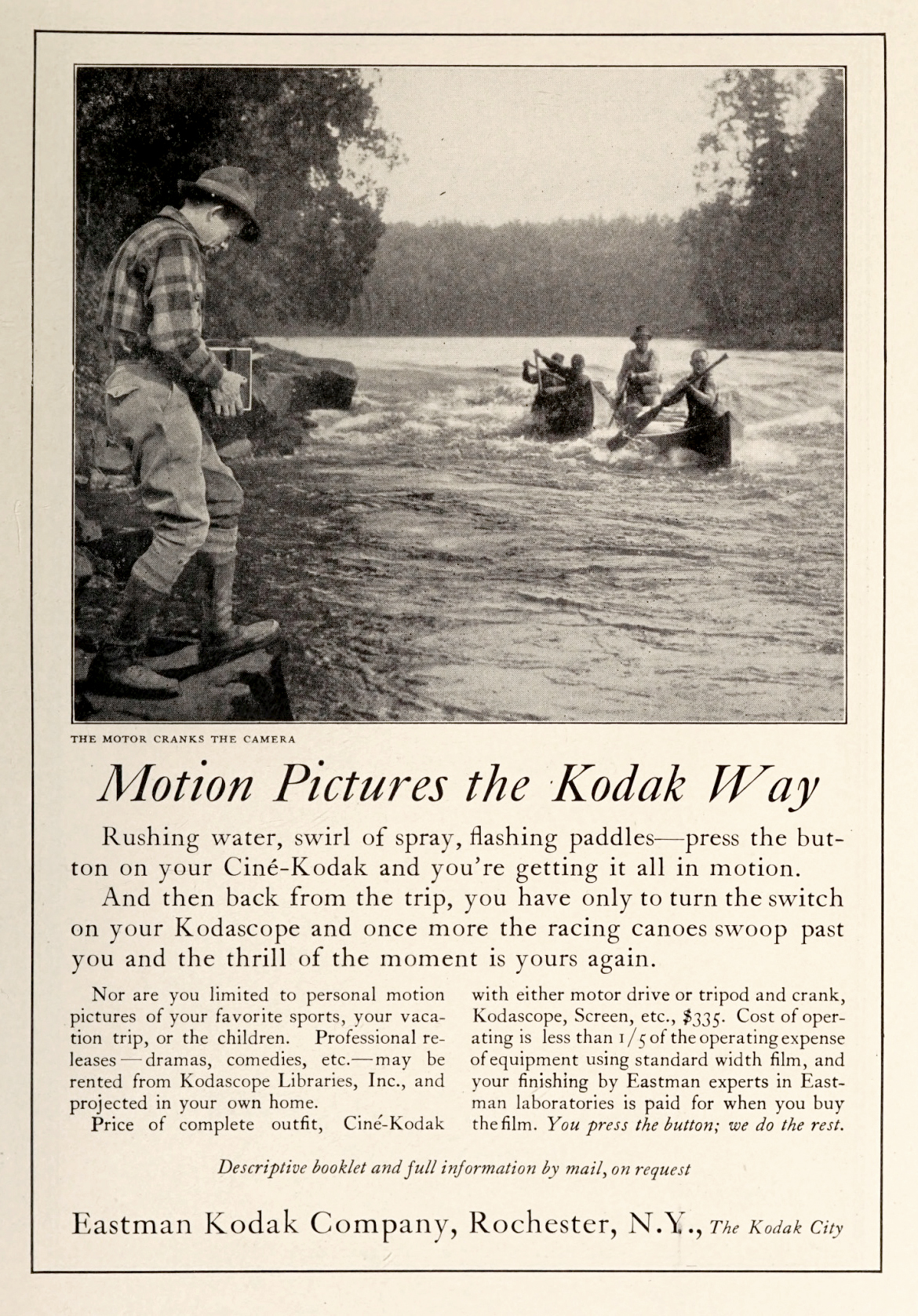
Photography, once a cumbersome and expensive technology that emerged around the mid 1800s, had by the end of the century become more mobile and accessible to amateurs due to reduced equipment size, the invention of dry plate negatives (as opposed to wet plate), and declining costs. Because film had also become faster (meaning less exposure time was needed), it became possible to photograph active subjects, such as animals, without blurring. This enabled naturalists to use the camera as a means of documenting nature, and hunters to “bag” trophies without killing—a shift influenced by the growing Conservation Movement, which did not prohibit hunting but sought to regulate and limit it (CITE). As motion picture cameras became more portable and accessible in the early 1900s, they too were used by hunters.
HEADER
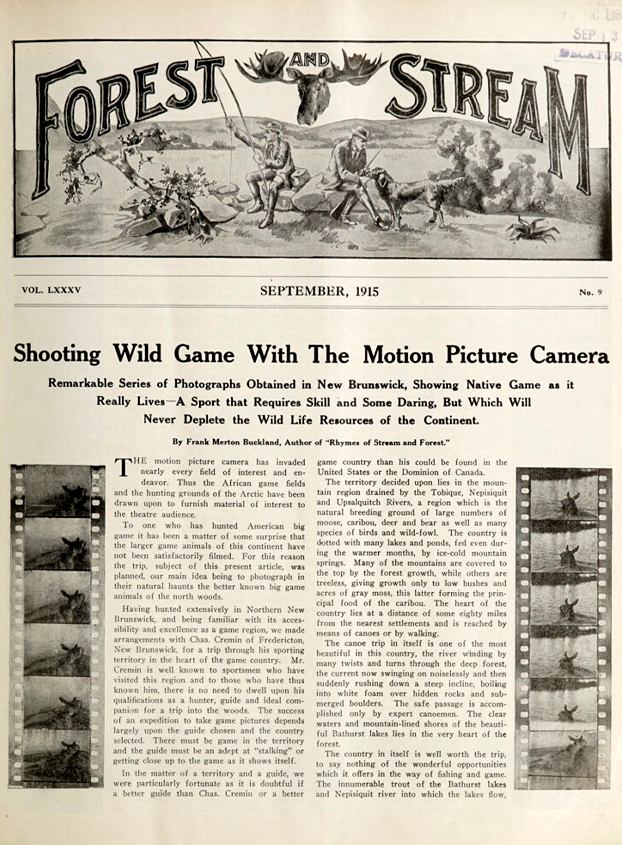
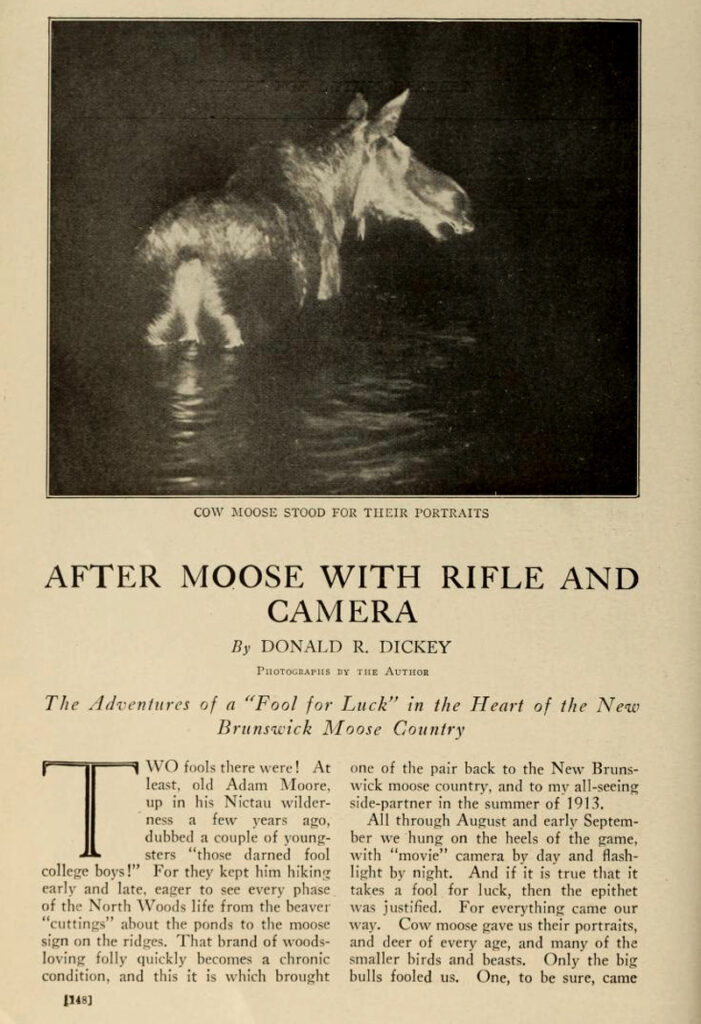
Mentions of hunting with cameras appear in early editions of Forest and Stream (see a 1873 issue). Founded by the prominent conservationist, George Bird Grinnell, the magazine promoted the health benefits of outdoor life along with ideas about nature preservation, wildlife conservation, and hunting regulation—ideas that would eventually help shape the North American Conservation Movement (61 – What book?). Forest and Stream and other outdoor magazines established around this time, such as the American Field and Stream and the Canadian Rod and Gun, became increasingly illustrated with photographs of hunting scenes, be it hunters with their kills, nature scenes, or the photographs of live animals, which began to be referred to as “wildlife photography.” This increase was due to both the growing popularity of photography and the emergence of printing technologies, such as lithography, halftone, and photogravure, that enabled photographs to be printed in publications. (Prior to the advent of these techniques, photographs could not be printed alongside text. Therefore, they were either directly tacked into publications or wood, steel, or copper plate engravings were made of them so they could be run through the printing press.
Learn more about the history of wildlife photography: George Shiras, III
The inclusion of actual photos in the Explorer suggests a desire to maintain the quality
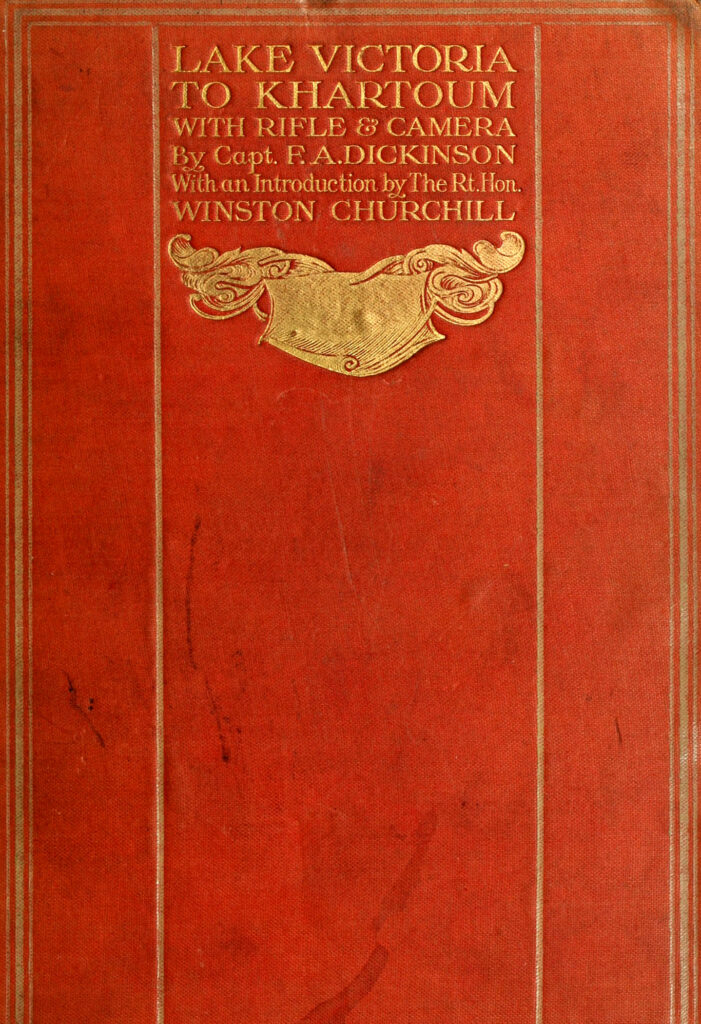
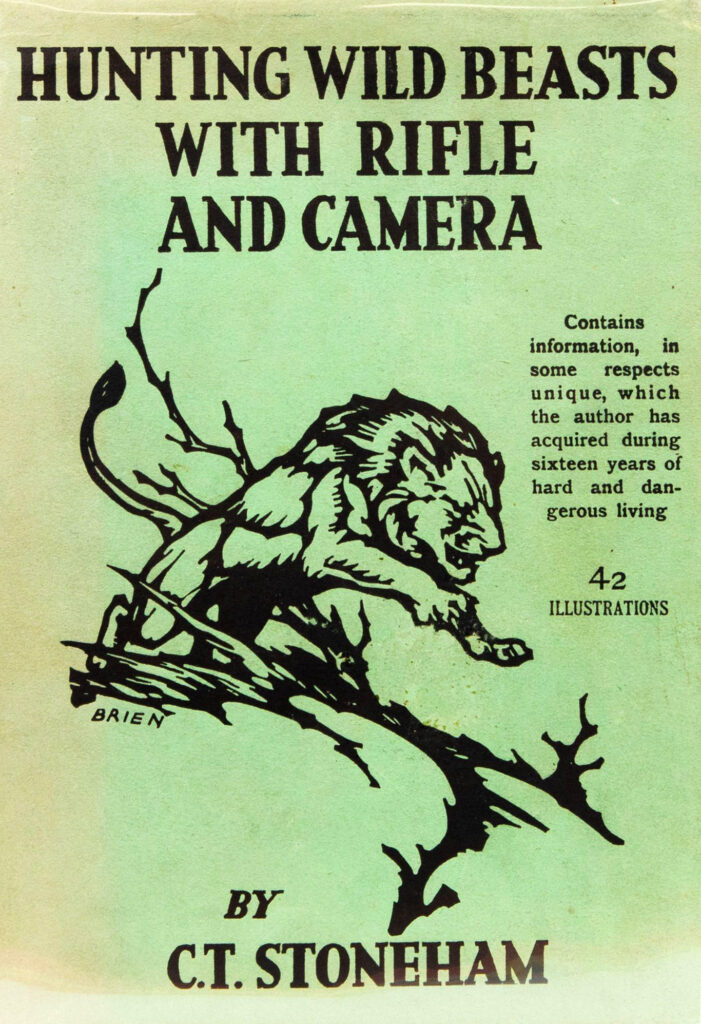
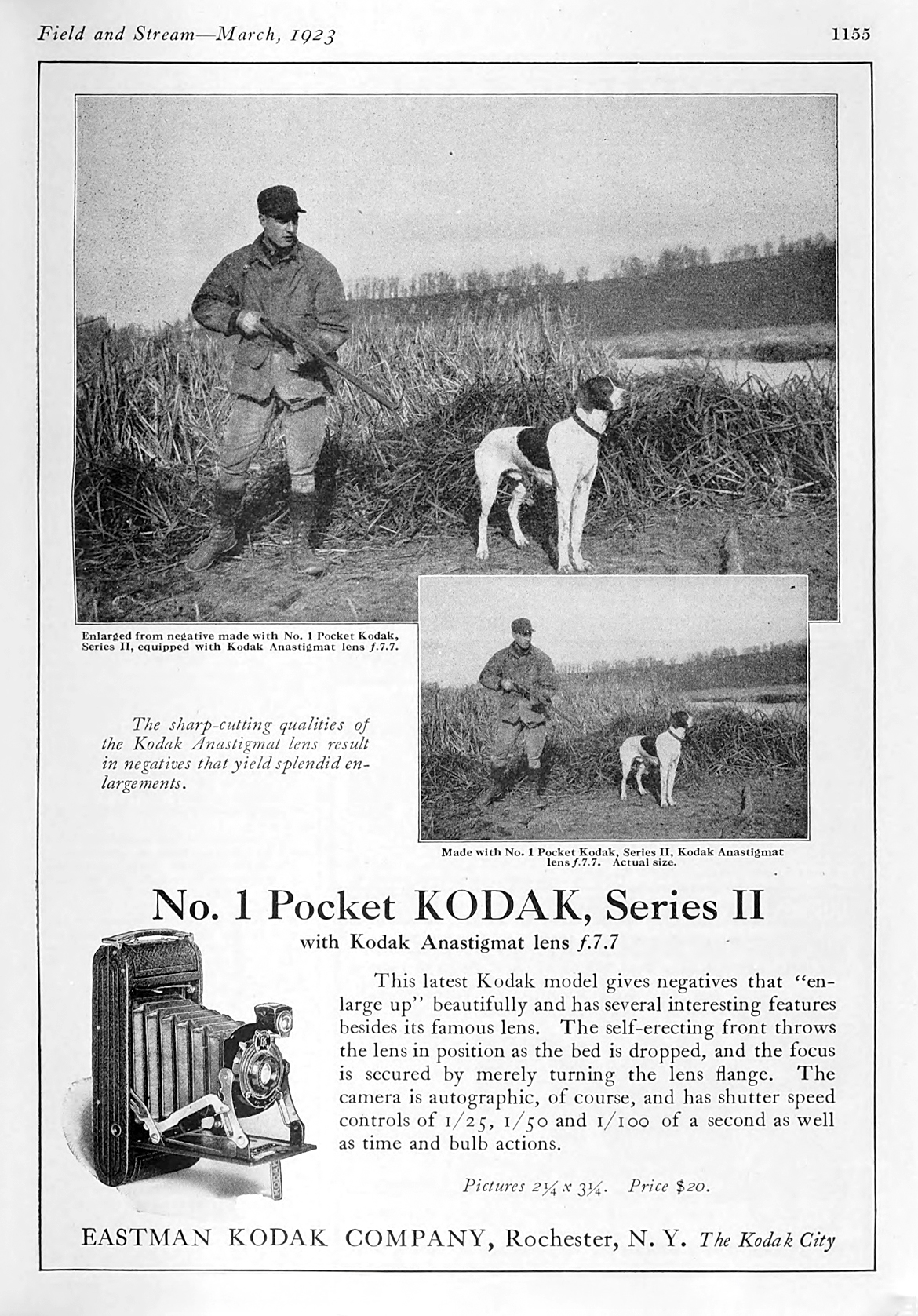
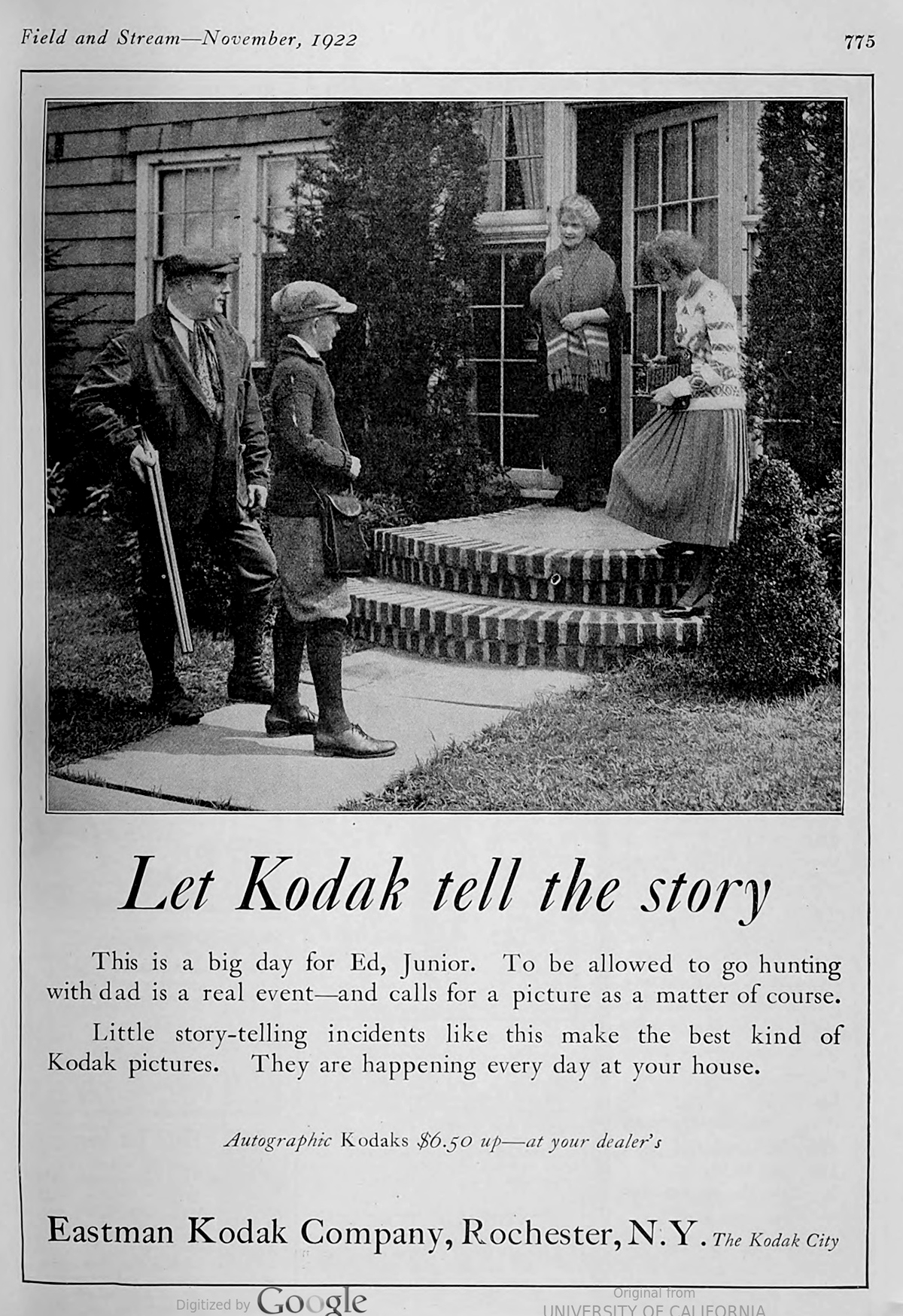
Beginning in the late 19th century, there was an increasing number of books and articles devoted to hunting with cameras, as well as photographic equipment ads and instructional information in outdoor and photography magazines, including ones on how to take photographs, select cameras, and make lantern slides.